Techniques
How to Make Salad Dressing Without a Recipe
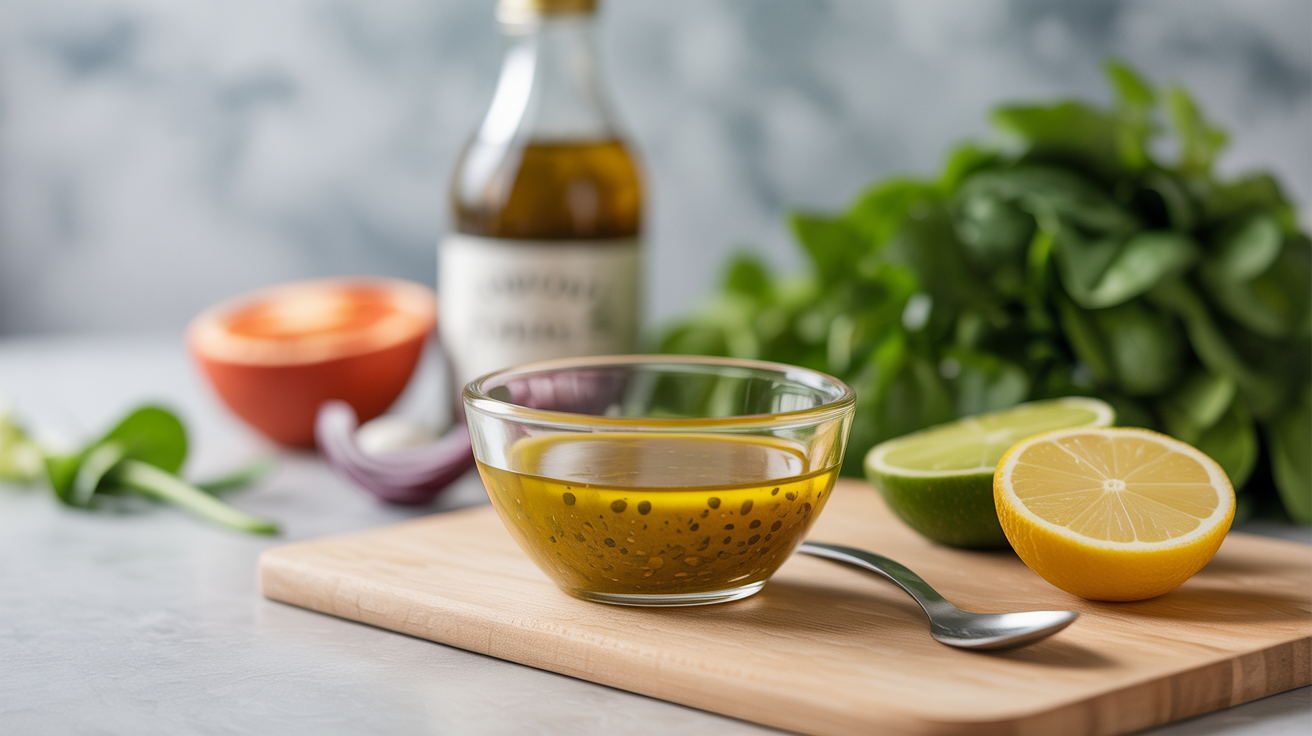
Once you know the ratio and understand a few variables, you can make a better dressing than anything bottled, from ingredients you probably already have. The structure is simple: three parts oil to one part acid, seasoned with salt, with optional additions that shift the character of the whole thing. From that foundation, you can build something light and lemony, rich and mustardy, garlicky and sharp, or subtly sweet, without consulting a recipe each time.
The 3:1 Ratio and How to Use It
The standard starting point for a vinaigrette is 3 parts oil to 1 part acid. For a salad serving two, that typically means 3 tablespoons (45 ml) of oil and 1 tablespoon (15 ml) of vinegar or lemon juice. Scale it up proportionally for a larger batch.
That ratio is a baseline, not a fixed rule. Sturdy greens like kale, arugula, or radicchio can handle more acid without tasting sharp, so a 2.5:1 ratio works well there. Delicate lettuces, especially butter or Bibb varieties, do better at 3.5:1 or even 4:1. The real guide is your own palate. Taste after mixing and adjust before it goes on the salad.
What to Use as Your Acid
Red wine vinegar is the most common choice and a reliable one. It has enough character to add flavor, but not so much that it dominates. Sherry vinegar is a step up in complexity, with a deeper, slightly nutty quality that pairs well with roasted vegetables or strong cheeses. Apple cider vinegar sits on the mellower, sweeter end and works particularly well on slaws and grain salads.
Fresh lemon juice makes a bright, clean dressing that tastes almost like a different category. It's the better choice for anything with fresh herbs or seafood. The downside is that it loses brightness faster than vinegar. A lemon-dressed salad made two hours ahead can taste flat, whereas a vinegar dressing holds up much longer in the fridge.
Picking Your Oil
Extra-virgin olive oil is the standard choice, and for a simple vinaigrette where the oil's flavor is front and center, quality matters. A decent bottle will give you a rounded, slightly fruity backdrop that bottled dressings rarely match. For something more neutral, use grapeseed or avocado oil. These work well when the dressing carries bold flavors like tahini, miso, or a lot of garlic, and you don't want the oil competing.
One practical note: cold olive oil will solidify in the refrigerator. That's normal and not a problem. Just pull the jar out 10 to 15 minutes before serving, or run it briefly under warm water.
How to Emulsify a Dressing That Stays Together
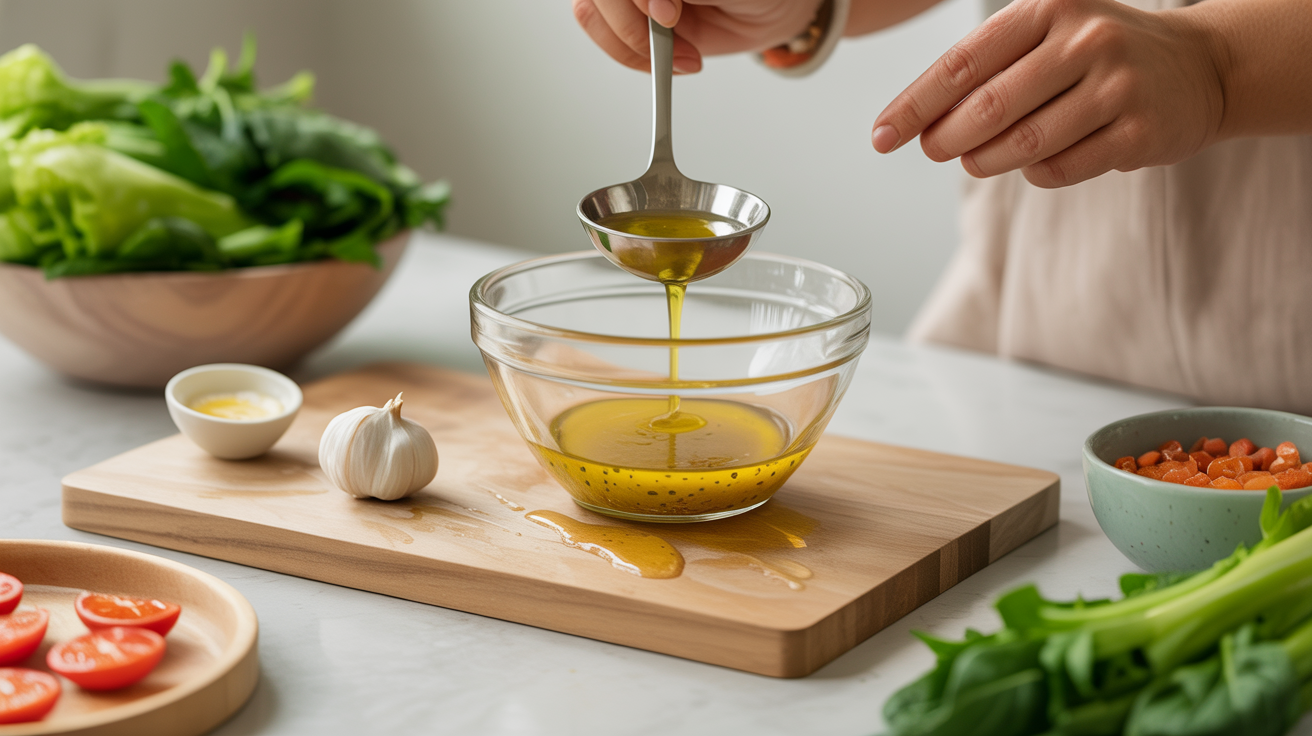
Oil and water-based liquids repel each other. Shake them together without anything else and they'll combine briefly, then separate within a minute. An emulsifier solves this: it's a molecule that bonds to both oil and water, bridging them so the mixture holds together.
Dijon mustard is the most practical emulsifier for everyday dressings. Mustard contains mucilage, a gum-like carbohydrate that coats tiny droplets of oil and keeps them suspended in the vinegar instead of pooling back together, though as food scientist Jessica Gavin explains, it doesn't hold as long as an egg-based emulsifier would. Even half a teaspoon (2 to 3 g) will help a standard 4-tablespoon batch hold together for 20 to 30 minutes, long enough for the salad to be dressed and served. Honey, finely grated garlic, and egg yolk can also emulsify, and each adds its own flavor in the process.
The Jar Method
The easiest technique for a small batch is to use a small jar with a tight lid. Add the acid, emulsifier, salt, and any other flavorings first, then pour in the oil. Seal the lid and shake hard for 15 to 20 seconds. You can see immediately whether the dressing has combined, and the jar doubles as storage.
Shake longer than you think you need to. The emulsion is still forming past the point where the dressing first looks uniform.
Whisking in a Bowl
For larger batches or when mixing directly in a salad bowl, whisk the acid and seasonings together first, then add the oil slowly. The first tablespoon or so should go in almost a drop at a time while you whisk constantly. Once you see the dressing start to look creamy and slightly opaque rather than clear and thin, you can add the remaining oil in a slow, steady stream.
The slow start is what matters. Adding too much oil at once before the emulsion forms means it never comes together properly.
The Variables That Shape the Flavor
Salt dissolved in the acid phase before you add the oil is the single change that makes the biggest difference in a homemade dressing. Salt doesn't distribute evenly through oil, so adding it early ensures every bite is seasoned rather than leaving pockets of blandness or unexpected sharpness.
Mustard
Beyond its emulsifying role, Dijon mustard adds sharpness and a faint background heat that fills out the flavor of the whole dressing. Whole-grain mustard gives a slightly milder, more textured result and looks attractive. Dry mustard powder works in a pinch but doesn't emulsify as well as prepared versions.
For a 4-tablespoon dressing, use between half a teaspoon and 1 full teaspoon (2 to 5 g). More than that and the dressing starts to read primarily as mustard rather than vinaigrette.
Garlic
Raw garlic pressed or grated very fine into the acid adds a punchy, assertive note. If you want something softer, let the minced garlic sit in the vinegar for 5 minutes before adding the oil. The acid slightly tempers the raw edge without cooking it. Roasted garlic, mashed into the acid phase, makes the dressing sweeter and fuller without any sharpness at all.
One thing worth noting: raw garlic gets more intense as it sits. A dressing that tastes balanced the day you make it may taste sharper the next morning, which is worth accounting for if you're making a batch to last the week.
Sweetener
A small amount of honey rounds out a dressing that feels too sharp or one-dimensional. Start with half a teaspoon (2 to 3 ml) and taste before adding more. Honey also has mild emulsifying properties, so it does double duty in a simple dressing. Maple syrup is a natural substitute, particularly in grain bowl dressings where its flavor complements earthy grains and roasted root vegetables.
Not every dressing needs sweetener. With good vinegar and proper salt, many vinaigrettes don't need it at all.
Herbs
Fresh herbs go in at the end, just before the dressing is used. Soft herbs like parsley, basil, chervil, and tarragon lose their brightness quickly once cut. Tougher herbs like thyme or finely chopped rosemary can go in earlier without much deterioration. If you're using dried herbs, add them to the acid at the start so they have time to rehydrate and bloom before the oil goes in. The difference in how fresh versus dried herbs perform in a dressing is noticeable: dried herbs added at the last minute taste dusty; dried herbs added early taste integrated.
For a standard 4-tablespoon dressing, 1 tablespoon (about 4 g) of loosely packed fresh chopped herbs is usually the right amount.
Tasting, Adjusting, and Getting Consistent
Taste the dressing on a leaf of the salad, not off a spoon. A dressing tasted on its own often reads sharper than it will on actual greens, because the greens dilute the acid slightly. The feedback you get from a dressed leaf is more accurate.
If the dressing tastes flat, it usually needs salt or a bit more acid, not more oil. If it tastes too sharp or harsh, it needs more oil, a pinch of sugar, or both. If it feels greasy or heavy, it needs more acid.
Writing down what worked helps. After a handful of batches you'll have a personal baseline. Adjustments become faster because you're correcting from a known reference point rather than starting from scratch.
Storing and Making Dressings Ahead
Most vinaigrettes keep for 5 to 7 days in the refrigerator, sealed in a jar. Dressings with fresh herbs or fresh lemon juice are better within 2 to 3 days. Garlic-heavy dressings mellow over time, which can work either way depending on what you want.
Separation in the fridge is normal and not a sign the dressing has gone bad. Leave it on the counter for 10 minutes or shake it vigorously for 20 seconds before using. Label the jar with the date. It takes a second and you'll never have to guess.
Frequently Asked Questions
What is the basic ratio for making salad dressing?
The standard vinaigrette ratio is 3 parts oil to 1 part acid. For a salad serving two, that's typically 3 tablespoons (45 ml) of oil and 1 tablespoon (15 ml) of vinegar or lemon juice. You can adjust it slightly based on the greens and your preference for tartness.
Why does my homemade dressing separate so fast?
Without an emulsifier, oil and acid will always separate within a minute or two. Adding half a teaspoon (2 to 3 g) of Dijon mustard to the acid before the oil gives the dressing something to bind around. Shaking or whisking thoroughly also helps the emulsion form more completely.
Can I make salad dressing without vinegar?
Yes. Fresh lemon juice or lime juice both work well as the acid component. Lemon juice makes a bright, clean dressing that suits herb-forward or seafood salads. It loses brightness faster than vinegar, so it's best for dressings you'll use the same day.
How long does homemade salad dressing keep in the fridge?
Most vinaigrettes keep for 5 to 7 days when stored in a sealed jar in the refrigerator. Dressings made with fresh herbs or fresh citrus juice are better within 2 to 3 days. Shake or stir before each use since separation in cold temperatures is normal.
Do I need to add mustard?
No, but it helps. Mustard acts as an emulsifier that keeps the dressing from separating as quickly, and it adds background flavor. If you don't want mustard flavor in the dressing, a small amount of honey or a paste made from finely grated garlic can provide some emulsifying effect. A dressing without any emulsifier will still taste good; it just needs to be shaken right before it goes on the salad.