Ingredients
Fresh vs Dried Herbs: When to Use Which
Swapping fresh herbs for dried (or the other way around) trips up a lot of cooks. The problem is not just the ratio, it is understanding that dried and fresh herbs are fundamentally different ingredients, and treating them the same way will get you flat braises and muddy sauces.
How dried herb conversion actually works
The standard ratio is 1 teaspoon dried for every 1 tablespoon fresh. The Kitchn's guide to substituting dried herbs explains why: fresh herbs are 80 to 90 percent water, so once that water evaporates, what's left is more concentrated flavor from the same essential oils. That is a 1:3 ratio, and it holds reasonably well for most sturdy herbs like oregano, thyme, and rosemary.
But the ratio is a starting point, not a rule. Dried herbs vary in potency depending on how long they have been sitting in your cabinet. Fresh herbs vary in intensity by season and growing conditions. You still have to taste.
| Fresh (1 tablespoon) | Dried equivalent | Notes |
|---|---|---|
| Basil | 1 tsp | Dried basil loses most of its brightness |
| Oregano | 1 tsp | Dries well; dried is often stronger |
| Thyme | 1 tsp | Dries very well; good swap |
| Rosemary | 1 tsp | Dries well; chop dried leaves finely |
| Tarragon | 1 tsp | Acceptable substitute |
| Parsley | 1 tsp | Dried parsley is nearly flavorless |
| Chives | not recommended | No dried substitute worth using |
| Cilantro | not recommended | Dried cilantro has almost no flavor |
| Dill | 1 tsp | Dried works in cooked dishes; not for garnish |
| Mint | 1 tsp | Works in cooked applications; not for salads |
When to adjust down
For dried herbs you have had less than six months, stick to the 1:3 ratio. For anything older, use slightly more, since dried herbs lose volatile oils over time. If the jar smells faint when you open it, the herb is past its prime and you may need to double the amount.
Which herbs dry well and which do not
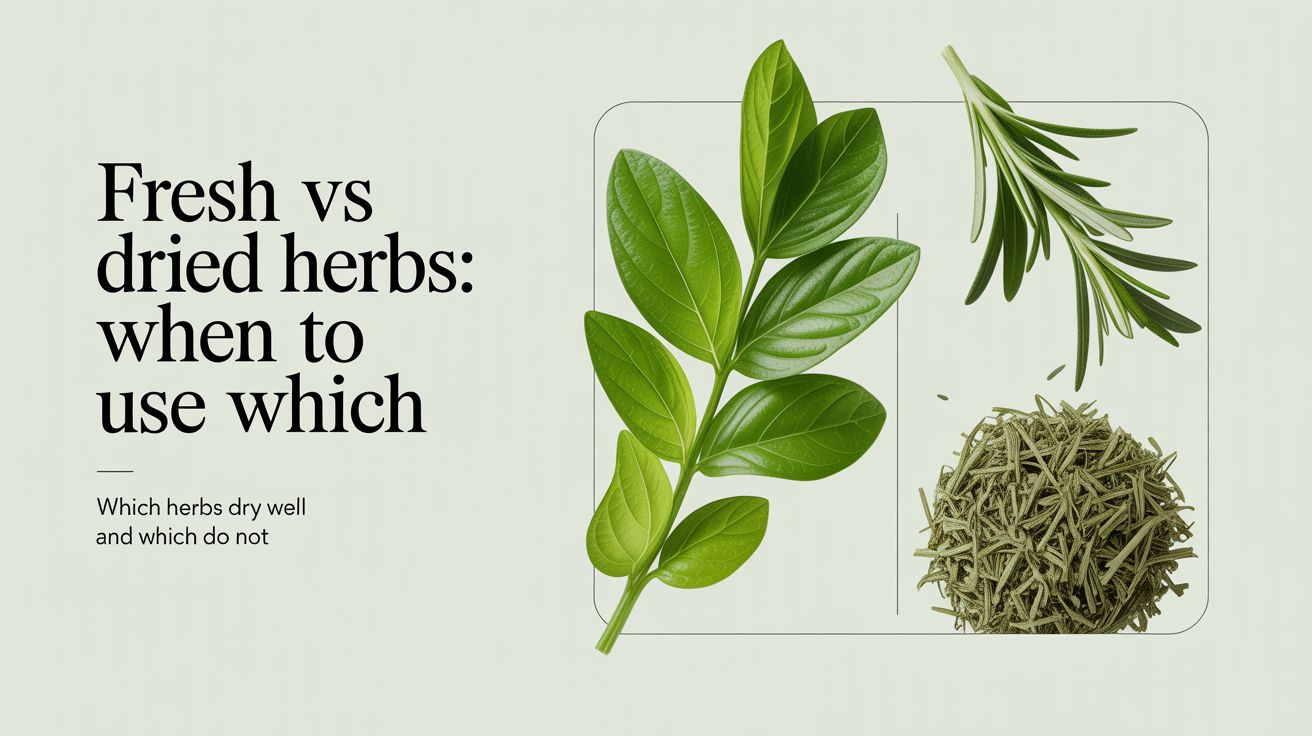
This is the part most recipes skip over. Not all herbs respond to drying the same way.
Woody herbs dry well. Thyme, rosemary, oregano, marjoram, and sage all have thick cell walls and oils that hold up when moisture is removed. These are the herbs where the dried version is genuinely usable, sometimes even preferable in long-cooked dishes.
Tender herbs mostly do not. Basil, parsley, cilantro, chives, and dill have delicate cell structures. When dried, they lose the volatile compounds that give them flavor. Dried parsley is a faded version of itself. Dried cilantro is close to useless. If a recipe calls for fresh parsley as a garnish, there is no dried substitute, so just skip it or find something else.
Basil is a partial exception. Dried basil still carries some earthy, slightly sweet flavor and works fine in tomato sauces that cook for 30 minutes or more. What it cannot do is replace fresh basil in a caprese salad or as a finishing herb on pasta.
Buying dried herbs worth using
The quality gap between fresh and dried narrows considerably if you buy better dried herbs. The small glass jars at the front of the grocery store spice aisle are usually old. Bulk spice shops or online herb suppliers turn over inventory faster. Rubbed sage, for example, from a good supplier has a completely different smell than the gray-green powder in a year-old supermarket jar.
When to add herbs during cooking
Timing is where most cooks go wrong regardless of whether they are using fresh or dried.
Dried herbs need heat and time to rehydrate and release their oils. Add them early, at the start of sauteing onions, or when you add garlic, or when the braise first comes to a simmer. They need at least 20 to 30 minutes of cooking to bloom properly. Dried thyme added to a soup five minutes before serving tastes dusty and raw.
Fresh herbs split into two categories:
- Sturdy fresh herbs (rosemary, thyme, sage, bay) can go in early and hold up to heat. Strip thyme leaves into a braise at the beginning; add rosemary to roasting vegetables from the start.
- Tender fresh herbs (basil, parsley, cilantro, chives, tarragon, dill) should go in at the very end, after the heat is off or just before serving. Heat kills their brightness fast. A handful of fresh basil stirred into tomato sauce right before plating gives you something dried basil never can.
The oil in your cooking matters here too. Dried herbs bloom particularly well in fat, which is why adding dried oregano to warm olive oil before you add anything else to the pan makes a real difference to the final flavor. It is the same reason good olive oil is worth using when cooking with dried herbs rather than a neutral oil.
Fresh herbs where dried simply does not work
Some applications only make sense with fresh.
Gremolata, the lemon-parsley-garlic condiment for osso buco, requires fresh parsley, since the whole point is raw brightness. Herb sauces like chimichurri, salsa verde, chermoula, and pesto are all built on fresh herbs. No dried version comes close.
Fresh dill on roasted salmon, fresh tarragon in a béarnaise, fresh mint in a grain salad, these are finishing herbs, used for fragrance as much as flavor. Dried versions would add bitterness without the aroma.
Chives are in their own category. There is no dried chive worth buying. If a recipe calls for chives and you do not have them, use the green tops of scallions instead.
Herb pastes and freezing
If you have fresh herbs that are about to turn, making a quick herb paste extends their life. Blend with enough olive oil to form a thick paste, then freeze in ice cube trays. This works especially well with basil, parsley, and cilantro. The freezing does soften the texture, so these pastes work in cooked applications but not as fresh garnishes.
Storage: fresh and dried
Fresh tender herbs (parsley, cilantro, basil, dill) last longest treated like cut flowers: trim the stems, stand them in a glass with an inch of water, cover loosely with a plastic bag, and refrigerate. Basil is the exception, it goes black in a cold fridge. Keep it at room temperature on the counter, stems in water.
Fresh woody herbs (thyme, rosemary, sage) wrapped loosely in a damp paper towel inside a bag will keep in the refrigerator for one to two weeks.
Dried herbs should go in airtight containers away from light and heat. Above the stove or near the oven is the worst possible place to store them. A cool cabinet or a drawer works much better. The same applies to finishing salt: heat and humidity degrade both.
The rule of thumb for dried herb shelf life is one year, but smell is a better test than the date. Open the jar and take a sniff. If you smell the herb clearly, it still has life. If you barely smell anything, replace it.
Frequently Asked Questions
Can I substitute dried herbs for fresh in cold dishes like salads or dips?
Generally no. Dried herbs have a concentrated, sometimes bitter flavor that does not soften the way it does with heat. In a yogurt dip or a salad dressing, dried herbs need time to rehydrate and mellow, at least 30 minutes of sitting in the dressing before serving. For green salads meant to be dressed and served immediately, only fresh herbs work.
How do I know when dried herbs are too old to use?
Open the jar and rub a pinch between your fingers. If the scent is strong and clear, the herb is still good. If you have to hold the jar under your nose and can barely smell it, the herb has lost most of its volatile oils. It will not harm your food but will not contribute much flavor either. Most dried herbs are past their prime after 12 to 18 months.
Does the type of dish change which herbs work dried vs fresh?
Yes, and dish time matters a lot. Long-cooked dishes, braises, soups, slow-roasted meats, are where dried herbs perform best because the extended cooking time rehydrates them and integrates their flavor. For quick-cooked dishes like stir-fries or seared fish, fresh herbs added at the end usually make more sense because the dish is not on heat long enough to cook out the harshness of dried herbs.
Are there dishes where using onions alongside herbs changes which form to use?
Indirectly, yes. When you are building a flavor base with aromatics like onions and garlic in fat before adding other ingredients, that is the ideal moment to add dried herbs. They bloom in the fat alongside the aromatics and have time to cook before anything else goes in. That sauteing step is why dried oregano in a tomato sauce tastes better than dried oregano added at the end.