Techniques
How to Sharpen a Chef's Knife (and Use It Safely)
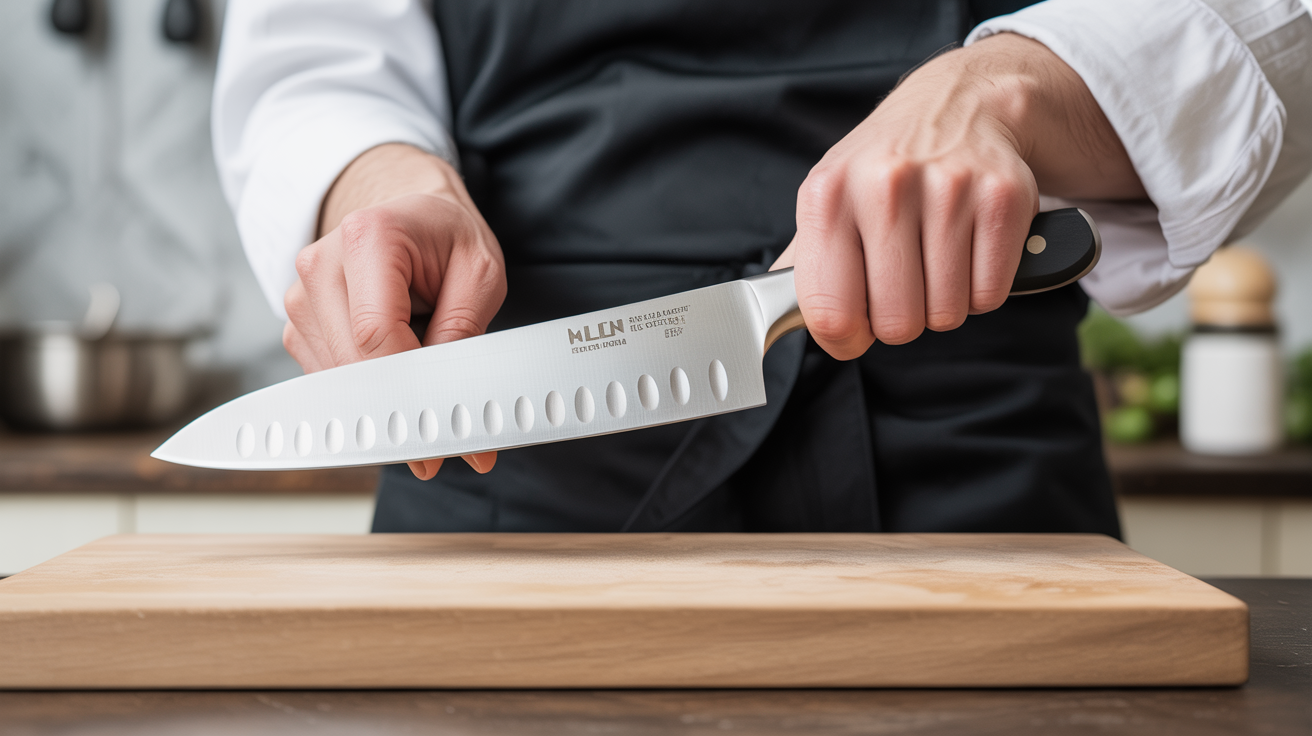
A dull knife is the one most likely to cut you. It skids off a tomato skin or rolls off an onion instead of biting in, and that slip is where accidents happen. A sharp knife goes where you point it.
Most home cooks never sharpen their knives, then wonder why cooking feels like a fight. The good news is that keeping an edge is simple once you separate two things people constantly confuse: honing and sharpening.
Snapshot
- Honing straightens a bent edge in seconds and removes no metal. Do it before most cooking sessions.
- Sharpening removes a thin layer of metal to create a genuinely new edge. Do it every few months, not every day.
- A 400 grit coarse stone reshapes a dull edge; a 1000 grit fine stone polishes it.
- 15 to 20 degrees per side is the standard angle for most Western chef's knives.
- The paper test tells you where you stand: a sharp knife slices cleanly, a dull one tears or slides.
Honing is not sharpening
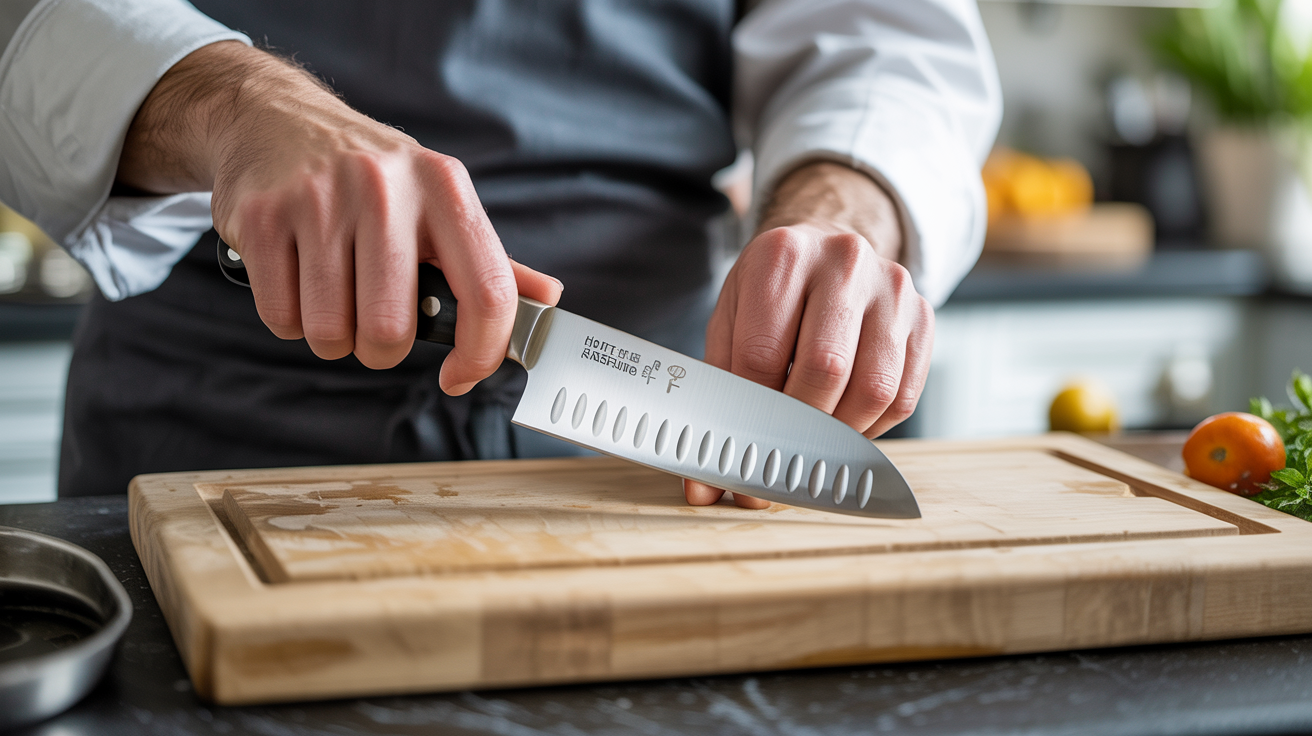
Honing realigns an edge that has bent slightly to one side from normal use. It does not remove metal, and it takes a few seconds. That is what the steel rod in most knife blocks is for, and you can do it before each cooking session.
Sharpening removes a small amount of metal to create a new edge. You do it occasionally, maybe a few times a year for a home cook, when honing no longer brings the edge back.
If your knife still feels dull right after honing, it is time to actually sharpen it.
Honing vs. sharpening at a glance
| Honing | Sharpening | |
|---|---|---|
| Removes metal | No | Yes, a thin layer |
| Frequency | Before most cooking sessions | Every few months |
| Tool | Honing steel | Whetstone or pull-through sharpener |
| Fixes | A bent, rolled edge | A genuinely dull edge |
A quick test for sharpness
Hold a sheet of printer paper by one edge and try to slice down through it. A sharp knife catches and cuts a clean line. A dull one tears or slides off. Do this test before and after you sharpen so you can tell whether you are making progress.
How to hone (do this often)
- Hold the steel vertically with its tip resting on a cutting board, point down.
- Set the heel of the blade near the top of the steel at about a 15 to 20 degree angle. A rough way to find the angle: hold the blade flat against the steel, then lift the spine about two matchbook-thicknesses.
- Draw the blade down and toward you so the whole edge passes over the steel, from heel to tip.
- Do the same on the other side. Five or six light passes per side is plenty. Pressure is not the point; the angle is.
How to sharpen with a whetstone
A whetstone gives you the most control and the best edge. It takes practice, but it is a skill you keep.
What you need
A combination stone with a coarse side around 400 grit and a fine side around 1000 grit covers most home needs. Soak it in water for the time the maker recommends, usually around ten minutes, until the bubbles stop.
The motion
Set the stone on a damp towel so it does not slide. Lay the blade on the coarse side at that same 15 to 20 degree angle. Push the knife away from you across the stone as if you were shaving a thin layer off the top, keeping the angle steady, then draw it back. Work the whole length of the edge, including the tip.
After several passes you will feel a slight rough lip on the opposite side of the edge, called a burr. That tells you the coarse grit has done its job on that side. Flip the knife and repeat until you feel the burr on the other side, then move to the fine grit and do lighter passes to polish the edge and remove the burr.
Rinse the blade, dry it, and run the paper test again.
If you would rather not use a stone
Pull-through sharpeners are faster and harder to mess up, though they remove more metal and give a less refined edge. For an everyday kitchen knife that is a fair trade. Whatever tool you choose, the rule is the same: a consistent angle beats hard pressure every time.
Keeping the edge longer
A few habits make sharpening a rare chore:
- Cut on wood or plastic, never glass, stone, or a countertop. Hard surfaces roll an edge fast.
- Hand-wash and dry your knife. The dishwasher bangs the edge against other items and the heat is hard on the handle.
- Store it in a block, on a magnetic strip, or in a blade guard, not loose in a drawer.
Once your knife is sharp, prep gets quicker and more pleasant. It pays off the moment you break down vegetables for something like one-pan chicken and vegetables. And if you are setting up the rest of your kitchen, a cast-iron pan is worth learning to care for too; here is how to season and care for a cast-iron skillet.
Frequently asked questions
How often should I sharpen my knife?
Hone before most cooking sessions. Sharpen when honing no longer restores the edge, which for a home cook is usually every few months.
What angle should I use?
Most Western chef's knives are happy around 15 to 20 degrees per side. Many Japanese knives are ground to a finer angle; check what the maker recommends.
Can I ruin a knife by sharpening it wrong?
You can scratch the blade or round the tip with sloppy technique, but you are unlikely to do real harm with a whetstone and patience. Go slow and keep the angle steady.
Is an electric sharpener worth it?
For convenience, yes. Just know it grinds away more metal than a stone, so your knife will wear down faster over the years.
Sources
- Knife sharpening, Wikipedia covers sharpening angles and the distinction between sharpening and honing in more depth.
- Sharpening stone, Wikipedia has background on grit sizes and the different types of whetstones available.