Ingredients
The Home Cook's Guide to Vinegar

Bottom Line
- White distilled is sharp and single-purpose. Save it for pickling and coleslaw.
- Apple cider vinegar is the most flexible bottle on the shelf and the easiest stand-in when you're out of a wine vinegar.
- Red wine vinegar has backbone, white wine vinegar is softer, and rice vinegar is the mildest of all six.
- Balsamic ranges from grocery-store wine vinegar with caramel color to true aged Modena product. They're not interchangeable when balsamic is the star.
- Most dishes need 1/2 to 2 teaspoons of vinegar to taste "brighter," not a splash of a quarter cup.
Most home cooks have two or three bottles of vinegar pushed to the back of a cabinet. Maybe white distilled, definitely something labeled "balsamic," possibly a half-used apple cider vinegar from a marinade recipe. What's less common is knowing what each one does and why it matters which you reach for.
This guide covers the six vinegars that show up most often in real home kitchens, what makes each one distinct, and where each one earns its place.
What Makes Vinegar Useful in Cooking
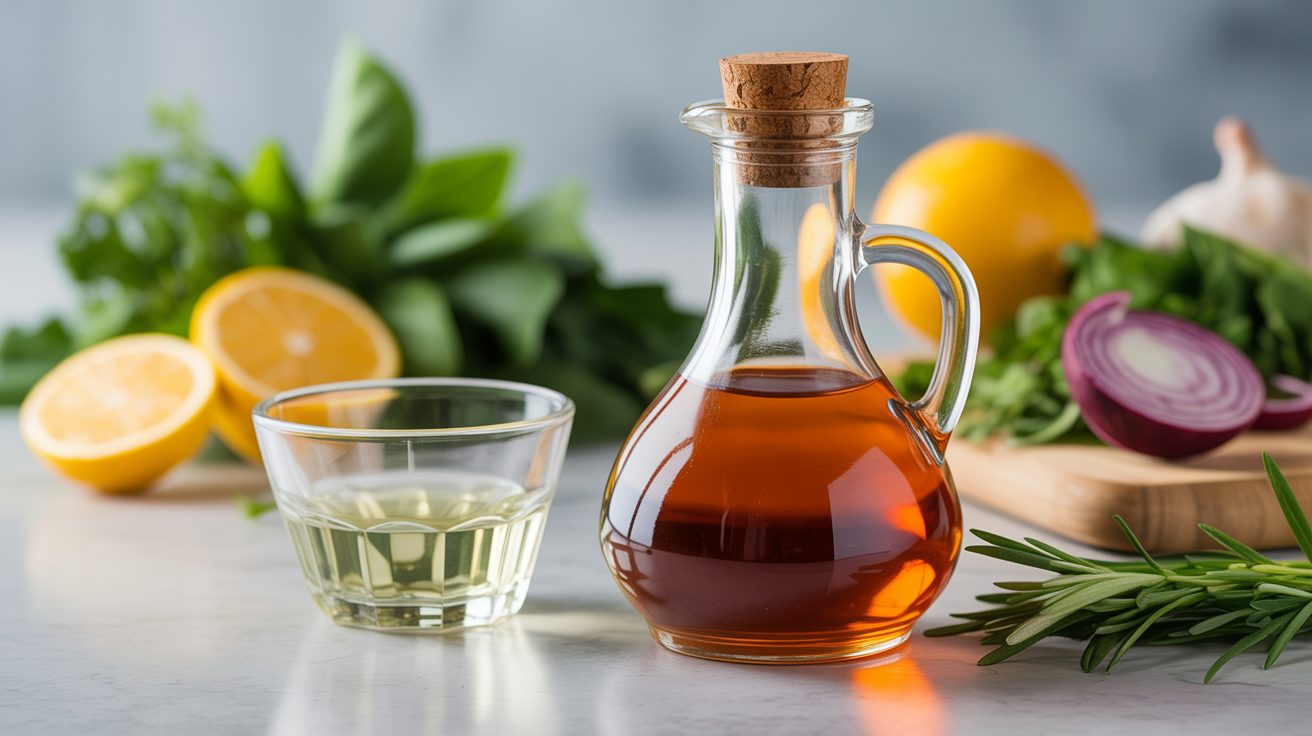
Vinegar is diluted acetic acid, typically ranging from 4% to 8% acidity. That acid does several things in the kitchen: it brightens flavors, cuts through richness, tenderizes proteins in marinades, and provides the sharp contrast that makes a dressing taste alive rather than flat. The flavor a vinegar carries beyond its acidity, whether fruity, mellow, or assertive, is what determines which dish it suits best.
| Vinegar | Typical acidity | Character | Reach for it when |
|---|---|---|---|
| White distilled | ~5% | Sharp, neutral | Pickling, coleslaw |
| Apple cider | 5-6% | Mildly fruity | Dressings, marinades, braises |
| Red wine | ~6% | Bold, slightly tannic | Vinaigrettes, red meat marinades |
| White wine | ~6% | Soft, clean | Pan sauces, herb vinaigrettes |
| Rice | 4-4.5% | Gentle, faintly sweet | Sushi rice, Asian slaws |
| Balsamic | 4-5% | Sweet, syrupy | Reductions, fruit, drizzling |
White Distilled Vinegar: Sharp and Single-Purpose
White distilled vinegar is made from grain alcohol and typically sits at 5% acidity. The flavor is harsh and one-dimensional. That's not an insult. It's exactly what makes it the right choice for certain jobs.
Where White Distilled Works
Pickling is its strongest suit. The neutral flavor keeps the pickled vegetables front and center without adding a fruity or winey note that might clash. A basic quick-pickle brine: combine 1 cup white distilled vinegar, 1 cup water, 2 teaspoons kosher salt, and 1 tablespoon sugar. Heat to 140°F (60°C), pour over sliced cucumbers or thinly cut red onions, and refrigerate for at least 30 minutes before serving.
In coleslaw dressings, 1 to 2 teaspoons adds the bite that balances mayonnaise without making the slaw taste sour. That's about the outer limit of its culinary usefulness. It doesn't belong in vinaigrettes, pan sauces, or any preparation where flavor nuance matters. The sharp edges have nowhere to soften.
Apple Cider Vinegar: The Most Flexible Bottle on the Shelf
Apple cider vinegar is made from fermented apple juice, and the apple origin comes through clearly. It's mildly fruity, a little sweet, and just sharp enough to function as an acid without dominating the dish. Acidity usually falls between 5% and 6%.
This is the one vinegar that does the most jobs. It works in salad dressings, marinades, braises, slaws, and sauces. A tablespoon stirred into braised cabbage or collard greens at the end of cooking brightens the whole pot without making it taste aggressively of vinegar.
In marinades for chicken or pork, 2 tablespoons per pound of meat adds both flavor and gentle tenderizing. Going higher than that backfires. Too much acid makes protein mushy rather than tender.
Apple cider vinegar is also the easiest substitute when a recipe calls for a wine vinegar and you don't have one. The match isn't perfect, but it's close enough in most contexts.
The Wine Vinegars
Red wine vinegar and white wine vinegar both come from fermented wine. Each carries grape characteristics, which gives them more complexity than white distilled but less sweetness than balsamic.
Red Wine Vinegar
Red wine vinegar is bold and slightly tannic. It works well in vinaigrettes where you want some backbone, in marinades for red meat, and in sauces where assertive acid makes sense. A classic French vinaigrette: 1 tablespoon red wine vinegar, 3 tablespoons good olive oil (the type of oil you use here matters; see types of olive oil for how to choose), a pinch of salt, a pinch of black pepper, and half a teaspoon of Dijon mustard. Shake or whisk until emulsified.
Red wine vinegar also does good work in Greek-style salads and Mediterranean grain bowls. It has enough character to hold its own against strong flavors like olives, feta, and roasted red peppers.
White Wine Vinegar
White wine vinegar is softer. Use it when you want acid without the color or tannin that red wine vinegar brings. Delicate pan sauces, butter sauces, and chicken dishes all benefit from a splash of white wine vinegar. A straightforward pan sauce for sautéed chicken (the full technique is covered in how to make a pan sauce) often uses 2 tablespoons of white wine vinegar to deglaze the fond before adding stock.
It also suits herb-forward vinaigrettes, think tarragon or chive, where red wine vinegar would dominate the delicate herbs and add unwanted color.
Rice Vinegar and Balsamic: Two Ends of the Spectrum
These two vinegars sit at opposite ends of the flavor range. Rice vinegar is gentle and barely sweet; balsamic is thick, syrupy, and rich.
Rice Vinegar
Rice vinegar is made from fermented rice and typically runs 4% to 4.5% acidity, significantly milder than other vinegars. The flavor is clean, lightly sweet, and almost neutral. This makes it ideal for seasoning sushi rice, dressing Asian-style slaws and noodle salads, and building dipping sauces.
Seasoned rice vinegar (which has sugar and salt already added) is the standard for sushi rice. Unseasoned works better when you're controlling your own seasoning. A simple slaw dressing: 3 tablespoons rice vinegar, 1 tablespoon sesame oil, 1 teaspoon sugar, a pinch of salt. Toss with shredded napa cabbage and carrots.
Because it's so mild, rice vinegar is easy to overuse. Taste as you go and stop when the flavor brightens rather than when it tastes acidic.
Balsamic Vinegar
Authentic balsamic is made from cooked grape must (not wine) and aged for years. The result is thick, dark, and sweet, with a depth that cheap imitations made from wine vinegar and caramel color can't replicate. Acidity is lower, usually 4% to 5%, but the concentration of flavor compensates.
Balsamic earns its place where richness adds something: drizzled over strawberries, over fresh mozzarella and tomatoes, or reduced into a glaze. To make a balsamic reduction, pour 1/2 cup into a small saucepan over medium-low heat (roughly 300°F/150°C at the pan surface) and simmer until it coats a spoon, about 8 to 10 minutes. The reduction stores well at room temperature for weeks and works on roasted vegetables, grilled chicken, or vanilla ice cream.
Avoid cooking balsamic into long braises in large amounts. The sweetness becomes cloying. A tablespoon stirred in during the last few minutes of cooking is more useful than a quarter cup added at the start.
Using Acid to Season Food
The most practical thing to understand about vinegar is that small amounts do more than large ones. Most dishes need 1/2 to 2 teaspoons to wake up the flavors, not tablespoons. If a dish tastes flat, add acid in 1/4-teaspoon increments, stir, and taste before adding more.
Vinegar works similarly to salt in this regard: you're looking for the point where the food tastes more like itself, not where it tastes like vinegar. This applies equally to finishing a pot of soup, brightening a pan sauce, or adjusting a dressing that isn't quite hitting the right note.
Frequently Asked Questions
Can I substitute apple cider vinegar for white wine vinegar?
Yes, in most cases. Apple cider vinegar is slightly fruitier and can add a faint apple note, but in dressings, marinades, and cooked sauces, the difference is small. Use the same amount the recipe specifies. If the dish is very delicately flavored (a butter sauce, for instance), the substitution may be noticeable.
Why does my homemade vinaigrette taste too sharp?
Two common causes: either the vinegar-to-oil ratio is off, or the vinegar itself is low quality. A standard ratio is 1 part vinegar to 3 parts oil. If you're already there and it still stings, add a small pinch of sugar and a bit more oil. Letting the vinaigrette rest for 10 minutes at room temperature before serving also softens the edge slightly, giving the acid time to mellow against the oil.
Should vinegar go in at the beginning or end of cooking?
It depends on the effect you want. Vinegar added early cooks off its sharper volatile notes and becomes a background flavor. Vinegar added at the end stays bright and forward. For finishing applications (a splash into pasta, a drizzle over roasted vegetables) add it in the last 30 to 60 seconds. For braises and long-cooked dishes, a small amount at both stages gives you depth plus brightness at once.
How long does opened vinegar last?
Practically indefinitely. Vinegar is self-preserving because of its acidity. Quality can drop over time (balsamic may lose some complexity after several years open), but vinegar doesn't spoil the way dairy or oils do. Store bottles at room temperature, away from direct sunlight, and the contents will be fine for years.
What's the actual difference between cheap and expensive balsamic?
A meaningful one. Traditional balsamic from Modena, labeled with an official consortium seal, is made only from cooked grape must and aged at least 12 years. Most grocery store "balsamic vinegar of Modena" only needs to rest in wood for 60 days and can legally include wine vinegar and a small amount of caramel coloring. Both have their uses, but they aren't interchangeable when balsamic is the star of the dish. For cooking and reducing into glazes, grocery store balsamic works fine. For drizzling directly over food at the table, the aged version earns its price.
Sources
- Wikipedia: Vinegar covers acetic acid content ranges and how vinegar's double fermentation process works across different source materials.
- Wikipedia: Balsamic Vinegar of Modena breaks down the legal difference between everyday balsamic and the 12-year aged traditional product.