Techniques
How to Make a Pan Sauce From Fond
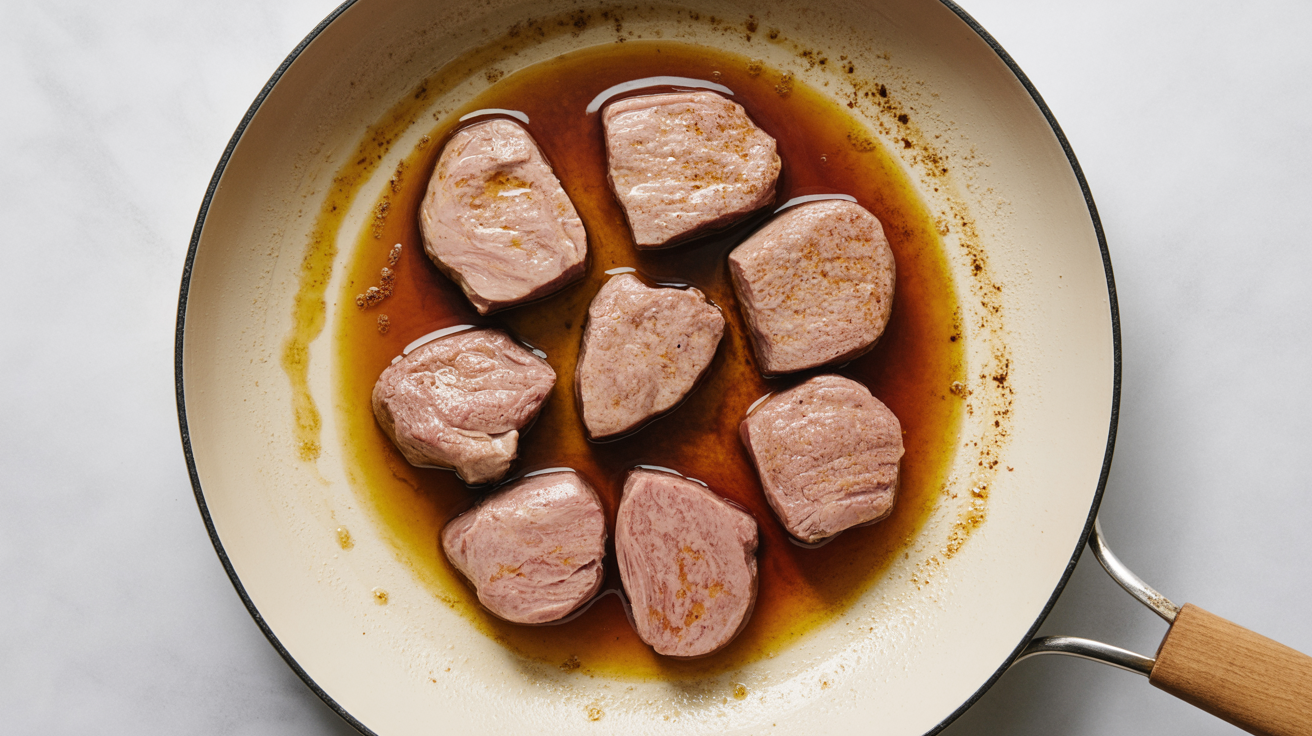
Pan sauces take about four minutes and use ingredients already in your kitchen. The short version: after searing meat, you pour liquid into the hot pan, scrape up the browned bits, reduce until syrupy, then whisk in cold butter. That's it. Everything else is refinement.
If you want more control over that process, or you've ended up with something thin and greasy instead of glossy and coating, here's what's actually happening in the pan.
What fond is and why it matters
Fond is the layer of browned protein and sugars stuck to the bottom of your pan after searing meat. It looks like you burned something. You didn't. Those bits carry most of the flavor in what will become your sauce.
The Maillard reaction (the same browning process responsible for a good crust on a seared steak) is a reaction between amino acids and sugars that, under heat, keeps rearranging into new molecules. Modernist Cuisine notes that this cascade produces literally hundreds of flavor and aroma compounds, which is why the browning matters more than the color alone. When you dissolve that fond in liquid, those compounds go straight into your sauce. That's why a pan sauce made from a well-seared piece of chicken is better than one from a sad, pale piece that steamed in its own moisture.
If you burned the fond (actual black char, acrid smell), wipe the pan out and start with fresh fat. Scorched fond makes a bitter sauce.
Choosing your deglazing liquid
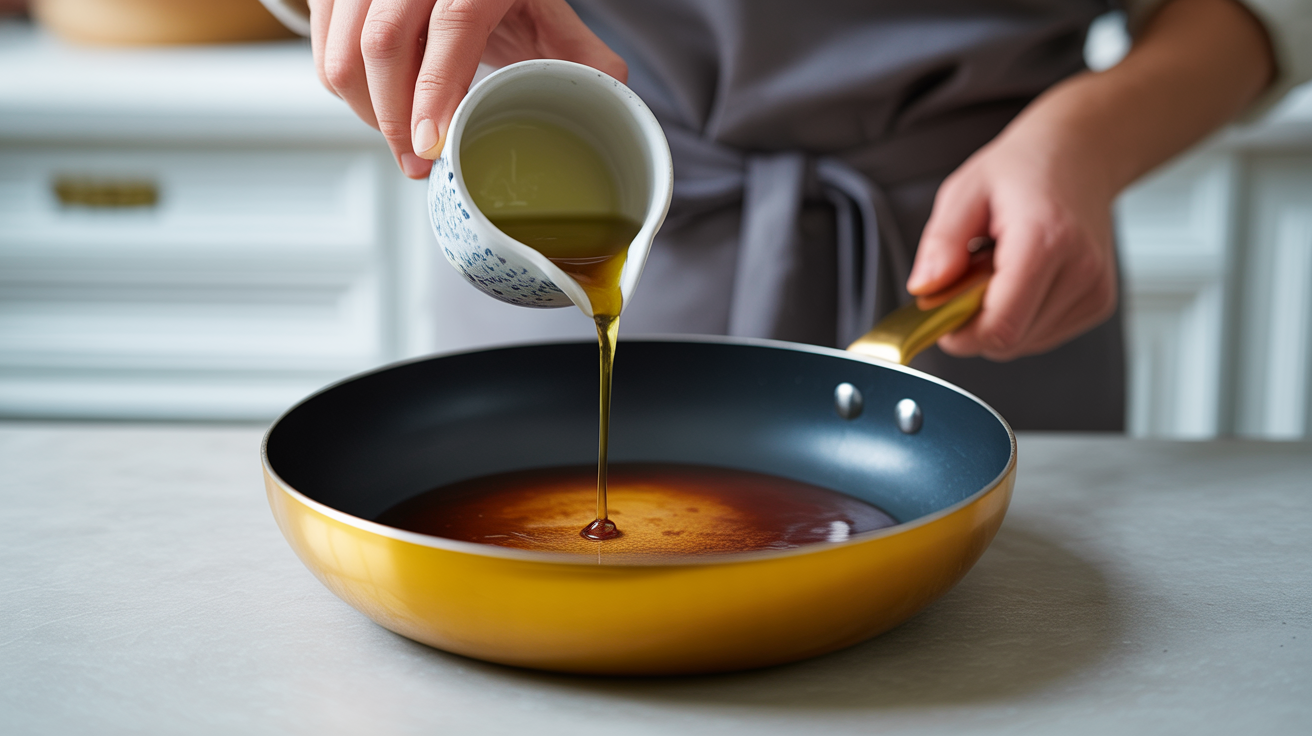
The deglazing liquid dissolves the fond and forms the base of the sauce. Almost anything liquid works, but some choices make more sense than others depending on what you're cooking.
Wine
Dry white wine (sauvignon blanc, pinot grigio) works with chicken, pork, and fish. Dry red wine (something you'd drink, not cooking wine) works with beef and lamb. A splash of sherry or Madeira adds depth with mushrooms or duck. Plan on about 1/2 cup. It cooks down significantly, so the wine flavor concentrates. Use something that tastes okay on its own.
Stock
Chicken stock is the most versatile option. Beef stock with beef, vegetable stock if you want a lighter sauce. Stock gives body without adding acidity, so it's forgiving if your fond is on the darker side. Use 1/2 to 3/4 cup.
Brandy or spirits
A small pour (2 tablespoons) of cognac or bourbon before the stock adds a layer of complexity you can't get otherwise. Add it first, let it reduce by half before the stock goes in.
Combinations
Wine plus stock is the most common combination in restaurant kitchens. The wine adds acidity and brightness; the stock adds body. A ratio of 1/4 cup wine to 1/2 cup stock gives you something balanced.
The repeatable ratio
This is the pan sauce formula that works regardless of what protein you're cooking.
| Component | Amount | Notes |
|---|---|---|
| Aromatics (shallot, garlic) | 1 small shallot or 1 clove | Soften in the pan fat before deglazing |
| Deglazing liquid (wine, spirits) | 1/4 cup | Add first, reduce by half |
| Stock | 1/2 cup | Add after wine reduces |
| Cold butter | 2 tablespoons | Whisk in off heat at the end |
| Salt | To taste | Adjust at the end only |
This makes enough sauce for two portions. Double everything for four. The ratio scales cleanly.
How to make pan sauce: step by step
The meat is rested and off the pan. This is where the sauce starts.
- Pour off most of the fat. Leave about one tablespoon in the pan. If there's no fat left (happens with lean cuts), add a small knob of butter.
- Soften the aromatics. Add a minced shallot over medium heat. Cook for 60 to 90 seconds until it softens and turns translucent. Don't brown it.
- Deglaze. Pour in your wine or spirits. It will hiss and steam. Use a wooden spoon or spatula to scrape the fond off the bottom of the pan. This step is what gives pan sauces their flavor. Don't rush past it.
- Reduce the wine. Let it cook until the liquid is almost gone and the pan looks syrupy, about 2 minutes.
- Add stock. Pour in the stock and increase the heat slightly. Reduce until the sauce coats the back of a spoon, another 2 to 3 minutes. It should look glossy and move slowly when you tilt the pan.
- Mount with butter. Pull the pan off the heat. Add cold butter cut into small pieces and whisk constantly as it melts. The sauce should thicken slightly and turn glossy. If the pan is too hot, the butter breaks into grease instead of emulsifying, so pull the pan off the heat before you add it.
- Season and taste. Add salt only now. The sauce has been reducing, so what tasted undersalted earlier may be right by now. A small squeeze of lemon lifts the whole thing if it tastes flat.
What "coating the back of a spoon" actually means
Dip a spoon into the sauce, then run your finger through the sauce on the back of the spoon. If the line holds without the sauce running back through it, you're there. If the sauce floods back immediately, keep reducing. Two more minutes usually does it.
Mounting with butter: what goes wrong
Butter mounting (also called monter au beurre) is the step most home cooks skip or botch. The goal is an emulsion, tiny fat droplets suspended in the liquid, that gives the sauce its glossy, clingy texture.
The butter must be cold. Room-temperature butter breaks immediately. Keep a stick in the fridge and cut pieces directly from it.
The pan must be off the heat or on very low. If the sauce is boiling when you add butter, the emulsion breaks and you get greasy liquid with butter pools.
Whisk constantly as the butter goes in. You're building the emulsion with mechanical action. Stop whisking and the emulsion can break.
If the sauce breaks anyway, separating into a greasy liquid, you can sometimes rescue it. Move the pan to a cold burner, add a tablespoon of cold water, and whisk vigorously. It works about half the time.
Flavor variations
Once you have the base method down, the pan sauce recipe adapts to whatever you have.
With mushrooms: Saute thinly sliced cremini mushrooms in the pan fat before the shallots. They'll release liquid; let that cook off before you add the aromatics.
With fresh herbs: Add a sprig of thyme or rosemary during the stock reduction and pull it out before mounting the butter. Finish with fresh parsley or chives after the butter goes in.
With cream: For a richer sauce, add 2 tablespoons of heavy cream after the stock reduces and before the butter. Let it reduce by half, then proceed with the butter.
With mustard: Whisk in a teaspoon of Dijon with the butter at the end. Works especially well with pork and chicken.
This same logic applies beyond meat. A pan sauce made from the drippings after roasting vegetables at high heat picks up the same caramelized fond from the roasting pan. Deglaze with white wine and stock the same way.
What to serve it with
Pan sauces are best with anything that was seared or roasted and rested. Steak is the obvious pairing. Chicken thighs, pork chops, and duck breast all work well.
For sides, something starchy makes sense because the sauce needs something to land on. Plain steamed rice works well because it doesn't compete with the sauce. Mashed potatoes or egg noodles are the other classic options.
FAQ
Can I make a pan sauce without wine?
Yes. Skip the wine and use 3/4 cup stock total. You'll lose some brightness and acidity, so compensate with a squeeze of lemon juice or a small splash of white wine vinegar at the very end. The sauce will be slightly less complex but still good.
Why does my pan sauce taste thin and watery?
It hasn't reduced enough. Keep the heat at medium-high and give it another 2 minutes. The sauce should reduce by about half from when you added the stock. If it's still thin after that, the stock may have been diluted. Homemade stock reduces to a thicker consistency than most cartons.
Can I make pan sauce ahead of time?
Sorta. You can reduce the wine and stock ahead and refrigerate the base. Reheat gently and mount the butter just before serving. Butter-mounted sauces separate as they cool, so finish the sauce right before you plate.
My sauce is too salty. Can I fix it?
If you seasoned as you went, probably not easily. The main fix is dilution: add more unsalted stock and reduce again. This takes time and changes the texture. The better approach is to season only at the end, after all the reduction is done.
What pan works best for pan sauces?
Stainless steel or carbon steel. Both develop good fond and don't react with acidic deglazing liquids. Nonstick pans don't develop much fond (the coating prevents sticking, which is the whole point of fond), so pan sauces from nonstick are usually flat. Cast iron works but holds heat so aggressively that the sauce can over-reduce fast, so watch it closely.