Kitchen Equipment
Why a Meat Thermometer Is the Most Underrated Kitchen Tool
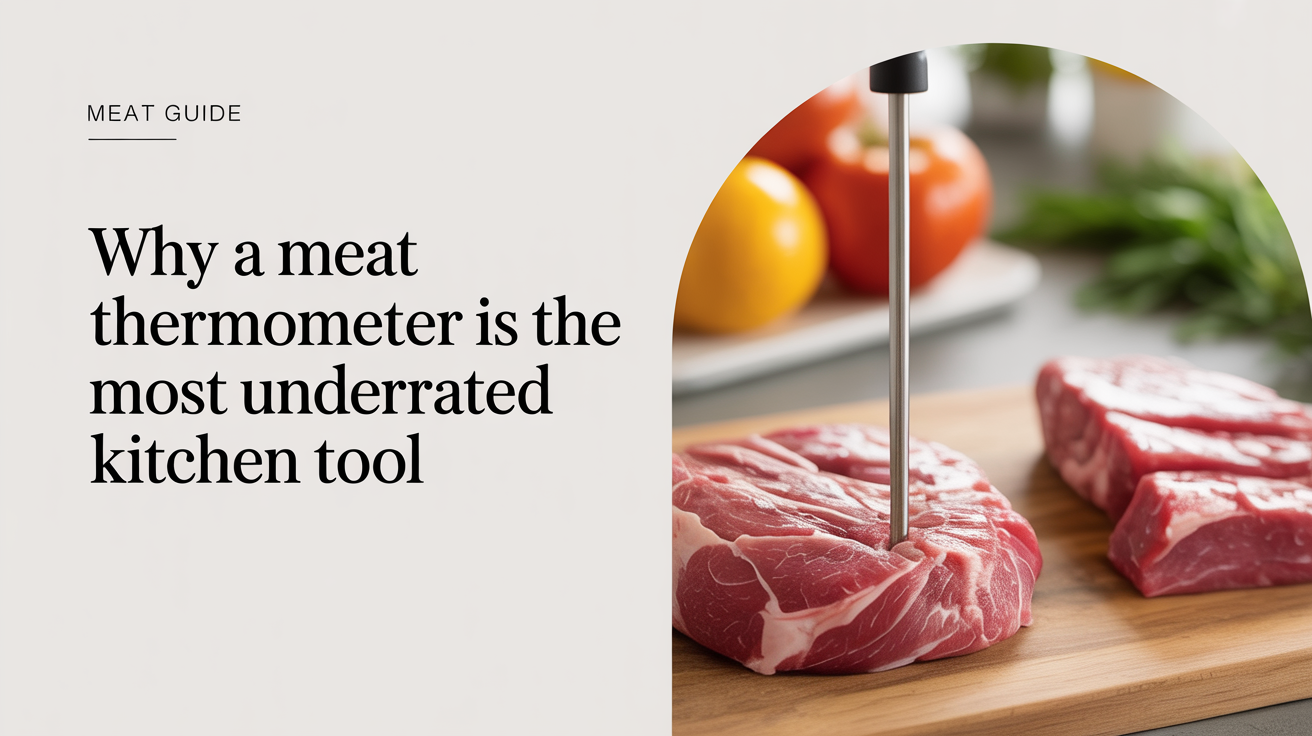
Most home cooks own at least one pan they barely use, a gadget that seemed essential at the store and never made it past the back of a drawer. A meat thermometer is the opposite situation: it costs less than almost anything else in the kitchen, and yet most home cooks either skip it entirely or pull it out only once a year for a holiday turkey.
That's a gap worth closing. A thermometer doesn't just keep food safe. It reliably tells you when a piece of chicken is done without drying it out, confirms a pork chop is cooked through without guessing, and stops you from slicing into a steak too early. Fingers, timers, and the poke test all have their place, but none of them measures the one thing that actually matters: the temperature at the center of the food.
Why Guessing Gets You Into Trouble
The cut-and-peek method works, sort of. You slice the thickest part of a piece of chicken, look for clear juices and no pink, and call it done. The problem is that by the time you can see those signs, you've already let heat and moisture escape. The next few minutes of resting can't undo a bird that's been cooked past 180°F (82°C).
Timing alone is similarly unreliable. A bone-in chicken thigh at 375°F (190°C) might take 35 minutes or 50 minutes depending on its starting temperature, how crowded the pan is, and the actual heat output of your oven (most home ovens run 15 to 25°F off from their dial setting). A thermometer removes those variables.
For food safety, the stakes are concrete. Undercooking poultry, pork, or ground meat creates real risk. Overcooking is less dangerous but still costly: a dry, rubbery chicken breast that was pulled at 175°F (79°C) instead of 165°F (74°C) is a waste of a good bird.
Safe Internal Temperatures for Common Proteins
These are the minimum internal temperatures recommended by University of Maine Cooperative Extension's food safety guide, which mirrors the federal USDA standard. Pull the food off heat a few degrees early to account for carryover (more on that below).
Poultry
Chicken and turkey need to reach 165°F (74°C) at the thickest part, away from bone. This applies to whole birds, bone-in pieces, and ground poultry alike. Dark meat (thighs and drumsticks) is more forgiving and stays juicy even at 170 to 175°F (77 to 79°C), so don't panic if thighs run a little higher.
Beef and Lamb
Steaks, chops, and roasts from whole muscle cuts are safe at 145°F (63°C) with a three-minute rest. In practice, most cooks aim lower by preference:
- Rare: 125°F (52°C)
- Medium-rare: 130 to 135°F (54 to 57°C)
- Medium: 140 to 145°F (60 to 63°C)
- Well done: 160°F (71°C) and above
Ground beef is a different story. Because grinding spreads any surface bacteria throughout the meat, ground beef needs 160°F (71°C) all the way through. No pink test substitutes for a thermometer here.
Pork
Pork chops, roasts, and tenderloin are done at 145°F (63°C) with a three-minute rest. At that temperature, pork is still slightly pink in the center and noticeably juicier than the well-done pork many people grew up eating. Ground pork, like ground beef, needs to hit 160°F (71°C).
Fish and Seafood
Fish is technically done at 145°F (63°C), though many cooks prefer salmon at 125 to 130°F (52 to 54°C) for a more tender, silkier texture. Shrimp and scallops are usually cooked by visual cues (color change, opacity) rather than temperature, but 120°F (49°C) is a reasonable target for shrimp if you want a reference point.
What Carryover Cooking Actually Means
Pulling a steak off the skillet or a chicken out of the oven doesn't stop the cooking. The outer layers of the food stay hot and continue driving heat toward the center for several minutes after the heat source is removed. This rise, called carryover cooking, typically adds 5 to 10°F (3 to 6°C) to the final internal temperature.
For a thick steak aimed at medium-rare (130 to 135°F / 54 to 57°C), that means pulling it off the pan at around 125°F (52°C) and letting it rest on a cutting board for 5 to 8 minutes. A whole roast chicken carries over more dramatically, sometimes climbing 10°F (6°C) or more after it comes out of the oven, so pulling it at 155 to 158°F (68 to 70°C) and resting it tented with foil for 10 minutes lands it right at the 165°F (74°C) target.
The rest period matters for texture, not just temperature. Resting lets muscle fibers relax and reabsorb some of the juices that tightened during cooking. Slice too early and those juices run straight onto the board.
If you've been cutting into a steak or one-pan chicken dish the moment it comes off heat and wondering why it always seems dry, carryover cooking and skipped resting time are likely the main reasons.
Instant-Read vs. Leave-In Probe: Which to Buy First
There are two main styles of kitchen thermometer, and they serve different jobs.
Instant-Read Thermometers
An instant-read thermometer gives you a temperature reading in 2 to 5 seconds. You insert the probe, read the number, and pull it out. These are the more versatile of the two types, useful for checking a steak mid-sear, confirming a chicken thigh is done, testing whether a loaf of bread has finished baking (center of a finished loaf typically reads 190 to 200°F / 88 to 93°C), or even checking candy and oil temperatures.
The main limitation is that you need to open the oven or lift the lid every time you want a reading. For a quick weeknight dinner, this is no inconvenience. For a long roast or a whole turkey, repeatedly opening the oven costs heat and adds time.
Buy this first. A reliable instant-read costs between $15 and $35. Models with a folding probe and digital display are easy to store. Look for one rated to read in 3 seconds or less.
Leave-In Probe Thermometers
A leave-in probe thermometer stays in the food throughout cooking. A heat-resistant cable connects the probe to a display unit that sits outside the oven or grill, so you can monitor the internal temperature without opening anything.
These shine for large cuts: a beef rib roast, a whole chicken, a pork shoulder on the grill. You set a target temperature, the display (or a connected app) alerts you when the food gets close, and you don't have to hover. Many models can be set to alarm at a pullout temperature that accounts for carryover.
The tradeoff is that a leave-in probe only monitors one spot. You still want to verify with an instant-read at a couple of other points in a large bird before declaring it done.
Buy this second, once you've established the habit of using a thermometer at all.
Getting an Accurate Reading
The thermometer probe needs to be in the right spot to give you a useful number. For most proteins, that means the thickest part of the meat, away from bone and fat. Bone conducts heat differently than muscle and will skew the reading high; fat pockets can be cooler than the surrounding meat.
For a whole chicken or turkey, check at the thickest part of the thigh, not the breast. The thigh takes longer to cook, so it's the indicator muscle. If the thigh reads 165°F (74°C), the breast is safely past that.
For a steak, insert the probe horizontally through the side of the cut so it reaches the center. Coming in from the top gives you a shorter probe path and a less accurate reading for thicker cuts.
After checking raw or partially cooked meat, wipe the probe with a paper towel or rinse it before measuring anything else.
Frequently Asked Questions
What's the difference between a probe thermometer and an instant-read thermometer?
An instant-read is handheld and gives a fast reading you take manually at any point during cooking. A probe thermometer has a heat-resistant cable and a display unit, so the probe stays in the food while it cooks and you can monitor the temperature without opening the oven. Instant-reads are more versatile for everyday cooking; leave-in probes are better for long roasts and grill sessions.
Does carryover cooking happen with chicken too?
Yes. A whole roast chicken can climb 8 to 10°F (4 to 6°C) after coming out of the oven, which is why pulling it at 155 to 158°F (68 to 70°C) and resting it for 10 minutes usually lands it right at the safe 165°F (74°C) mark. Bone-in chicken pieces carry over less dramatically, but a 3 to 5-minute rest is still worth doing.
Can I use a meat thermometer for things other than meat?
Absolutely. An instant-read thermometer is useful for checking oil temperature before frying (around 350°F / 175°C for most batters), testing bread doneness (190 to 200°F / 88 to 93°C at the center of most loaves), making caramel or candy (240°F / 115°C for soft ball stage), and even checking whether a cake is fully baked. The thermometer doesn't know what food it's reading; it just measures temperature.
Where exactly should I insert the thermometer for a steak?
Insert the probe through the side of the steak, aiming for the geometric center of the cut. This gives you a longer path through the meat, which is more accurate than stabbing straight down from the top. For a thick steak, you're looking for the coolest point, which will be at the center. If you're following a recipe like searing a steak and want medium-rare, pull it when the center reads 125°F (52°C) and let it rest before slicing.
How do I keep my thermometer accurate over time?
Most digital instant-read thermometers are factory calibrated and don't require adjustment. You can verify accuracy by inserting the probe into a glass of ice water (should read 32°F / 0°C) or into boiling water at sea level (212°F / 100°C, adjusted slightly for altitude). If the reading is off by more than 2°F (1°C), check the manual for a recalibration button; many models have one. Store the thermometer with the probe protected so the tip doesn't bend or get damaged.