Meal Prep
Budget Meal Prep That Doesn't Feel Like a Compromise
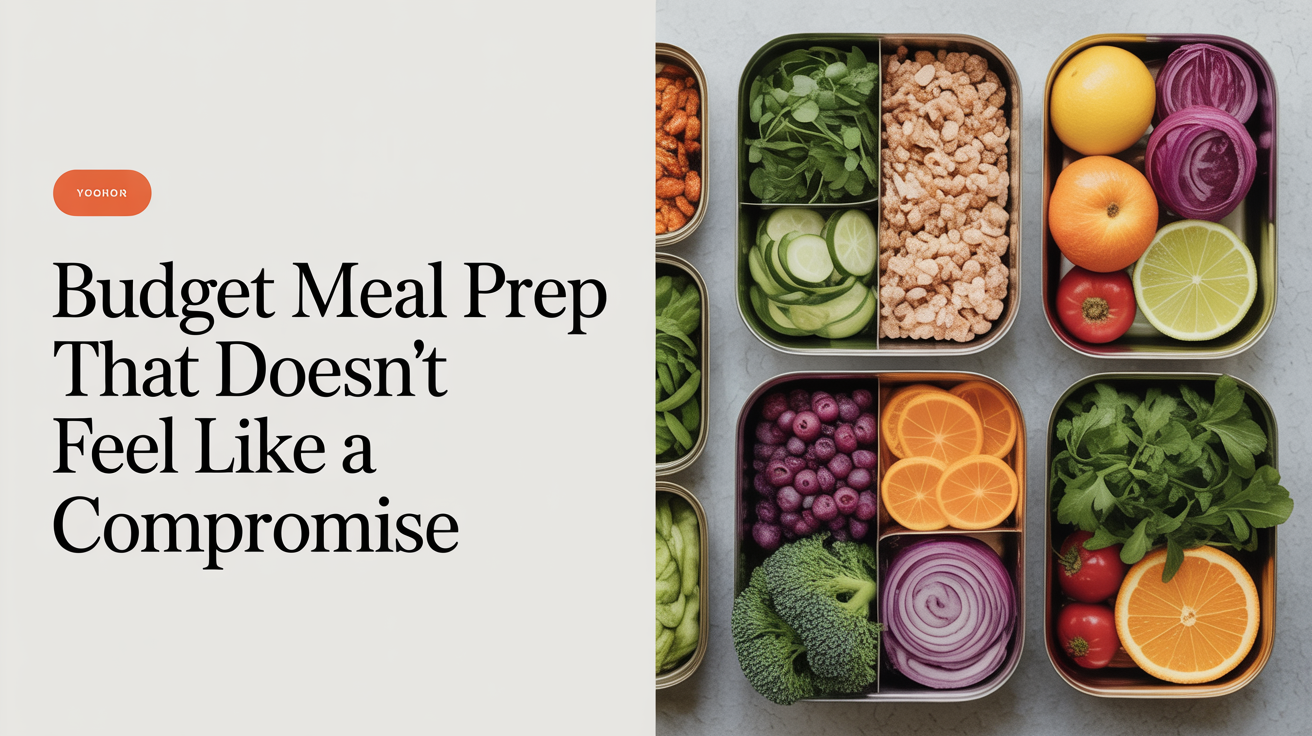
Budget cooking runs into trouble when people try to buy a little of everything. A more reliable approach is to pick five or six ingredients with real nutritional range, buy them in quantities that make sense, and let the cooking method carry most of the variety. That keeps the grocery bill predictable and the week's meals from blurring together.
The Five Ingredients Worth Centering Your Week Around
Each of these pulls above its weight, both nutritionally and cost-per-serving.
Dried beans. A 1 lb (450 g) bag of dried chickpeas, black beans, or lentils costs around a dollar and rehydrates to roughly 6 cups of cooked beans. Lentils cook in 25 minutes with no soaking. Other beans need an overnight soak, then 45 to 90 minutes of simmering, but the hands-on work is minimal. Spread across four meals, the cost per serving is nearly nothing.
Eggs. A dozen eggs covers breakfasts, a frittata, or a grain bowl topper across several days. Hard-boil a batch at the start of the week by simmering them for 12 minutes at a rolling boil, then transferring to an ice bath for 5 minutes. Stored unpeeled, they keep refrigerated for up to 7 days.
Canned fish. A 5 oz (140 g) can of tuna works in pasta, salads, grain bowls, and tacos without any cooking. Sardines are even more affordable and dense in omega-3s. Their flavor is assertive, but a squeeze of lemon and a spoonful of mustard dial it back considerably.
Chicken thighs. Bone-in, skin-on thighs are consistently the cheapest cut in the poultry case. They roast well at 400°F (205°C) for 35 to 40 minutes, and the meat stays moist when reheated, which chicken breasts rarely manage. Boneless thighs cost slightly more but still undercut breasts by a meaningful amount.
Oats. A large container of rolled oats covers two weeks of breakfasts. Cook them on the stovetop with a 2:1 ratio of water to oats (2 cups / 475 ml water for 1 cup / 90 g oats) over medium heat for about 5 minutes, or assemble overnight oats the night before with cold milk or water.
Buying Smart at the Store
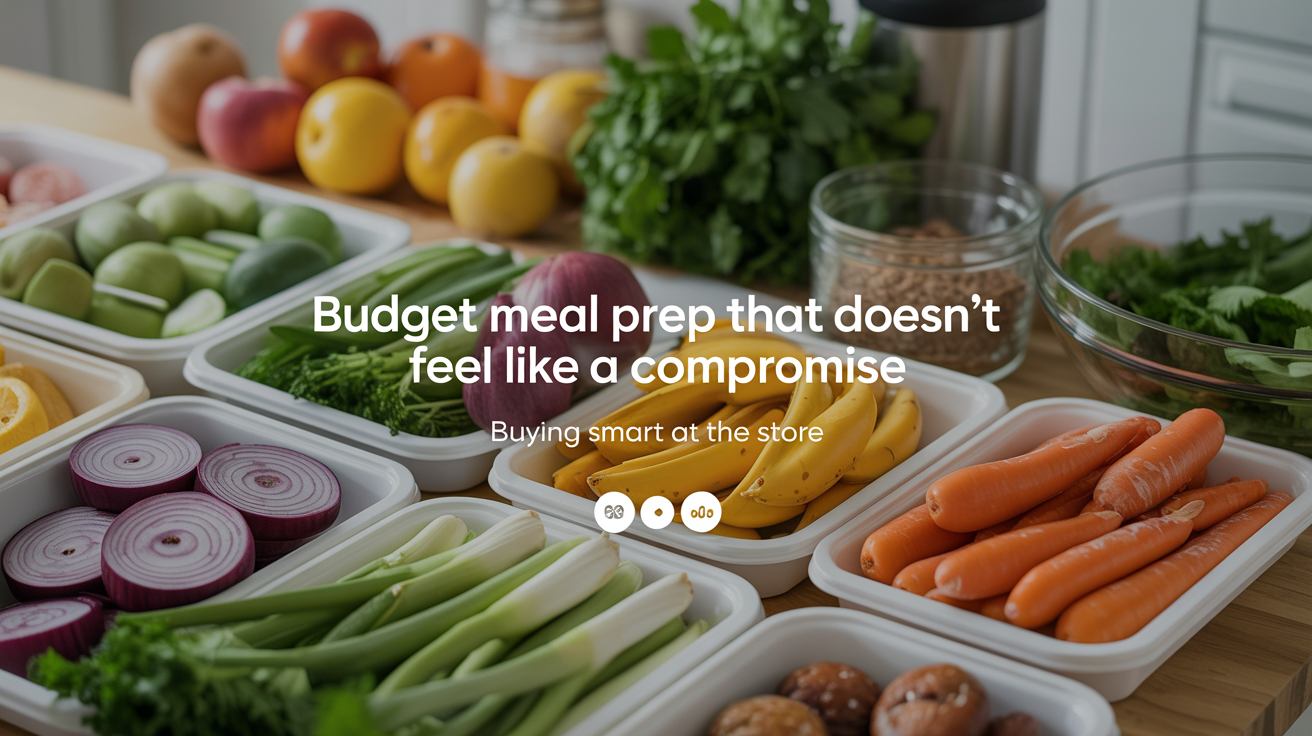
Grains and legumes: always buy the bigger bag
Dried beans and whole grains keep for 1 to 2 years in an airtight container, so there is no real downside to buying larger quantities. Brown rice, farro, and rolled oats fall into this same category. A 2 lb (900 g) bag of brown rice costs $2 to $3 and cooks up to about 6 cups of cooked grain.
Produce: lean on frozen and in-season
Frozen spinach, peas, corn, and edamame work just as well in cooked dishes as fresh, and you only pull out what you need. They also keep for months without spoiling. Seasonal vegetables cost noticeably less than out-of-season ones and tend to taste better, too. A head of cabbage, for example, is often cheaper than a bag of pre-shredded cabbage of the same weight.
Skip anything pre-cut
Spiralized zucchini, pre-shredded carrots, and stir-fry mixes carry a significant markup over whole vegetables. Slicing a head of cabbage takes two minutes. Buy the whole vegetable and do that two minutes of work yourself.
Rotating Through the Week Without Repeating Yourself
The key to avoiding monotony on a budget is changing the format, not necessarily the ingredient. The same batch of chicken thighs reads very differently over rice, tucked into a tortilla, or sliced over a green salad with a sharp vinaigrette.
Sunday prep session (about 90 minutes)
This session becomes the week's backbone:
- Cook 1 cup (190 g) dried lentils: rinse, add to a pot with 3 cups (700 ml) water, bring to a boil, then simmer uncovered for 25 minutes until tender
- Roast 4 bone-in chicken thighs on a sheet pan at 400°F (205°C) for 38 minutes, until the skin is deep golden and the internal temperature reads 165°F (74°C), the USDA-established threshold that reliably destroys salmonella and campylobacter in poultry
- Cook 2 cups (370 g) brown rice with 4 cups (950 ml) water: bring to a boil, cover, reduce to the lowest heat, and cook for 40 to 45 minutes
- Hard-boil 6 eggs using the 12-minute method above
Everything else through the week is assembly, not cooking.
Monday and Tuesday: grain bowls
Slice two chicken thighs off the bone and serve over brown rice with lentils and a handful of frozen spinach. Wilt the spinach in the microwave in 2 minutes with a splash of water and a pinch of salt. Finish with a sauce. Hot sauce, soy sauce, or tahini thinned with lemon juice all work without requiring much effort. Each bowl takes under 5 minutes to assemble.
Midweek: shift the format
By Wednesday, the bowl format starts to feel familiar. Use a 5 oz (140 g) can of tuna for lunch: mix it with 1 tablespoon of olive oil, a squeeze of lemon, salt, and pepper. A spoonful of capers or relish lifts it further. Serve over crackers or the remaining rice.
For dinner, make a quick egg fried rice. Scramble two eggs into leftover cooked rice in a skillet over medium-high heat, add a splash of soy sauce, and stir in whatever frozen vegetables are in the freezer. Total time from cold to plate: about 10 minutes.
Thursday and Friday: use the stragglers
Pull the remaining chicken off the bone and warm it in a small skillet over medium heat for 3 to 4 minutes. Wrap it in a flour tortilla with shredded cabbage (about 1 cup / 70 g), hot sauce, and a squeeze of lime. A simple taco like this uses almost nothing and feels like a proper meal.
Simmer the last of the lentils into a quick soup by adding 2 cups (475 ml) of broth, half a diced onion, and 1 teaspoon of cumin. Cook for 15 minutes over medium heat. The hard-boiled eggs work as grab-and-go breakfasts or snacks throughout all five days.
For a deeper look at the logistics of stretching batch-cooked components across a full week, the batch-cooking-tips guide walks through the planning framework in detail.
Making It Taste Like You Tried
A few habits separate budget meals that feel like a grind from ones that actually satisfy.
Salt during cooking, not just at the table. Grains and legumes that aren't seasoned in the pot taste flat no matter what you add later. Salt your cooking water. For beans, add salt toward the end of the simmer rather than the beginning, since early salting can cause skins to stay tough.
Finish with acid. A squeeze of lemon or a splash of apple cider vinegar just before serving wakes up food that's been sitting in the fridge. This matters most for beans, lentils, and eggs. Try it once and it becomes a habit.
Rotate your fats. Olive oil, sesame oil, and a small knob of butter taste genuinely different from each other. Using different ones across the week makes otherwise similar meals feel distinct. A drizzle of sesame oil over a grain bowl reads as something considered.
If protein content is a priority alongside cost, high-protein-meal-prep breaks down the most efficient protein sources with cost-per-gram comparisons.
Frequently Asked Questions
How long does cooked meal prep food keep in the fridge?
Cooked grains and beans keep for 4 to 5 days refrigerated. Cooked chicken keeps for 3 to 4 days, a window Michigan State University Extension's leftover-handling guidance also uses as the general rule for cooked leftovers, with 3 to 4 months as the freezer equivalent. Hard-boiled eggs in their shells keep up to 7 days. If you're prepping for a full week, freeze half the batch on Sunday and thaw it on Wednesday or Thursday night.
Is dried or canned beans cheaper?
Dried beans cost considerably less per serving. A 1 lb (450 g) bag of dried black beans yields around 6 cups cooked. The equivalent in canned beans would cost two to three times as much. The trade-off is time: canned beans are ready to use immediately. For actual budget prep, dried beans are worth building the habit around.
Do I have to cook every protein separately each night?
No. Batch-cooking one or two proteins on Sunday and rotating them through different formats is more efficient than cooking multiple dishes throughout the week. The variety comes from sauces, spices, and format (bowl vs. taco vs. soup), not from starting fresh each night.
Can I meal prep without a lot of storage containers?
You don't need matching sets. A few large zip-lock bags, a couple of basic glass containers, or even a sheet pan covered with plastic wrap works for storing cooked rice and beans. Storing components separately rather than as assembled meals also gives you more flexibility on what you feel like eating each day.
What if I don't like one of these five ingredients?
The framework matters more than the specific items. Swap canned fish for chickpeas if you don't eat fish. Use lentils as your primary protein instead of eggs if needed. The goal is to pick two or three protein sources and one or two grains that you'll actually eat, buy them in volume, and rotate through formats across the week. The ingredients above are a starting point, not a prescription.