Meal Prep
Batch Cooking Tips to Save Hours Each Week
Most people lose 45 minutes to an hour every weeknight just deciding what to cook, pulling out pans, and waiting for water to boil. Batch cooking collapses that overhead into one session. Here's how to do it without turning Sunday into a second job.
Components beat full meals
The biggest mistake beginners make: cooking complete dishes in bulk and eating the same thing five nights in a row. That gets old fast. A better approach is to batch components instead.
Cook a pot of grains. Roast two sheet pans of vegetables. Poach or bake a few pounds of protein. Those three things can become grain bowls, wraps, salads, stir-fries, or soup bases depending on what sauces and toppings you add. You get variety without cooking from scratch every night.
If you're new to this approach, meal prep for beginners has a good breakdown of how to think about building a prep list.
Which components are worth batching
Not everything benefits equally. Some things hold well for days; others degrade fast.
Good bets:
- Cooked grains (rice, farro, quinoa, barley) -- 5 days refrigerated
- Roasted vegetables -- 4 days refrigerated
- Cooked legumes -- 5 days refrigerated, or freeze for 3 months
- Marinated and baked chicken thighs or breasts -- 4 days refrigerated
- Hard-boiled eggs -- 7 days refrigerated (unpeeled)
- Homemade sauces and dressings -- 1 to 2 weeks depending on acidity
Skip batching:
- Dressed salads
- Anything with avocado mixed in
- Fish (texture degrades after 2 days)
- Eggs scrambled into dishes
The double-and-freeze method
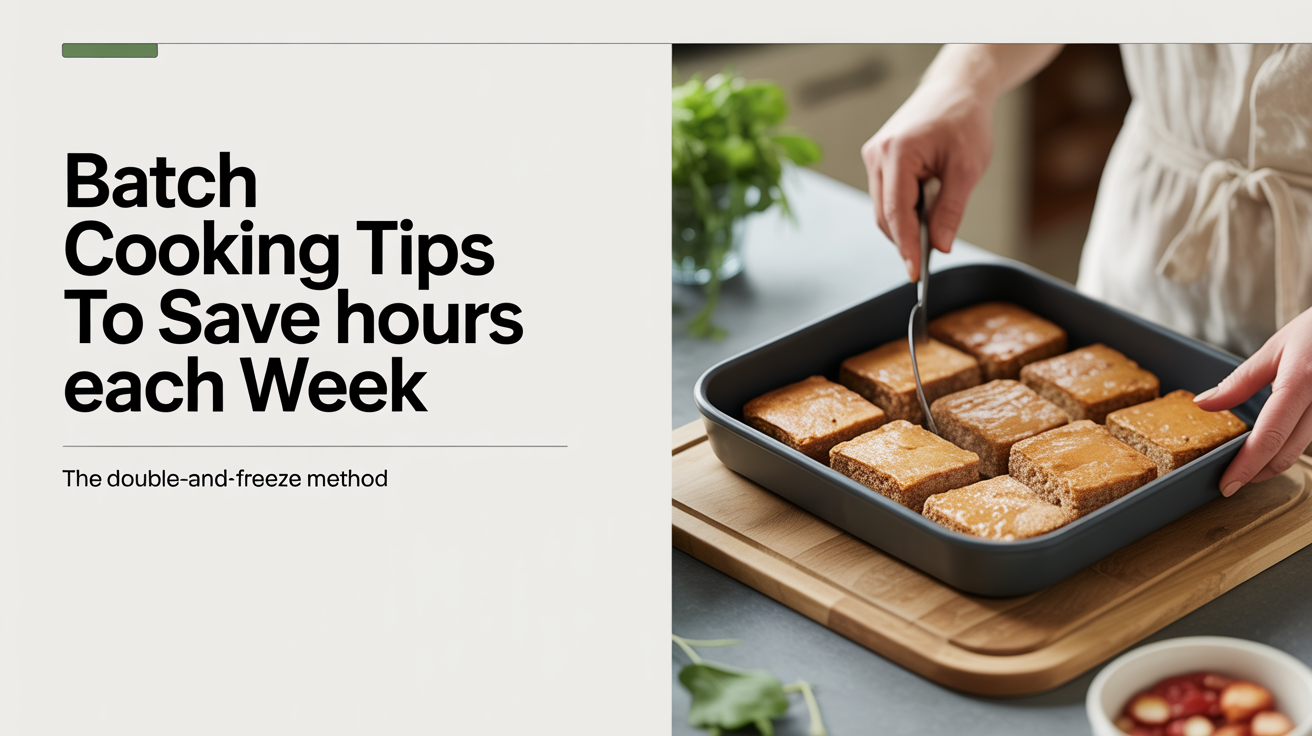
If full-session batch cooking feels overwhelming, start smaller. Every time you cook dinner, make twice as much and freeze half. A lasagna becomes two lasagnas. A pot of chili serves tonight and fills six freezer containers for later months.
This is the cook once eat twice approach at its simplest. Over four to six weeks of doing this consistently, you accumulate a real freezer inventory without ever dedicating a whole Sunday to cooking.
The key is packaging: freeze in single or double portions, label with the date and contents, and don't stack unlabeled bags hoping you'll remember what they are. A strip of freezer tape and a marker takes ten seconds.
For a full list of what actually survives freezing well (and what turns to mush), freezer-friendly meals covers the specifics.
How to sequence a single cook session
If you do want to run a proper batch session, order of operations matters. The goal is to keep every burner and oven rack active at once without creating a traffic jam.
A workable sequence
- Start the oven at 400 degrees F and prep everything that needs roasting first. Sheet pans go in before you do anything else.
- Put grains on the stove. Rice, farro, and barley are hands-off once they're simmering.
- Prep proteins while the oven and stove do their work. Season chicken thighs, marinate steak strips, or hard-boil a dozen eggs.
- Proteins go in the oven on a second rack when the first batch of vegetables is done, or on the stovetop in a hot pan.
- Make sauces last. They're quick and keep your cutting board clean for final prep.
With this order, a two-hour session realistically produces: two pounds of cooked protein, two types of roasted vegetables, a pot of grains, and two sauces. That covers 4 to 5 days of lunches and dinners for one or two people.
What to prep in parallel vs. in sequence
Parallel: anything oven-based. You can roast sweet potatoes and chicken at the same time on separate racks.
Sequential: stovetop items, because you only have so many burners. Grains first (longest cook time), then legumes if you're doing those from dried, then any stovetop proteins last.
Storage timelines you can actually trust
A lot of guides say "3 to 5 days" for everything, which isn't that useful. Michigan State University Extension's food safety guidance puts a finer point on it: leftovers belong in the refrigerator for 3 to 4 days or in the freezer for 3 to 4 months, and that clock starts once food has cooled, not once it's been sitting on the counter all evening. Here's a more specific breakdown by item:
| Item | Refrigerator | Freezer |
|---|---|---|
| Cooked chicken (plain) | 4 days | 3 months |
| Cooked ground beef | 3--4 days | 3--4 months |
| Cooked grains (rice, farro, quinoa) | 5 days | 2 months |
| Roasted vegetables | 4 days | 2 months (texture softens) |
| Cooked legumes | 5 days | 3 months |
| Soups and stews | 4--5 days | 4--6 months |
| Homemade tomato-based sauce | 5 days | 6 months |
| Hard-boiled eggs (unpeeled) | 7 days | Not recommended |
| Smoothie packs (unblended) | Not applicable | 3 months |
Freezer texture notes: roasted vegetables come out softer after freezing, which works fine in soups, grain bowls, or egg scrambles but won't hold up as a standalone side. Grains freeze and reheat well with a splash of water. Legumes are genuinely unchanged.
Realistic expectations for a first session
First time doing this, plan for 2 to 2.5 hours including cleanup. You'll be slower than you expect because you're making decisions as you go. That's fine.
By the third or fourth session, you'll have a default rotation. Most experienced batch cookers run the same core ingredients every week with minor variations, not a different menu each time. That predictability is the point. You stop thinking about it.
If you cook for one or two people, a single 2-hour session covers most of the week. For a family of four, you're looking at a longer session or two shorter ones split across the week.
For protein-specific batch strategies, high-protein meal prep goes into more detail on yields and portion math.
FAQ
How long does batch cooking actually take each week?
Once you have a routine, most people spend 1.5 to 2.5 hours once a week. The first few sessions take longer because you're building the habit and figuring out your rotation. If you use the double-and-freeze method instead, there's no dedicated session at all; you just cook slightly more than usual every night.
Can I batch cook if I have a small kitchen?
Yes, but you work sequentially rather than in parallel. One sheet pan at a time, one pot at a time. It takes longer but produces the same result. A small kitchen also benefits more from batching because cleanup is the most painful part, and batching means you only do it once.
What's the best container for batch cooking storage?
Glass containers with locking lids work well for the refrigerator because you can see what's inside and they don't stain. For the freezer, rigid plastic or silicone containers beat zip bags for anything liquid. Zip bags are fine for solid items like cooked grains or protein portions when you lay them flat to freeze.
Do batch-cooked meals taste as good reheated?
Depends on the item. Grains, legumes, soups, and stews reheat well. Roasted vegetables are softer than fresh but still good. Chicken thighs reheat better than chicken breasts, which can dry out. Adding a small amount of liquid (broth, sauce, water) before reheating helps most things.
Should I season everything fully before storing, or keep it plain?
Keep proteins and vegetables lightly seasoned (salt, oil, basic spices) and add final sauces and flavor profiles when you assemble meals. This gives you more flexibility across the week. A plain roasted chicken thigh goes into a grain bowl with tahini dressing just as easily as it goes into a taco with salsa. A chicken thigh marinated in teriyaki is more limited.
Full guidance on cooling and refrigerating leftovers safely is in Michigan State University Extension's Handling Leftovers bulletin, which is worth a skim if you batch cook every week.