Recipes
Nourishing Soup Recipes for Every Season
A pot of soup is one of the most forgiving things you can cook. It doesn't require precision timing, rarely burns if you step away for a moment, and rewards a heavy hand with aromatics. Better yet, healthy soup recipes can be genuinely satisfying without clever substitutions or complicated techniques.
This guide covers the basic framework that applies to nearly every style of soup, walks through brothy versus blended approaches, offers four recipes to try, and answers the questions that come up most often.
The Soup Framework: Aromatics, Base, and Body
Every good soup shares the same basic structure, regardless of what goes into it. Understanding three building blocks means you can adapt any recipe or improvise with what you have on hand.
Building the Aromatic Layer
Aromatics are the flavor foundation. The classic combination is onion, celery, and carrot (mirepoix), but garlic, leek, fennel, and shallot all belong in the same category. You cook them in fat over medium heat until softened, usually 6 to 8 minutes, before adding anything else.
The fat matters more than most recipes acknowledge. Olive oil gives a savory, slightly fruity base that suits Mediterranean-leaning soups. Butter adds richness. A neutral oil like avocado or sunflower works if you want the vegetables to carry the flavor themselves. Patience is the main requirement here: underdeveloped aromatics leave a faint raw taste that lingers even after long simmering.
Choosing Your Liquid Base
Your liquid becomes the backbone of the soup. Options include:
- Homemade or store-bought stock (chicken, beef, or vegetable): adds depth and body. Reach for a low-sodium version so you can control salt as you go.
- Water: works better than most people expect, particularly when combined with strong aromatics, a parmesan rind, or smoked paprika.
- Canned tomatoes with their liquid: excellent for tomato-forward recipes. Dilute with stock or water at a 1:1 ratio if you want a thinner consistency.
- Coconut milk: brings creaminess without dairy, pairing naturally with ginger, lime, and red curry paste.
A reliable starting point for a six-serving pot is 6 cups (1.4 liters) of liquid, adjusted later for the thickness you prefer.
Brothy vs. Blended: Two Paths to a Bowl
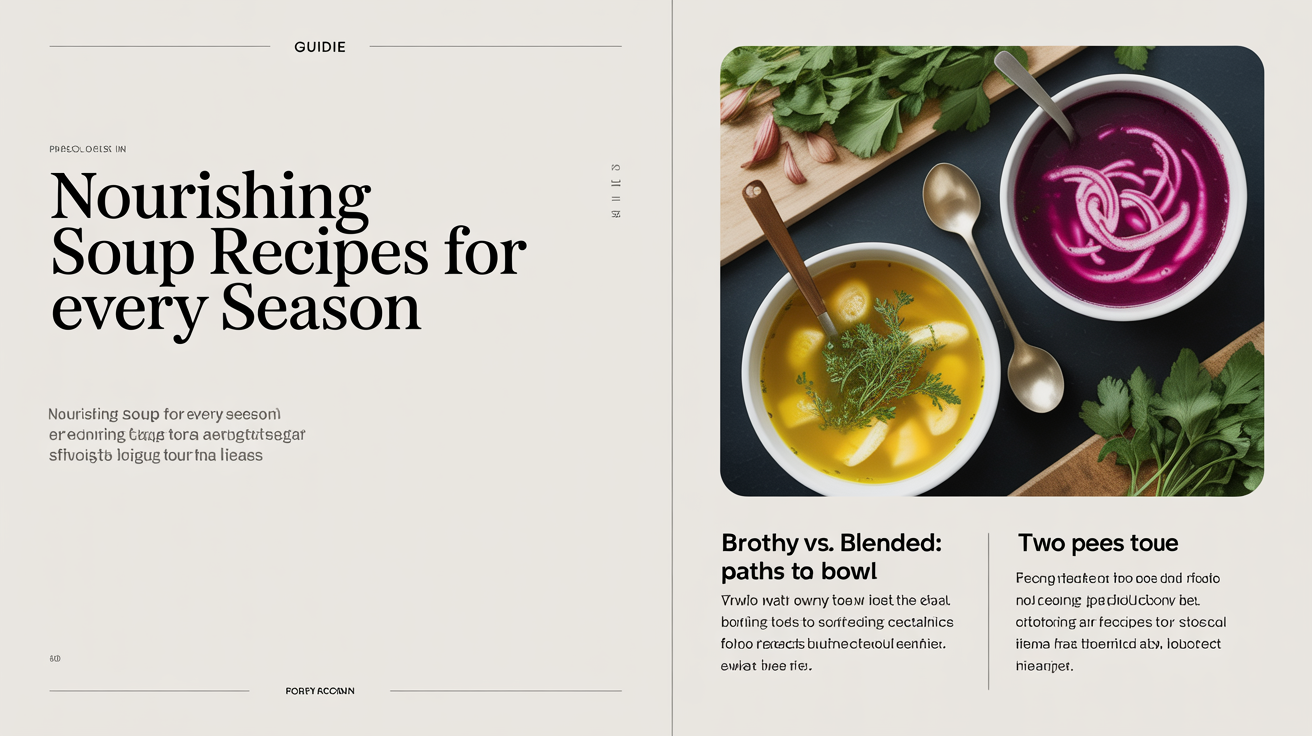
Brothy soups keep everything distinct. You can see the vegetables, beans, or grains in each spoonful, and the varied textures are part of the point. They come together quickly, often within 30 to 40 minutes, and they freeze without any quality loss.
Blended soups trade texture for a smooth, uniform consistency. Most follow the same sequence: cook aromatics, add vegetables and liquid, simmer until tender, then blend. An immersion blender handles this directly in the pot. A standard blender works too, but blend in batches (fill no more than halfway) and keep the lid slightly vented to release steam.
A middle approach worth trying: blend half the soup and stir it back into the pot. You get some body and creaminess from the blended portion while the rest keeps things interesting.
Neither style is inherently more nutritious than the other. The vegetables, legumes, or proteins you choose determine the nutritional profile, not whether you blend them.
Four Healthy Soup Recipes to Make This Week
These four use different flavor profiles and techniques, so they give a real sense of the range available to you.
Tuscan White Bean and Kale Soup
This brothy soup has serious staying power. Sauté 1 diced onion and 4 minced garlic cloves in 2 tablespoons of olive oil over medium heat for 7 minutes. Add 1 can (14 oz / 400 g) of crushed tomatoes, 2 cans (15 oz / 425 g each) of drained white beans, and 5 cups (1.2 liters) of low-sodium chicken or vegetable stock. Bring to a boil, reduce to a simmer, and cook for 15 minutes. Stir in 4 cups (120 g) of chopped kale and cook another 5 minutes. Season with salt, black pepper, and red pepper flakes. A parmesan rind simmered with the stock adds depth without any extra effort.
Roasted Tomato and Red Pepper Soup
Halve 2 lbs (900 g) of Roma tomatoes and 2 red bell peppers. Toss with 2 tablespoons of olive oil, spread on a baking sheet, and roast at 425°F (220°C) for 30 minutes until the edges char slightly. Transfer to a pot with 1 diced onion (softened in olive oil for 6 minutes), 3 garlic cloves, and 2 cups (475 ml) of vegetable stock. Simmer for 10 minutes, then blend until smooth. Fresh basil stirred in just before serving keeps the flavor bright rather than heavy.
Chicken and Vegetable Soup
The low-fuss approach: simmer 1.5 lbs (680 g) of bone-in chicken thighs in 7 cups (1.65 liters) of water with 1 teaspoon of salt for 25 minutes. Remove the chicken, shred the meat, and discard the bones. Return the meat to the pot. Add 2 diced carrots, 2 celery stalks, 1 cup (150 g) of frozen peas, and 1 teaspoon of dried thyme. Simmer for another 15 minutes. This is close to the kind of soup worth keeping on a weeknight rotation.
Red Lentil and Carrot Soup
Red lentils cook quickly and break down into a naturally creamy texture without blending. Warm 1 tablespoon of olive oil in a large pot over medium heat. Cook 1 diced onion and 3 minced garlic cloves for 7 minutes. Add 1 teaspoon of ground cumin, 1 teaspoon of smoked paprika, and 1/4 teaspoon of cayenne, then stir for 30 seconds. Add 3 large carrots (diced), 1.5 cups (300 g) of dried red lentils, and 6 cups (1.4 liters) of vegetable stock. Bring to a boil, reduce to a simmer, and cook for 25 minutes until the lentils are completely soft. A squeeze of lemon juice at the end lifts the whole thing.
Freezing and Storing Homemade Soup
Most soups keep well in the refrigerator for 3 to 4 days. Let the soup cool to room temperature before refrigerating, and store it in an airtight container. The FDA's refrigerator and freezer storage chart lists the same window for soups and stews, and a shorter one, 1 to 2 days, for any soup built on raw ground meat that went into the pot without fully cooking first.
For freezing, let the soup cool completely first, then transfer to freezer-safe containers or heavy-duty zip bags laid flat to save space. Leave about 1 inch (2.5 cm) of headspace for expansion. Brothy soups freeze for 2 to 3 months without noticeable quality loss. Cream-based soups and those with potatoes tend to separate or turn grainy after freezing. A better approach: freeze the base and add cream or potatoes after reheating.
Label everything with the date and the soup type. Frozen soup looks identical from the outside after a few weeks, and unlabeled containers are a real problem.
Soups made on a weekend fit naturally into broader batch-cooking habits. If you already have sheet-pan dinners in your rotation, adding a pot of soup to the same session uses oven heat efficiently. For days when even that feels like too much, leaning on a slow cooker lets the broth develop while you do other things.
Frequently Asked Questions
How do I thicken soup without flour?
Several techniques work. Blending a portion of the soup is the most common approach. You can also add a cooked and mashed potato, simmer the soup uncovered to reduce it, or stir in a tablespoon of tomato paste, which adds body along with flavor. Pureed white beans or cooked red lentils are another option that adds protein at the same time.
Can I make these soups in a slow cooker?
The brothy recipes (white bean and kale, chicken and vegetable, red lentil and carrot) all translate well. Soften aromatics on the stovetop first for better flavor, then add everything to the slow cooker. Cook on low for 6 to 8 hours or on high for 3 to 4 hours. The roasted tomato soup relies on the roasting step for its depth, so it doesn't adapt as cleanly to a slow cooker.
How long does homemade soup keep in the fridge?
Most vegetable and legume soups are good for 3 to 4 days, which lines up with FoodSafety.gov's cold storage guidance for cooked leftovers generally. Soups with chicken or other meat are best within that same window. The flavor often improves after a day in the fridge as the ingredients meld. Reheat thoroughly to 165°F (74°C) before serving, the minimum safe reheating temperature for leftovers.
Why does my soup taste flat?
Flat soup usually comes down to one of three things: not enough salt, underdeveloped aromatics, or missing acidity. Taste before serving and add salt in small increments. A splash of lemon juice or a dash of sherry vinegar does a lot to brighten flavors quickly. If the soup tastes watery despite proper seasoning, simmer it uncovered for 10 to 15 minutes to concentrate.
What is a fast soup option for busy weeknights?
Most brothy soups come together in 30 to 40 minutes once you have pantry staples ready. Canned beans or red lentils cut the cooking time significantly compared to dried. For the busiest nights, 30-minute meals that share the same pantry backbone (aromatics, stock, legumes) make the most sense to batch together.