Recipes
Cozy Slow Cooker Recipes Worth the Wait
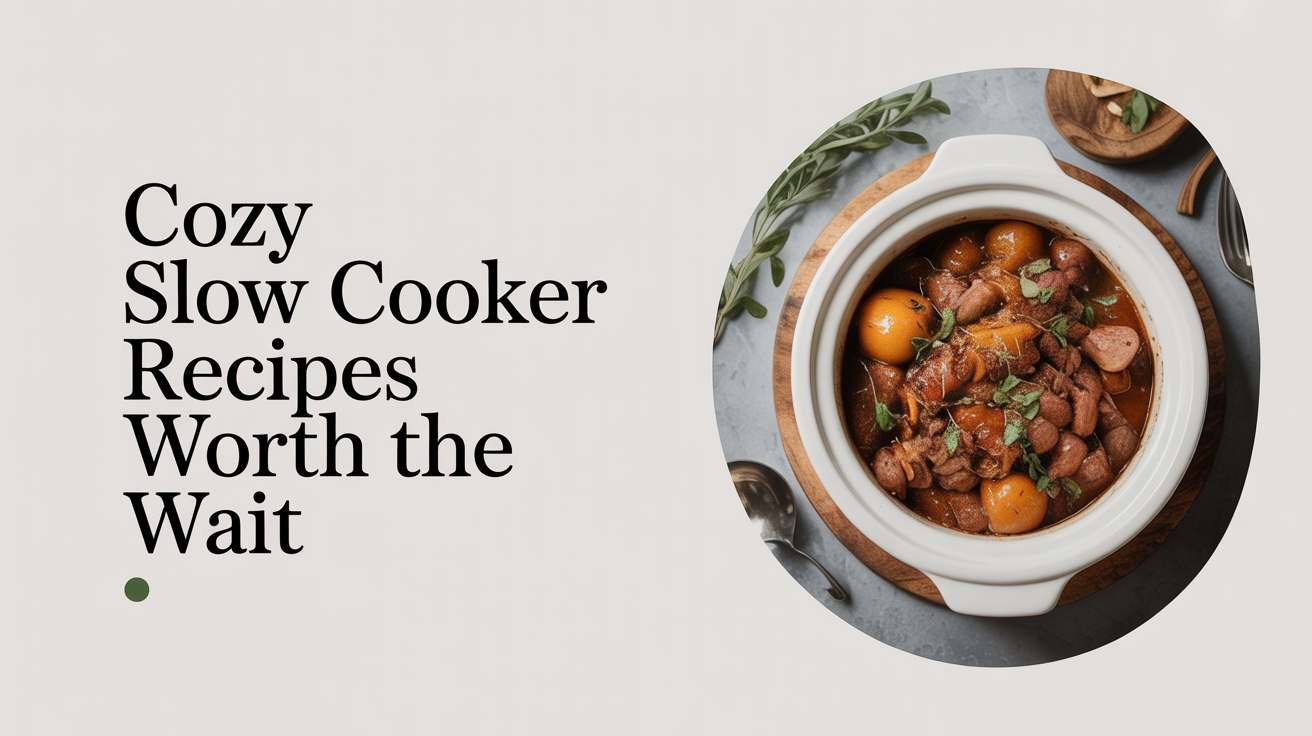
A slow cooker rewards patience more than skill. You do ten minutes of prep in the morning, go about your day, and come home to something that smells like you've been cooking for hours, because technically, you have.
That said, plenty of people set one up, come home to mushy vegetables and watery broth, and conclude the appliance isn't worth the cabinet space. The machine works fine; the problem is usually what goes in and when.
What the Slow Cooker Actually Does Well
The slow cooker runs between 190°F and 210°F on most settings. That's below a full simmer, which makes it terrible for anything that needs to brown, reduce, or crisp, and excellent for anything that needs low, sustained heat to break down tough connective tissue or rehydrate dried legumes.
The categories where it reliably delivers:
- Braises. Beef chuck, pork shoulder, lamb shanks. Anything with a lot of collagen that turns to gelatin with time. A 3-pound chuck roast needs about 8 hours on Low or 5 on High.
- Beans. Dried, unsoaked chickpeas go in dry and come out creamy in 6–8 hours on Low. Black beans take closer to 5–6. Add salt at the end, not the beginning; early salt keeps the skins from softening.
- Thick stews and soups. Chili, lentil soup, split pea. Dishes where liquid absorption is fine and where you're not after a bright, fresh finish.
- Pot roasts and pulled meats. The long cook does the shredding work for you.
What it doesn't do well: chicken breasts (they go rubbery), leafy greens (they turn to slime), delicate fish, and anything where you want the liquid to reduce into a sauce. The lid traps moisture with nowhere to go.
Layering Order and Liquid Ratios
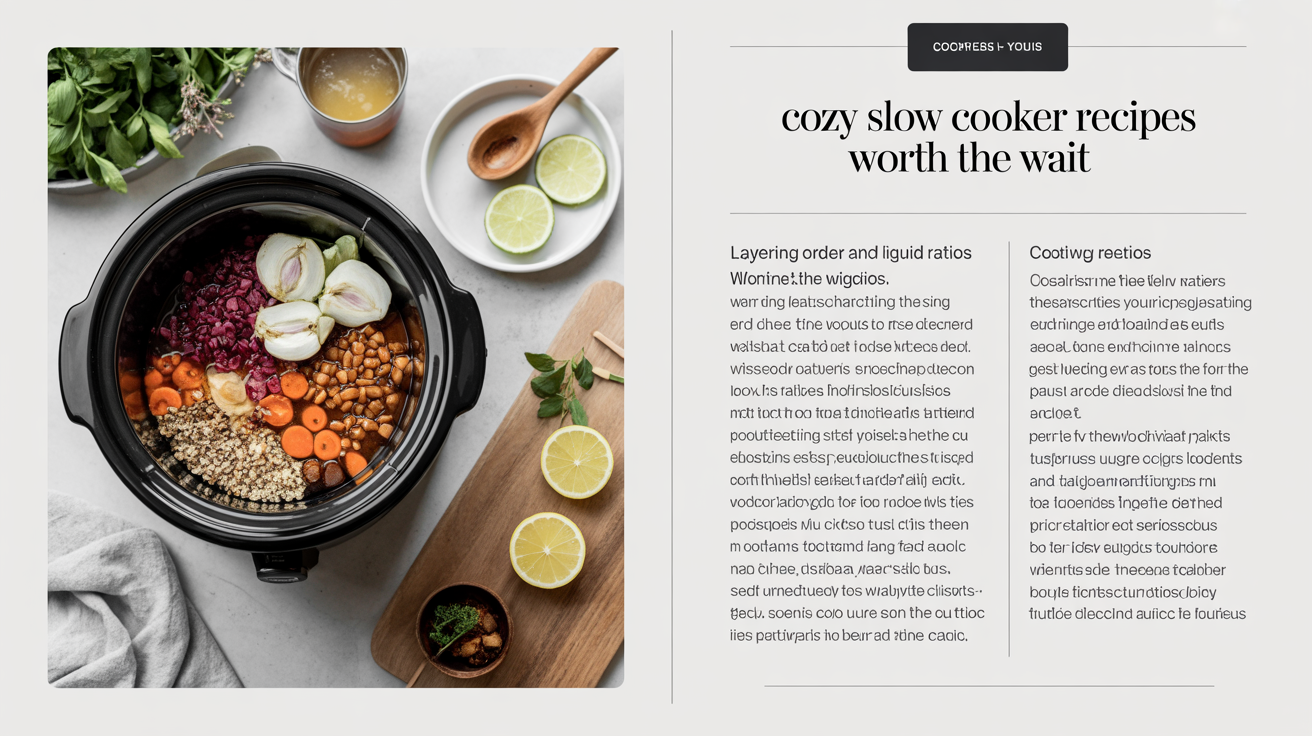
Order matters more than most recipes suggest.
Bottom of the pot: root vegetables and dense aromatics, carrots, onions, potatoes, turnips. These take the longest to cook and benefit from direct contact with the heat element at the base.
Middle: your protein. A pork shoulder on top of a bed of onions and carrots cooks more evenly than one sitting directly on the ceramic, where it can stick or dry out along the bottom edge.
Top, added later: quick-cooking additions, canned tomatoes, frozen corn, cream, fresh herbs. Tomatoes are fine going in at the start for chili or stew. Dairy is not. Add cream, sour cream, or milk in the last 30 minutes or it will curdle and separate.
How much liquid to use
The most common mistake is too much. The cooker is sealed; vegetables release moisture as they cook; proteins release juices. Start with less liquid than you think you need.
For a 6-quart cooker with 3 pounds of meat and vegetables, 1 to 1.5 cups of broth is usually enough. For soup or chili where you want actual broth in the bowl, use 3–4 cups.
If your dish consistently comes out soupy, try one of these at the end: remove the lid, set the cooker to High, and let it cook uncovered for 20–30 minutes. Or transfer the liquid to a saucepan and reduce it on the stovetop while the meat rests.
Low vs. High, When It Matters
Low runs around 190°F; High runs around 210°F. Both eventually get there; the difference is time and texture.
| Setting | Temperature | Time (3-lb chuck roast) | Result |
|---|---|---|---|
| Low | ~190°F | 8–10 hours | More tender, silkier texture |
| High | ~210°F | 4–5 hours | Done, but slightly firmer |
| Low (beans) | ~190°F | 6–8 hours | Creamy throughout |
| High (beans) | ~210°F | 3–4 hours | Can split the skins |
For tough cuts and beans, Low is worth it when you have the time. High is fine for ground meat dishes, soups with canned beans, or anything where texture isn't the point.
One thing both settings share: the sweet spot for most dishes is not right at done but an hour past it. Collagen needs time to fully dissolve. A chuck roast pulled at 6 hours on Low is edible; at 8 hours it falls apart. If you're not sure, let it go longer.
Four Recipes That Actually Work
Pulled pork shoulder
Rub a 4-pound bone-in pork shoulder with 1 tablespoon salt, 1 teaspoon each of black pepper, garlic powder, cumin, and smoked paprika. No liquid needed, the fat and juices will do the work. Cook on Low for 9–10 hours. Pull the bone out (it should slide clean) and shred with two forks. If you want a sauce, spoon off excess fat from the juices and reduce on the stovetop with a splash of apple cider vinegar.
Beef chili
Brown 1.5 pounds of ground beef in a skillet first, this matters. Unbrowned ground meat in a slow cooker has a grayish texture and flat flavor. Add the browned meat, two cans of drained kidney beans, one 28-ounce can of crushed tomatoes, one diced onion, two cloves of garlic, 2 tablespoons chili powder, 1 teaspoon cumin, salt to taste, and 1 cup of beef broth. Cook on Low for 6–7 hours. Adjust salt and acid (a squeeze of lime helps) before serving.
White bean and kale soup
This one works well as a vegetarian dinner. Add two 15-ounce cans of drained cannellini beans, one 28-ounce can of diced tomatoes with juice, 4 cups of vegetable broth, one diced onion, three cloves of garlic, a parmesan rind (optional but adds depth), and 1 teaspoon of dried thyme to the cooker. Cook on Low for 6 hours. Add 3 cups of roughly chopped kale in the last 30 minutes, any earlier and it goes to mush. Remove the parmesan rind before serving. Finish with a drizzle of olive oil and red pepper flakes.
Braised lamb shanks
Sear the shanks in a hot skillet with oil until browned on all sides, about 3 minutes per side. Place them in the cooker over a layer of diced carrots, celery, and onion. Add 1 cup of red wine, 1 cup of beef broth, a few sprigs of rosemary, and two cloves of garlic. Cook on Low for 8 hours. The meat should fall from the bone completely. Strain and reduce the braising liquid for a sauce.
Common Problems and How to Fix Them
Mushy vegetables: Add potatoes and root vegetables in the bottom (not on top), and consider parcoiling them briefly if they're going more than 8 hours. Zucchini, peppers, and corn should go in during the last 2 hours.
Watery finish: Start with less liquid. You can always add more; you can't take it back without reducing on the stove.
Rubbery chicken: Use thighs, not breasts. Bone-in thighs on Low for 5–6 hours stay moist. Chicken breasts, even on Low, become cottony around the 4-hour mark. If you want a faster protein-heavy dinner, the 30-minute meals category has better options for chicken breast.
Flat flavor: Salt going in is not the same as salt at the end. Always taste and adjust seasoning before serving. Acid, lemon juice, vinegar, a splash of wine, does more for a dull slow-cooker dish than extra salt.
For nights when you want something hands-off but faster, sheet pan dinners give you a similar no-fuss result in about 30 minutes with less liquid management.
Frequently Asked Questions
Is it safe to leave a slow cooker on all day while I'm at work?
Yes, with a few conditions. Make sure the cooker is on a heat-safe surface with clearance around it, not near curtains or cabinets. According to the USDA's guidance on slow cookers and food safety, food cooked on Low passes through the bacterial danger zone quickly enough to be safe. Don't open the lid repeatedly; each lid lift drops the temperature and adds 20–30 minutes to cook time. A programmable model that shifts to Warm after the cooking time finishes is worth buying if your schedule is unpredictable.
Can I put frozen meat in the slow cooker?
No. The USDA specifically advises against it, because the 40°F to 140°F "danger zone" is where bacteria multiply fastest, and frozen meat spends too long passing through that range as it slowly comes up to temperature in the cooker. Thaw protein in the refrigerator overnight before using it. This also affects cooking time in unpredictable ways; you can't reliably estimate doneness from a frozen start.
How do I know when my slow cooker dish is actually done?
For meat, the most reliable check is a meat thermometer, not elapsed time. Chuck roast should read at least 195°F for proper shredding texture (not just 160°F for food safety, it needs to go higher to break down the collagen). Pork shoulder for pulling wants to be around 200–205°F. Beans are done when they're creamy in the center with no chalky bite. If yours are taking longer than the recipe says, check your cooker, older models often run cooler than new ones.
Can I cook pasta or rice in the slow cooker?
Rice can work, barely. Use 1 cup of rice to 1.75 cups of liquid, add it in the last 2 hours on Low, and don't lift the lid. Brown rice takes longer than white and tends to hold up better. Pasta is generally a mistake, it turns to paste. Cook it separately and add it to the bowl at serving. The same goes for most grains; the texture suffers badly from 6+ hours of moist heat.