Recipes
How to Build a Grain Bowl That Actually Fills You Up
The Formula Behind a Good Grain Bowl
Most grain bowl recipes give you a single combination and call it a day. The problem: you run out of farro, or you don't have the exact herb the recipe calls for, and dinner is back to square one. What actually works is a formula you can run on whatever is already in your kitchen.
The framework has five parts: a grain base, a roasted or cooked vegetable, a protein, a sauce, and something crunchy on top. Each part is interchangeable. Brown rice one week, farro the next. Chickpeas when you're pressed for time, seared chicken when you have an extra 15 minutes. The bowl you eat on Monday looks nothing like the one on Friday, but both take roughly the same effort.
The other piece that trips people up is timing. Everything needs to land at roughly the same moment, and that means starting in the right order. More on that toward the end.
Step 1: Choose Your Grain Base
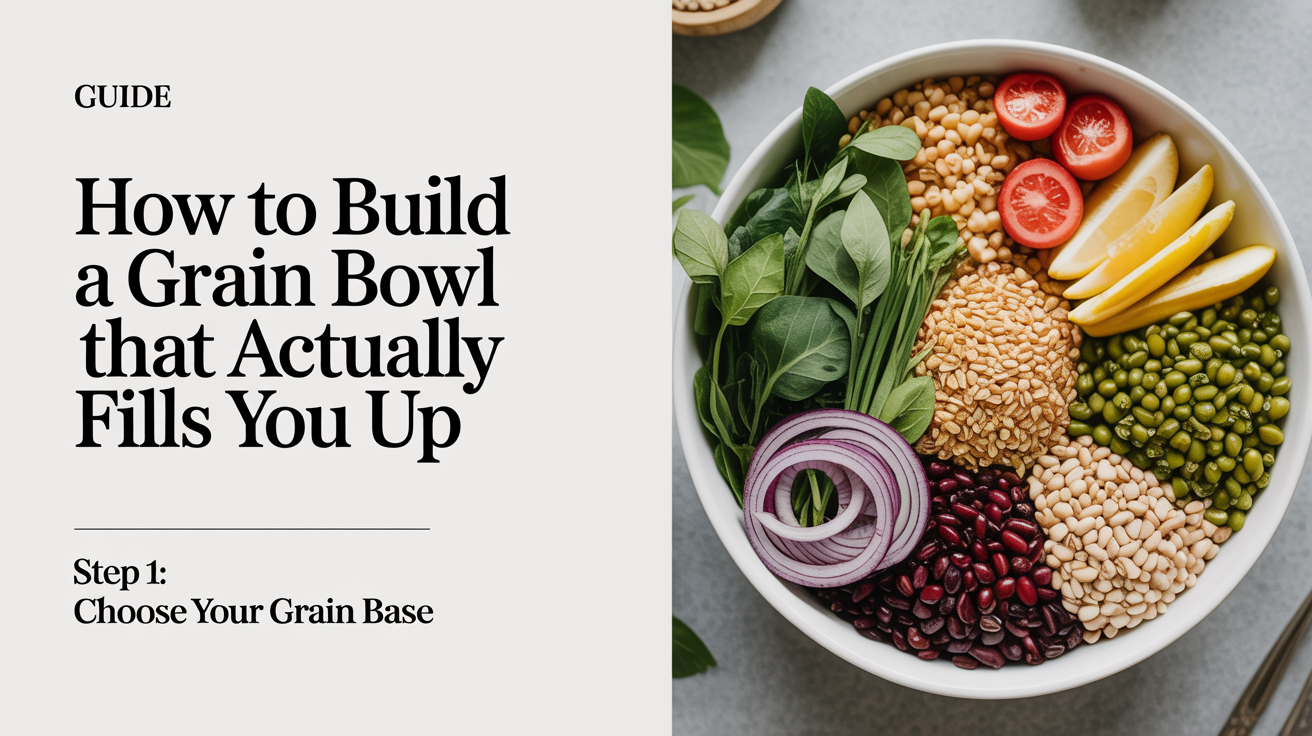
The grain does more work here than it gets credit for. It absorbs the sauce, adds bulk, and provides the kind of staying power that keeps you full for hours. A light salad won't do that. Grains will.
Options that hold up well:
- Brown rice (40 to 45 minutes, or use the instant version): neutral flavor, absorbs sauce readily
- Farro (25 to 30 minutes): chewy and slightly nutty, pairs well with earthy vegetables like roasted mushrooms or squash
- Quinoa (15 minutes): cooks fast and adds protein on its own. Quinoa is a complete protein, meaning it has all nine essential amino acids, and a cup cooked provides about 8 grams of protein along with 5 grams of fiber. Slightly bitter if underseasoned.
- White rice (18 minutes): softer texture, blends into the background so the toppings can lead
Season the cooking water. A generous pinch of salt per cup (240 ml) of water makes a real difference. If you have a couple of extra minutes, toast the dry grain in the pot for 2 minutes before adding the water, which deepens the flavor without adding anything to the dish.
Cooking rice consistently is worth getting right, because it's the base you'll reach for most often.
How Much Grain to Cook
For a filling bowl, aim for about 200 to 240 g of cooked grain per person (roughly 1 cup). That might not sound like a lot, but the protein and vegetables bulk it up considerably. Cook a double or triple batch while you're at it. Cooked grains keep in the refrigerator for up to 5 days and reheat well with just a splash of water.
Step 2: Roast the Vegetables
Roasted vegetables beat raw ones here almost every time. The caramelized edges and concentrated flavor give the bowl something to work with, and the oven does the actual cooking while you handle other components.
Temperature: 425°F (220°C). Lower than that and the vegetables steam rather than brown.
Timing by vegetable type:
- Dense vegetables (sweet potato, beets, carrots): 30 to 35 minutes, cut into 2 cm cubes
- Medium vegetables (broccoli, cauliflower, zucchini): 20 to 25 minutes, cut into similarly sized florets or half-moons
- Delicate vegetables (cherry tomatoes, thinly sliced red onion): 12 to 15 minutes
Toss with enough olive oil to coat, not drench (about 1 tablespoon per 300 g of vegetables). Season with salt before they go in. This pulls moisture from the surface during roasting and helps browning.
Getting vegetable roasting right depends as much on spacing as on temperature. Crowded vegetables steam. Give them room on the pan.
When You Don't Have Time to Roast
Sautéing works. Heat a pan over medium-high heat, add a drizzle of oil, and cook sliced vegetables for 6 to 10 minutes depending on their density. You won't get the same caramelized edges, but the bowl still comes together.
Other options that require no cooking at all:
- Frozen peas or corn defrosted in warm water (5 minutes)
- Thinly sliced raw cucumber or shredded cabbage if you want something fresh against the warm grain
- Leftover cooked vegetables from another night
Step 3: Add a Protein
This is what separates a bowl that keeps you full until dinner from one that leaves you reaching for snacks two hours later. You don't need a large portion, but you need something substantial.
Quick options that work:
- Canned chickpeas: Drain, rinse, and pat dry. Toss in olive oil and cumin. Roast at 425°F (220°C) for 20 to 25 minutes until crisp. They can share the oven with the vegetables if the timing lines up.
- Soft-boiled egg: Boil for 6 minutes, transfer to an ice bath for 5 minutes, peel, and halve. One or two per bowl.
- Leftover chicken or pork: Slice and lay on top cold or warmed briefly in a pan.
- Canned tuna or salmon: Drain and season with lemon and salt.
- Tofu: Press firm tofu for 10 minutes, cube it, and sear in a hot pan with oil for 4 minutes per side until the outside is firm and golden.
For most weeknights, the egg or the chickpeas win. They come together while the grain cooks, adding nothing to the timeline. About 85 to 115 g (3 to 4 oz) of protein per bowl is plenty alongside a full cup of grain and vegetables.
Step 4: Make a Simple Sauce
Dry grain bowls are common and disappointing. A sauce ties the components together and gives each forkful a reason to exist. You can make one from pantry staples in about 3 minutes.
Tahini base (goes with almost anything):
- 2 tablespoons tahini
- 1 tablespoon lemon juice
- 1 tablespoon water, plus more to thin
- 1 small garlic clove, grated
- Salt to taste
Whisk until smooth. Add more water a teaspoon at a time until it pours off a spoon in a steady stream. This keeps in the refrigerator for up to a week.
Soy-ginger base (good with rice bowls and Asian-leaning vegetables):
- 2 tablespoons soy sauce
- 1 tablespoon rice vinegar
- 1 teaspoon sesame oil
- 1 teaspoon honey or maple syrup
- 1 teaspoon fresh ginger, grated
Yogurt-herb base:
- 3 tablespoons plain yogurt
- 1 tablespoon olive oil
- Juice of half a lemon
- Fresh or dried herbs (dill, mint, or parsley), salt to taste
Start with 2 tablespoons of sauce per bowl. Most people underdress the bowl and then find it flat. Taste before serving and add more if needed.
Step 5: The Crunch Layer
Something textural on top changes the eating experience noticeably. It's not strictly required, but the contrast against soft grain and roasted vegetables is worth the small effort.
Good options:
- Toasted pumpkin seeds or sunflower seeds (dry-toast in a pan over medium heat, 3 to 4 minutes, stirring occasionally until golden)
- Crushed crackers or croutons
- Pickled vegetables, which add crunch and acid at the same time
- A handful of fresh herbs like cilantro, parsley, or basil
For a quick-pickled red onion: slice one small red onion thin, pack it into a jar, and pour over a mixture of 120 ml (1/2 cup) white wine vinegar, 120 ml water, 1 teaspoon sugar, and 1/2 teaspoon salt. Let it sit for at least 20 minutes before using. The onion softens slightly and loses the harsh raw bite.
Getting the Timing Right
The reason grain bowls fall apart on busy nights is that each component has a different cook time. Start in the wrong order and something is cold or not ready when everything else finishes.
A reliable sequence:
- Start the grain first. It takes the longest, so get it going before anything else.
- Preheat the oven to 425°F (220°C) while the grain heats up.
- Prep and roast the vegetables. They go in once the oven reaches temperature.
- Start the protein once the grain is simmering. For eggs, bring water to a boil during the last 10 minutes of the grain's cook time.
- Make the sauce while everything else is in the oven or on the stove. It takes 3 minutes and can wait.
- Toast seeds or prep the crunch during the final 5 minutes.
If your grain takes 40 minutes and your vegetables take 25, start the grain, set a 15-minute timer, then prep and start the vegetables. Both finish close to the same time. This planning adds no extra work. It just changes the sequence.
Frequently Asked Questions
Can I meal prep grain bowl components ahead of time?
Yes. Cook the grain and roast the vegetables on the weekend and store them separately in airtight containers in the refrigerator. Both keep for up to 5 days. Assemble the bowls fresh before eating, and add the sauce and crunch at the last moment so the grain doesn't absorb all the dressing and turn soft.
What if I don't have time to roast vegetables?
Sautéing works. Heat a pan over medium-high heat, add a drizzle of oil, and cook sliced vegetables for 6 to 10 minutes depending on how dense they are. You won't get the same caramelization, but the bowl still comes together well. Raw vegetables like shredded cabbage or sliced cucumber also work if you want no cooking at all.
Why does my grain bowl taste bland?
Usually three things: under-salted grain, too little sauce, and nothing acidic. Taste the cooked grain before assembling and season if needed. Use a full 2 tablespoons of sauce per bowl. Add something acidic, whether that's lemon juice drizzled on top, pickled onion, or a splash of vinegar in the sauce.
Is a grain bowl filling enough as a full dinner?
A bowl with 200 g cooked grain, one protein serving, a cup of roasted vegetables, and a sauce tends to run around 600 to 700 calories. Most adults find that satisfying. If you're particularly hungry, add a second egg, bump the grain to 300 g, or be more generous with the sauce and seeds.
Can I use pasta or potatoes as the base instead?
Both work and follow the same assembly logic. Roasted potato cubes or a small-format pasta like orzo absorb sauce well and make for a sturdy base. The bowl becomes a bit heavier and more starchy, but the formula holds. Just season the potatoes or pasta water the same way you would the grain.