Techniques
How to Roast Vegetables So They Caramelize, Not Steam
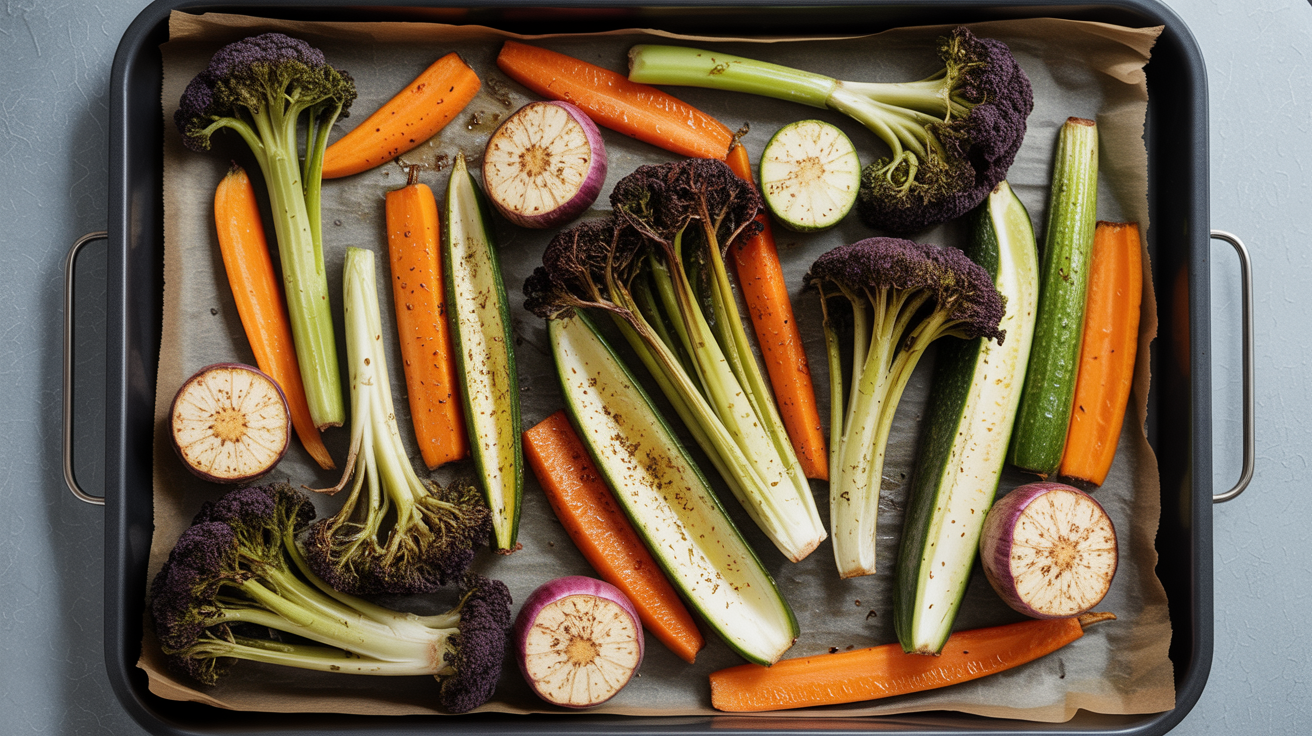
Most roasted vegetables come out pale and soft, sitting in a puddle of their own liquid. That's steaming, not roasting, and the fix is straightforward once you understand what's actually happening in the oven.
Why vegetables steam instead of brown
Broccoli, zucchini, and mushrooms are mostly water. Blast them with heat and that water escapes as steam. If the steam has nowhere to go, because pieces are crowded together or the oven isn't hot enough, the vegetables braise in their own moisture before any browning can happen.
Browning requires two overlapping reactions. The Maillard reaction starts around 280°F (140°C) at the surface of the food, where proteins and sugars rearrange into new flavor compounds. Modernist Cuisine describes this as a cascade that eventually produces hundreds of distinct molecules, which is why browned food tastes so much more complex than steamed food, not just darker. Caramelization kicks in closer to 320°F (160°C) and converts sugars into the nutty, slightly bitter notes you associate with deeply golden onions or roasted carrots. Both reactions require a dry surface. Wet surfaces have to evaporate first, which takes time and heat that could otherwise go into browning.
The practical implication: your oven needs to be at least 425°F, the pan needs breathing room, and the vegetables need to go in dry.
Temperature and oven setup
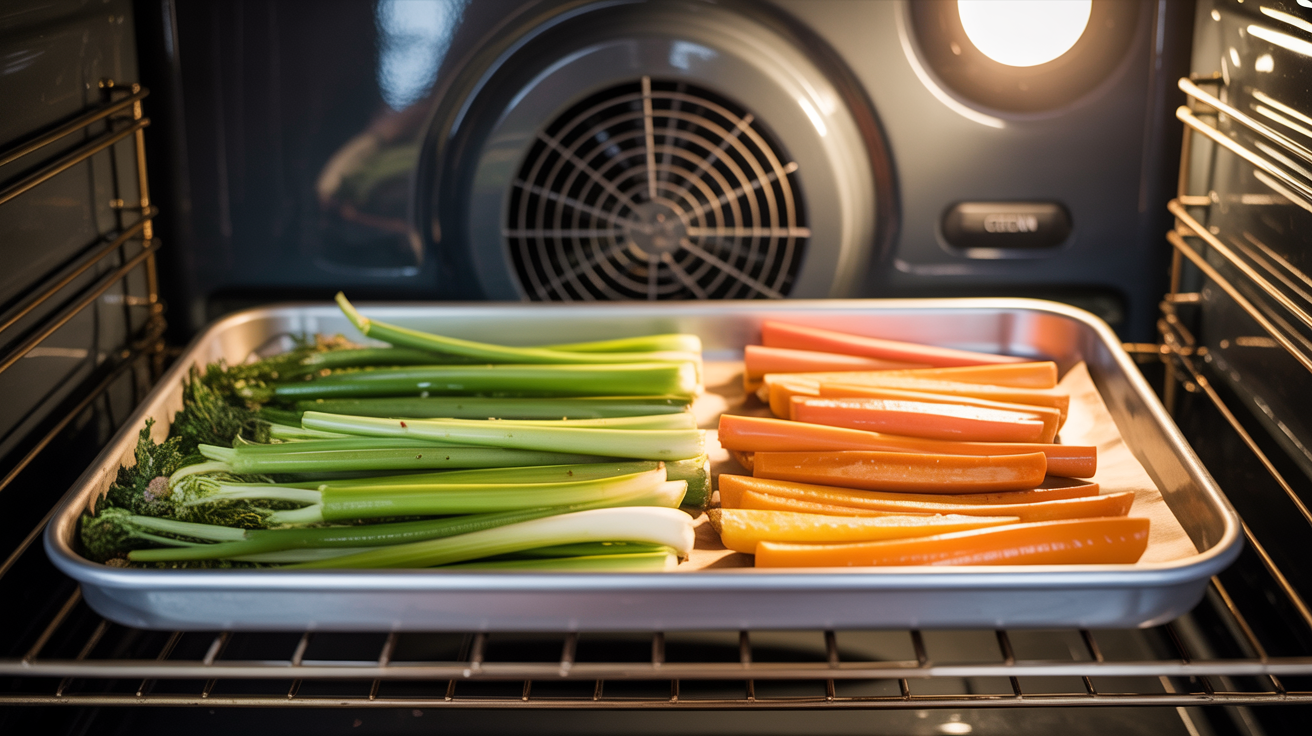
Roast most vegetables at 425°F to 450°F. Lower than that and they soften before the surface dries out enough to brown. Higher, say 500°F, works for some things (potato wedges, asparagus) but burns thin pieces before the inside cooks through.
Position the rack in the lower third of the oven, not the middle. Heat radiates from the bottom element, and the pan itself conducts heat upward into the vegetables. A lower rack gives you more direct bottom heat, which helps the undersides of the vegetables pick up color.
Preheat a heavy sheet pan in the oven before adding vegetables. A cold pan extends cooking time and can waterlog the bottom side of whatever you put on it. Slide the food onto a hot pan and it starts cooking on contact.
Oil: how much and which kind
Use about 1 tablespoon of oil per pound of vegetables. More than that and things turn greasy; less and you get dry spots that scorch before the rest catches up.
Toss the vegetables in a bowl before spreading them on the pan. Coating in the bowl is more even than drizzling oil over an already-spread tray. Every surface should look lightly slick, not soaking.
For most roasting, a neutral oil with a smoke point above 400°F works fine: refined avocado oil, grapeseed oil, or standard vegetable oil. Olive oil is fine at 425°F for most of the cooking time. It can begin to break down near the end, but in practice the flavor difference is minor unless you're roasting above 450°F for long stretches.
Cutting size and consistency
Cut everything to roughly the same size so pieces finish at the same time. Aim for 1 to 1.5 inches on most dense vegetables like carrots, sweet potatoes, and beets. Cut leafy or thin vegetables larger; broccoli florets and cauliflower can go bigger because they cook fast and have a lot of surface area to begin with.
Denser vegetables take longer. If you're mixing carrots with zucchini, either cut the carrots smaller, give them a 10-minute head start in the oven, or roast them on separate pans.
Pat wet vegetables dry before oiling them. Zucchini, mushrooms, and eggplant hold a lot of moisture. A few passes with a paper towel makes a real difference.
Pan spacing: the one thing most recipes undersell
Leave at least half an inch between pieces. Steam has to escape somewhere. If pieces are touching, the moisture released from one just humidifies the air immediately around its neighbor.
For most home ovens, a standard half-sheet pan (18x13 inches) holds about one pound of cut vegetables comfortably. Two pounds needs two pans. If you try to fit two pounds on one pan, you will get steamed vegetables, every time.
Don't line the pan with foil or parchment if you want serious browning. Both insulate the bottom of the vegetables from the hot pan surface and trap steam under the food. A bare seasoned pan or one with just a wipe of oil gives better color on the bottom.
When to flip, and when not to
Flip once, at the halfway point. For most vegetables at 425°F, that's somewhere between 15 and 20 minutes in. Flipping too early means the bottom hasn't had time to develop a crust and pieces stick. Flipping repeatedly prevents the crust from ever forming.
Some things don't need flipping at all. Asparagus and thin green beans have enough surface area that they brown adequately just from the oven's ambient heat. Thick root vegetables benefit from flipping because the bottom side develops more color than the top.
If vegetables look done but haven't browned yet, crank the broiler for two to three minutes at the end. Watch it closely; things go from golden to burnt quickly under a broiler.
Vegetable-by-vegetable timing guide
| Vegetable | Cut size | Temp | Time | Notes |
|---|---|---|---|---|
| Broccoli florets | 2-inch pieces | 425°F | 18-22 min | Edges should be lightly charred |
| Cauliflower | 1.5-inch florets | 425°F | 25-30 min | Flat side down, flip once |
| Brussels sprouts | Halved | 425°F | 22-28 min | Cut side down the whole time |
| Carrots | 1-inch coins | 425°F | 25-30 min | Toss in a little honey last 5 min for glaze |
| Sweet potato | 1-inch cubes | 425°F | 30-35 min | Spread thin, give them room |
| Zucchini | 3/4-inch coins | 450°F | 15-18 min | Pat dry, run hot and fast |
| Asparagus | Whole spears | 425°F | 10-15 min | Thin spears take 10 min, thick take 15 |
| Mushrooms | Halved | 450°F | 20-25 min | Never crowd, they release a lot of liquid |
| Cherry tomatoes | Whole | 400°F | 25-30 min | Lower temp keeps them from bursting too fast |
| Beets | 1-inch cubes | 400°F | 35-45 min | Roast separately, they bleed onto everything |
These are starting points. Ovens vary, and so do vegetable sizes. Start checking a few minutes early.
Seasoning: before, after, or both
Salt before roasting. Salt draws moisture to the surface, which sounds counterintuitive, but as the oven evaporates that moisture quickly it concentrates flavor at the surface. The exception is very watery vegetables like zucchini: if you're concerned about excess moisture, salt them, let them sit 15 minutes, then pat dry before oiling.
Add delicate herbs (parsley, basil, tarragon) after roasting. They burn. Hardy herbs (rosemary, thyme, oregano) can go on before and survive the oven. Garlic works best tossed in during the last 10 minutes; raw garlic added at the start usually burns bitter before the vegetables finish.
Acid, a squeeze of lemon or a splash of vinegar, added after roasting brightens everything. Try it even when you think the vegetables are already good. The difference is noticeable.
For pairing ideas, caramelized onions made separately are an easy way to add sweetness and depth to a tray of roasted root vegetables without changing the cooking method. Roasted vegetables also work as a side to almost any protein; if you're cooking a steak the same night, the timing works out well since you can sear a steak while the vegetables are in the oven.
Frequently Asked Questions
Why are my roasted vegetables soggy even at high heat?
Overcrowding is the most common cause. Too many vegetables on one pan traps steam and prevents browning. Use two pans instead of one, or roast in batches. Also check that the vegetables were dry before oiling; excess surface moisture needs to evaporate before browning can start.
Can I roast vegetables ahead of time?
Yes, but they won't be as crispy when reheated. Roast them, let them cool completely, then refrigerate. Reheat on a bare sheet pan at 400°F for 8 to 10 minutes to restore some texture. They'll never be quite as good as fresh from the oven, but they're still good.
Do I need to blanch dense vegetables like carrots before roasting?
No. Cutting them to the right size and giving them enough time in the oven is enough. Blanching adds a step and extra moisture. If you're roasting a mix with uneven cooking times, just cut the dense vegetables smaller or give them a head start.
What's the best pan for roasting vegetables?
A heavy rimmed sheet pan, sometimes called a half-sheet pan, is the standard. Thin cookie sheets warp at high heat and heat unevenly. Dark pans absorb heat faster and can help with browning. Avoid glass or ceramic baking dishes; they trap steam and don't conduct heat as well as metal.
Once you have the technique down, roasting becomes the default method for almost any vegetable. The rules are simple and consistent whether you're making a quick weeknight side or a larger batch that pairs with a rice dish or grain bowl.