Kitchen Equipment
Nonstick vs Stainless Steel: Which Pan, When
Most home cooks either own one pan and wonder why it underperforms half the time, or they own six pans and still reach for the wrong one. The nonstick vs stainless steel question comes up constantly because both are marketed as all-purpose, and neither actually is.
Here's the honest version: these two pans are good at almost opposite things.
What nonstick pans do well
Nonstick is the right tool for eggs, pancakes, crepes, and any fish fillet with skin. The coating prevents proteins from bonding to the metal surface, which is what you want when you're cooking something delicate that you don't want torn apart on the flip.
Fried eggs are the clearest example. In a stainless pan, an egg will stick unless the pan is properly preheated and oiled. In a nonstick pan, you can cook an egg in a small amount of butter over medium-low heat and slide it out without touching it with a spatula. That's not a failure of technique, it's just physics.
Crepes work for the same reason. A thin batter with no structural integrity needs a surface that will release it cleanly. Nonstick handles this without drama.
The heat limit problem
Nonstick coatings start breaking down above 500°F (260°C), and some older PTFE coatings get problematic at lower temperatures. This rules out most high-heat cooking. You can't preheat an empty nonstick pan on high heat and then sear a steak, you'll damage the coating and smoke up the kitchen.
This is the constraint most people don't realize when they buy a nonstick pan expecting it to handle everything.
Nonstick lifespan
A nonstick pan used carefully lasts two to five years before the coating noticeably degrades. "Carefully" means: no metal utensils, no high heat, hand wash only, don't stack it under cast iron. Even then, the coating wears. That's not a defect, it's how the material works.
When the coating starts flaking or losing release, replace the pan. Cooking on a damaged nonstick surface is not something you want to do long-term.
What stainless steel pans do well
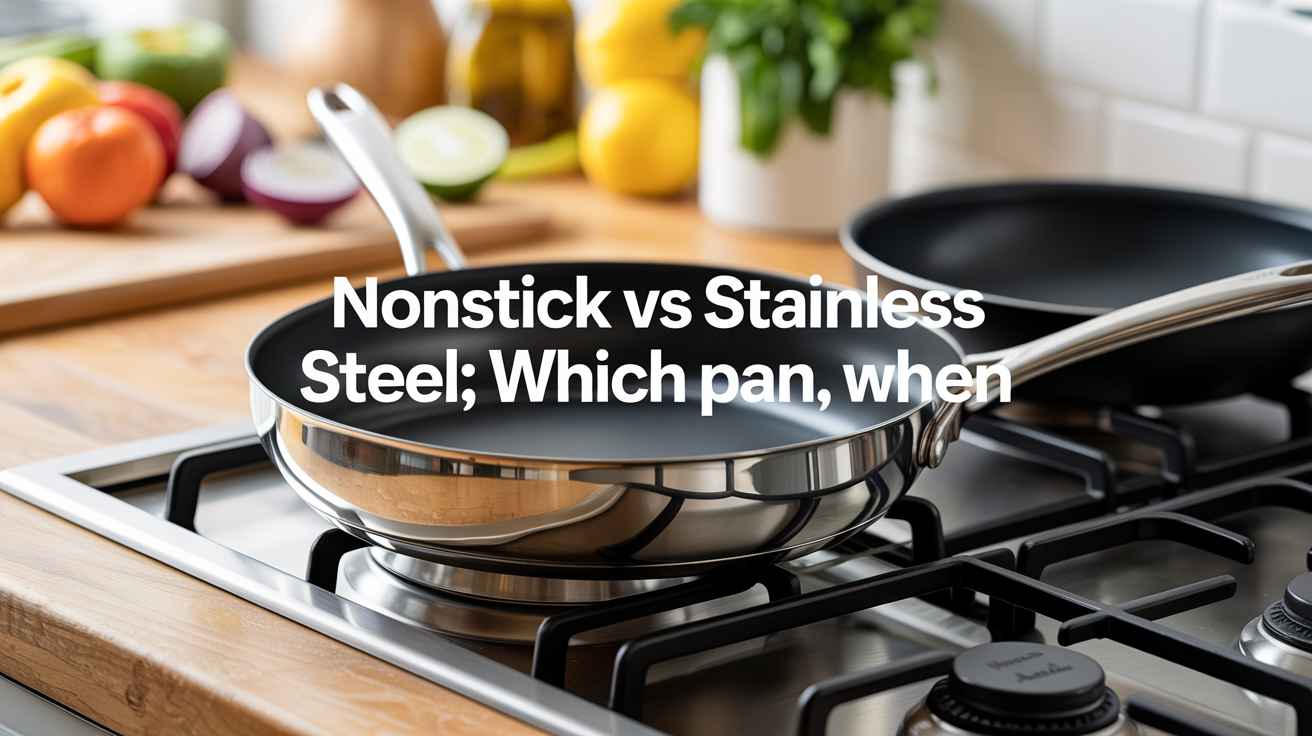
Stainless steel is built for heat. Preheat it properly, and you can sear a chicken thigh, finish a pan sauce, and deglaze with wine, all in one pan, all in sequence. Nonstick can't do any of that well.
The key thing stainless gives you is fond. Fond is the brown bits that stick to the pan after you sear meat. In stainless, those bits release when you add liquid, forming the base of a pan sauce. In nonstick, nothing sticks, so there's nothing to deglaze. You end up with flavorless liquid in the pan instead of sauce.
Stainless also handles oven finishing. Most stainless pans are oven-safe to 500°F or higher, so you can sear a thick pork chop on the stovetop and finish it in the oven without switching vessels. If you do a lot of that kind of cooking, and it's worth doing, stainless is the pan you want.
| Task | Nonstick | Stainless |
|---|---|---|
| Fried eggs | Best choice | Sticks without careful prep |
| Pancakes | Best choice | Works but less forgiving |
| Fish with skin | Best choice | Possible, higher skill needed |
| Searing meat | Poor, too low heat | Best choice |
| Pan sauces | No fond forms | Best choice |
| Oven finishing | Up to ~400°F max | Up to 500°F+ |
| Browning butter | Works | Works better (visual feedback) |
| Longevity | 2–5 years | Decades |
Getting stainless not to stick
Most people try stainless once, the food sticks, and they conclude it's a bad pan. Usually the problem is that the pan wasn't hot enough before adding oil or food.
The standard test: heat the empty pan over medium to medium-high heat for 2 minutes. Add oil and wait until it shimmers and just starts to smoke at the edges. Then add your food. If you've done this right, proteins will initially stick and then release on their own when a crust has formed. Trying to move food too early is the most common stainless mistake.
A properly preheated stainless pan with adequate oil will cook an egg without sticking. It takes more attention than nonstick, but it works.
Stainless care
Stainless is close to indestructible compared to nonstick. You can use metal utensils. You can run it through the dishwasher, though hand washing preserves the finish longer. You can leave it on high heat. Stainless will discolor and develop a rainbow patina; this is cosmetic and doesn't affect cooking.
For stuck food, fill the pan with water, bring to a simmer, and use a wooden spoon to scrape. Barkeeper's Friend powder removes the discoloration if that bothers you.
Which pan to buy first
This depends entirely on what you cook most.
If breakfast is your main cooking, eggs, pancakes, omelets, buy a nonstick pan first, probably a 10-inch. If you cook a lot of meat, want to make pan sauces, or do stovetop-to-oven work, buy a stainless pan first.
The honest answer for most home cooks is that you want one of each. A 10-inch nonstick handles eggs and delicate proteins. A 10 or 12-inch stainless handles everything that needs heat or produces fond. Together, those two pans cover about 80% of what a home cook does on the stovetop.
If you can only afford one right now, go stainless. The technique gap is learnable, and stainless will outlast three or four nonstick pans. Think of it like a good chef's knife, a tool you buy once and keep for years, not something you replace on a schedule.
Thickness matters more than brand
For stainless, look for tri-ply or five-ply construction. This means the pan has an aluminum core sandwiched between stainless layers. The aluminum spreads heat evenly; the stainless gives the cooking surface. Thin stainless pans have hot spots and warp more easily.
For nonstick, thickness matters less since you're cooking lower and slower. What matters more is the coating quality and not overpaying for a pan you'll replace in a few years.
Common mistakes and how to fix them
Overheating nonstick
Putting a nonstick pan on high heat, especially empty, degrades the coating faster and can release fumes. If you've been doing this, you haven't ruined anything permanently yet, just stop. Use nonstick on medium to medium-low and the coating will last much longer.
Under-preheating stainless
Adding food to a cold or barely warm stainless pan guarantees sticking. If you add food and it sticks immediately without releasing, the pan wasn't hot enough. Pull the food off if you can, wipe the pan, reheat properly, and try again.
Using the same pan for acidic braises
Long braises with tomatoes, wine, or citrus can pit aluminum nonstick pans and should be done in stainless, enameled cast iron, or a dutch oven. The acid isn't a problem for short cooking, but leaving acidic food sitting in a nonstick pan, or braising in one for two hours, will degrade the surface.
Stacking pans without protection
Nonstick coatings scratch when metal pans stack directly on them. Store a paper towel or pan protector between stacked pans. This adds maybe 30 seconds to your cabinet organization and meaningfully extends the coating life.
Frequently Asked Questions
Can I use a nonstick pan for everything and skip stainless?
Technically yes, but you'll have gaps. Nonstick won't get hot enough to properly sear meat, won't produce fond for pan sauces, and can't go in a very hot oven. If you mostly cook eggs, fish, and delicate things, nonstick works. If you cook meat regularly, you'll keep running into its limits.
Is ceramic nonstick better than PTFE?
Ceramic coatings (sometimes marketed as PTFE-free) release food well when new, but most users find they lose their nonstick property faster than PTFE. PTFE coatings, when used at appropriate temperatures, have a longer functional life. Major manufacturers agreed to phase PFOA out of cookware manufacturing years ago, and the FDA's page on authorized PFAS uses in food-contact materials confirms PTFE itself is still a permitted food-contact material when it's intact and used as directed. It's a distinction worth knowing: PFOA-free doesn't mean PFAS-free, but it does mean the specific compound that raised the most health concern is gone from the manufacturing process.
How do I know when my nonstick pan needs replacing?
When food starts sticking regularly despite using oil, or when you can see the coating flaking, pitting, or peeling. Minor surface scratches from plastic utensils don't necessarily mean the pan is done, degraded release performance is the better signal. If an egg requires significant effort to dislodge, it's time.
Does stainless steel react with food?
For practical purposes, no. Stainless is inert for almost all cooking. The exception: highly acidic foods sitting in the pan for extended periods can cause slight metallic taste in sensitive people, but this isn't a health concern. For long acid-forward braises, use enameled cast iron or a stainless-lined pot rather than a raw aluminum-core pan.