Kitchen Equipment
How to Choose the Best Chef's Knife
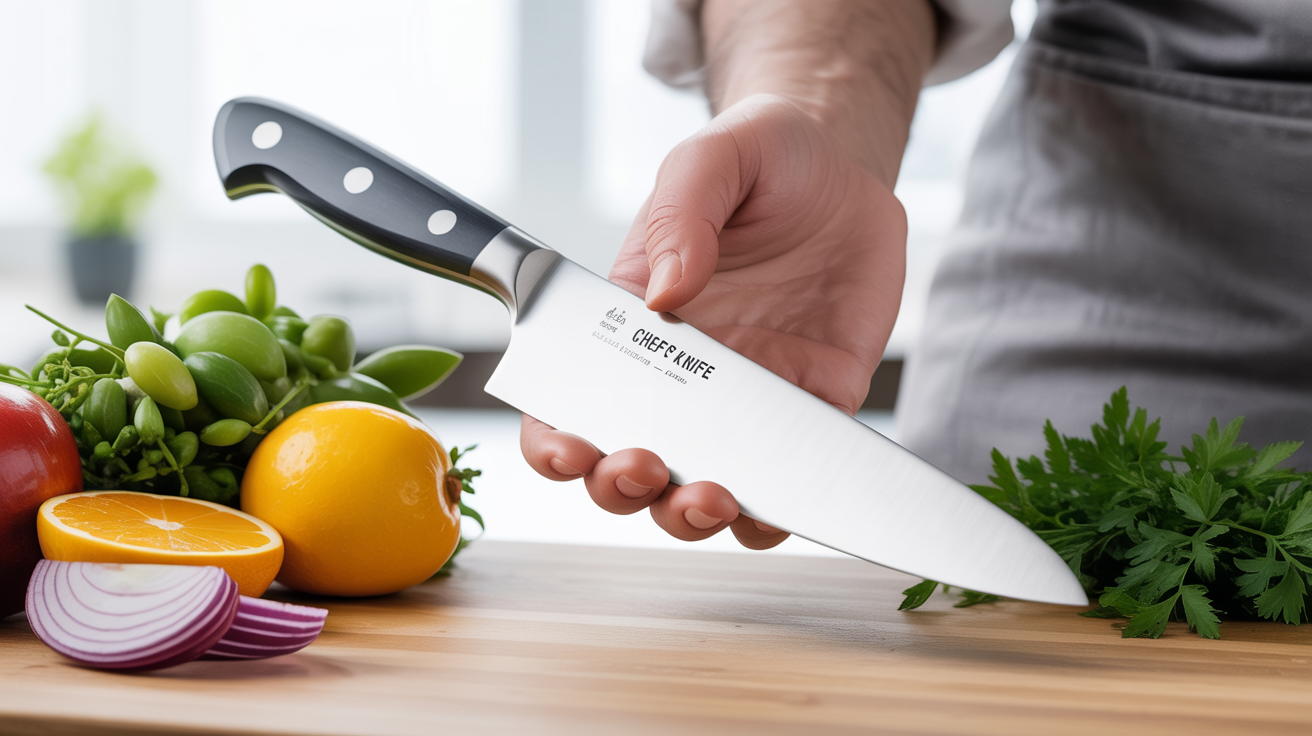
A chef's knife gets used more than any other tool in the kitchen, so buying the wrong one is a real problem. The wrong weight, grip, or steel type means you'll reach for it less often, and your prep work suffers. This guide covers what actually matters when choosing one.
Blade length
Most chef's knives sold are either 6, 8, or 10 inches. The 8-inch is the default for good reason: long enough to break down a chicken or slice a melon, short enough to control precisely when mincing garlic. When America's Test Kitchen tested chef's knives against tasks like breaking down whole chickens, slicing tomatoes, and chopping butternut squash, they built the whole lineup around 8-inch blades, since that length handled the widest range of real kitchen tasks without becoming unwieldy.
Who should consider a 6-inch: cooks with small hands, anyone who finds an 8-inch unwieldy when fine-dicing onions, or anyone mostly cooking for one or two people. The shorter blade gives you more feedback and control at the tip.
Who should look at a 10-inch: cooks who regularly break down large proteins, or anyone doing high-volume prep (think: Sunday batch cooking where you're cutting 4 lbs of vegetables at a stretch). The extra length reduces the strokes needed per cut.
If you've never owned a dedicated chef's knife before, start with 8 inches. You can always add other lengths later.
Steel type: what it actually changes
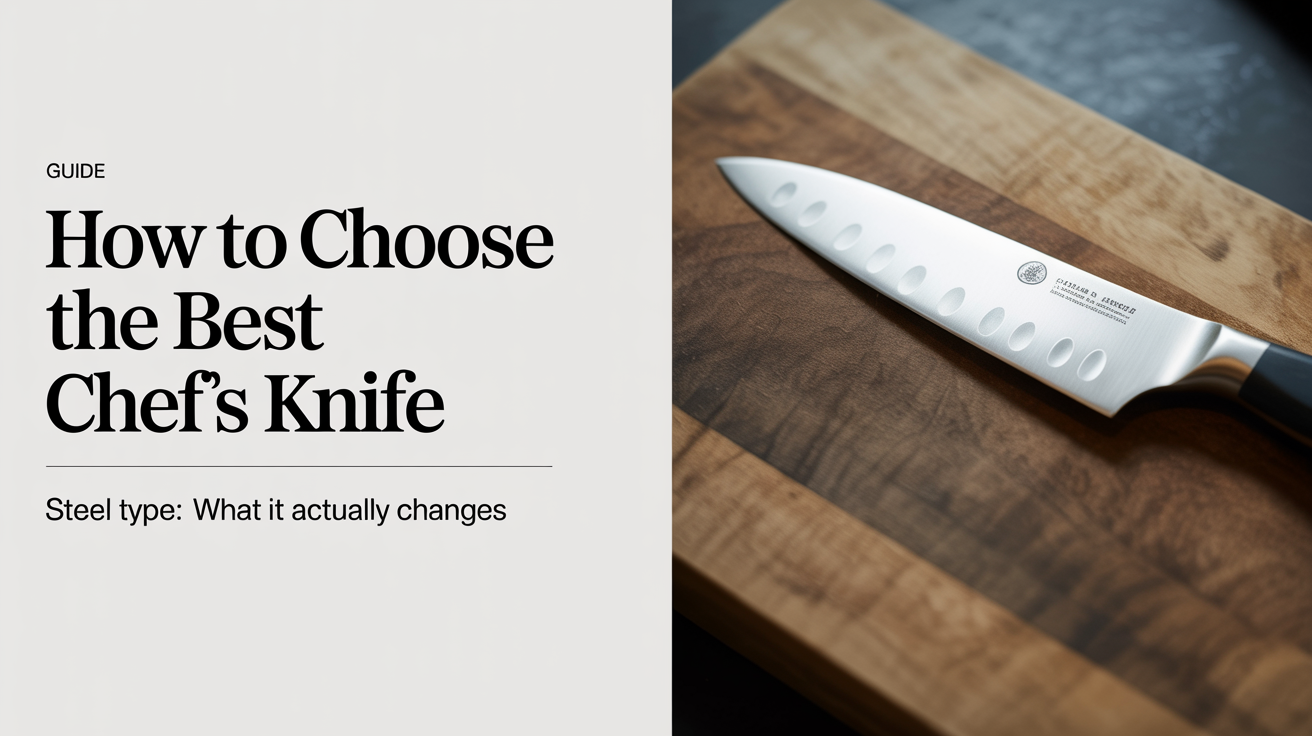
Two main categories here: German steel (softer, around 56-58 HRC on the Rockwell scale) and Japanese steel (harder, typically 60-65 HRC). The difference isn't just marketing.
| Feature | German steel | Japanese steel |
|---|---|---|
| Edge angle | 20-25° per side | 10-15° per side |
| Sharpness out of box | Good | Razor sharp |
| Edge retention | Needs more frequent honing | Holds edge longer |
| Chip resistance | Chips less easily | More brittle, chips on hard foods |
| Weight | Heavier | Lighter |
| Sharpening | Easier, less precise | Needs finer grit, more skill |
German steel is more forgiving. You can run it through a dish rack, sharpen it on a basic whetstone, and use it to cut through squash rinds without much worry. Japanese steel gives you a finer edge but requires more care: don't use it on frozen food, don't try to pry apart stuck items, and expect to learn proper whetstone technique to maintain it.
For most home cooks, German steel is the practical choice. If you already own good knives and want to add something that holds a finer edge for delicate work, that's when Japanese steel starts making sense.
Tang: full vs partial
The tang is the portion of the blade that extends into the handle. Full tang means the steel runs the entire length of the handle, visible as two strips along the sides; partial tang stops somewhere in the middle.
Full tang is worth insisting on for a knife you'll use daily. The handle won't loosen over years of washing, the knife balances better at the bolster (the thick band between blade and handle), and if something does fail structurally, you'll notice wobble before it becomes dangerous. Partial-tang knives aren't automatically bad, but they're less durable over time.
While you're checking the tang, look at the rivets holding the handle scales. They should sit flush, not raised. Raised rivets catch food debris and are annoying to clean.
How to test balance in hand
If you're buying in a store, pick the knife up and pinch the blade just above the bolster between your thumb and index finger, with your other three fingers wrapped loosely around the handle. This is called the pinch grip, and it's how you'll hold the knife for most tasks.
A well-balanced knife should feel neutral or very slightly blade-heavy at the bolster. If the handle pulls down significantly, the knife will fatigue your wrist during long prep sessions. If the blade pulls down hard, you lose precision.
Also check: does the bolster dig into your knuckles? A thick, pronounced bolster prevents you from using the full length of the blade and makes sharpening harder (you can't sharpen all the way to the heel without a special technique or sending it out). Some Japanese-style knives have no bolster at all, which some cooks prefer.
Weight preference is personal. Some people want a heavier knife that does more work; others prefer a lighter blade they can move faster. If you can, hold a few different knives before committing.
Handle materials
Western handles are usually wood (stabilized or sealed), synthetic composites like POM or Fibrox, or resin-impregnated wood. Japanese handles are often octagonal or D-shaped and made from softer woods like ho (magnolia) or pakkawood.
For home cooks who hand-wash: any material works. For anyone who sometimes puts knives in the dishwasher (which you shouldn't, but people do): synthetic handles survive better than wood. Pakkawood is more dishwasher-resistant than plain wood but still not ideal.
The D-shaped handle on many Japanese knives is designed for a specific handedness. If you're left-handed, check whether the D-shape is ambidextrous or right-hand-specific.
Budget tiers
Under $60: You can get a functional knife in this range, but it narrows your options fast. Look for German steel, full tang, and a basic synthetic handle. Skip anything claiming to be Japanese-style at this price; the steel quality usually doesn't back up the claim.
$60-120: The range where most serious home cooks should shop. You'll find well-made German knives and entry-level Japanese options with proper heat treatment. This is where the value is.
$120-250: Diminishing returns for most home cooks. You're buying better fit and finish, often hand-sharpened edges from the factory, and more refined handle geometry. Worth it if you cook daily and maintain your knives properly.
Over $250: Custom or artisan production. Legitimate tools, but the performance gap over a well-maintained $150 knife is small for home use.
Note: maintenance matters more than price. A $90 knife you keep sharp outperforms a $300 knife you never sharpen. If you don't have a sharpening setup yet, budget for a basic whetstone or a sharpening service alongside the knife purchase.
If you're building out your kitchen setup more broadly, read our guide on dutch oven uses for the tools that pair well with good knife work, and nonstick vs stainless steel pans for the pan decisions that follow.
Common mistakes when buying
Buying a knife block set instead of one good knife. The knives in most sets are mediocre across the board, and you'll end up with six knives you barely use. Buy one excellent chef's knife, one paring knife when you need it, and a serrated bread knife. That covers 95% of home cooking.
Choosing based on aesthetics. A Damascus pattern looks good but tells you nothing about steel quality. Judge the knife by the steel spec, the fit and finish, and how it feels in your hand.
Buying online without holding it first. Possible, but you're guessing on balance and grip comfort. If there's any kitchen store near you with floor stock, handle a few knives before buying. Even if you then buy online.
Frequently Asked Questions
What's the best chef knife for a beginner?
A German-steel, full-tang, 8-inch knife in the $60-120 range. At this price you get real quality, and if you decide knife work isn't your thing, you haven't lost much. Brands to look at: Victorinox Fibrox (around $50, Fibrox handle, excellent value), Wusthof Classic, Henckels Professional S. Any of these will outperform what most home cooks currently own.
Is an 8 inch chef knife the right size for most people?
For most home cooks, yes. The 8-inch handles the widest range of tasks without being unwieldy. Smaller hands sometimes prefer a 6-inch; cooks doing a lot of large-batch prep sometimes prefer 10. If you're unsure, start with 8.
How often should I sharpen my chef's knife?
Depends on use. A home cook using the knife daily should sharpen it every 2-3 months, and hone it (on a honing steel or ceramic rod) every few uses. Honing realigns the edge without removing metal; sharpening removes metal to restore a dull edge. Many people confuse the two and skip sharpening entirely, which is why most home knives are duller than they should be. Check out our guide on stand mixer attachments if you're also building out other kitchen tools.
German vs Japanese chef knife: which should I buy?
For most home cooks: German. More forgiving, easier to maintain, handles a wider range of tasks without worrying about chips. Japanese knives are worth considering if you do a lot of precise vegetable work, already know how to use a whetstone, and won't use the knife on hard or frozen foods. If you're early in building a knife collection, German steel first, Japanese later if you want it.