Kitchen Equipment
What a Dutch Oven Is For: 12 Ways to Use It
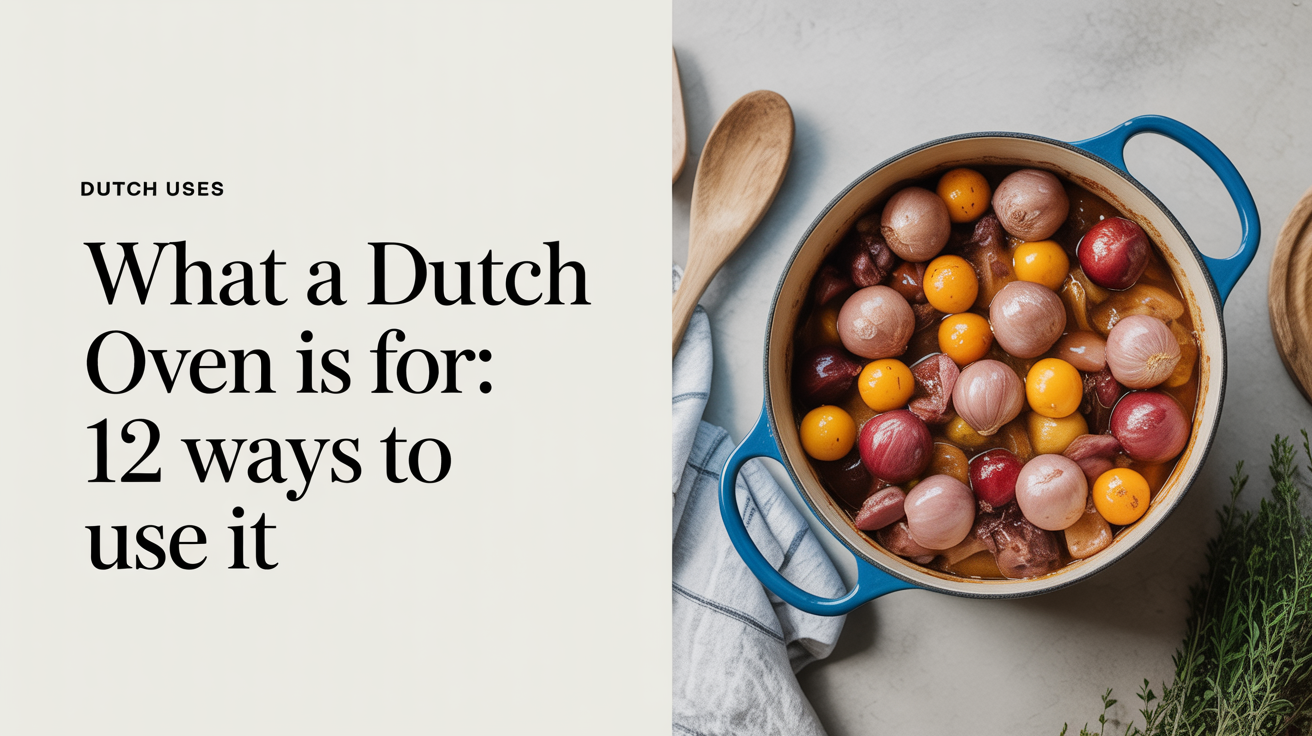
A Dutch oven is the single most versatile pot in a home kitchen. If you only ever buy one piece of heavy cookware, this is the one: it braises, soups, bakes bread, deep-fries, and roasts, all in the same vessel.
What makes a Dutch oven different
The short answer: thick walls, a tight-fitting lid, and a lot of mass. A 5.5-quart enameled Dutch oven weighs around 12 pounds empty. That weight is the whole point. Cast iron holds heat evenly and retains it long after the burner drops, which is why it's so good at long, slow cooking.
Enameled vs. bare cast iron
Most home cooks are choosing between two types:
| Feature | Enameled (e.g. Le Creuset, Lodge Enameled) | Bare cast iron |
|---|---|---|
| Seasoning required | No | Yes |
| Reactive with acids | No | Yes (tomatoes, wine can strip seasoning) |
| Cleaning | Soap fine, some dishwasher-safe | Hand wash, dry immediately |
| Starting cost | $60–$400 | $30–$80 |
| Surface repairs | Not possible if enamel chips | Re-season anytime |
For most people, enameled is the right call. You can deglaze with wine, cook tomato-based sauces, and clean it without fussing over a seasoning layer. Bare cast iron is fine if you already know how to maintain it or want to save money, but if the pot sits unused because you're nervous about rusting it, that's a worse outcome than spending more.
Sizing
A 5 to 6 quart pot handles most tasks: feeds four to six people, fits a whole chicken, holds enough oil for frying. Go smaller (3.5 qt) only if you're cooking for one or two consistently. Go bigger (7–9 qt) if you regularly cook large batches for a crowd or want to bake large loaves. Most cooks who own one eventually wish they had the 5.5 qt, not anything smaller.
Braising
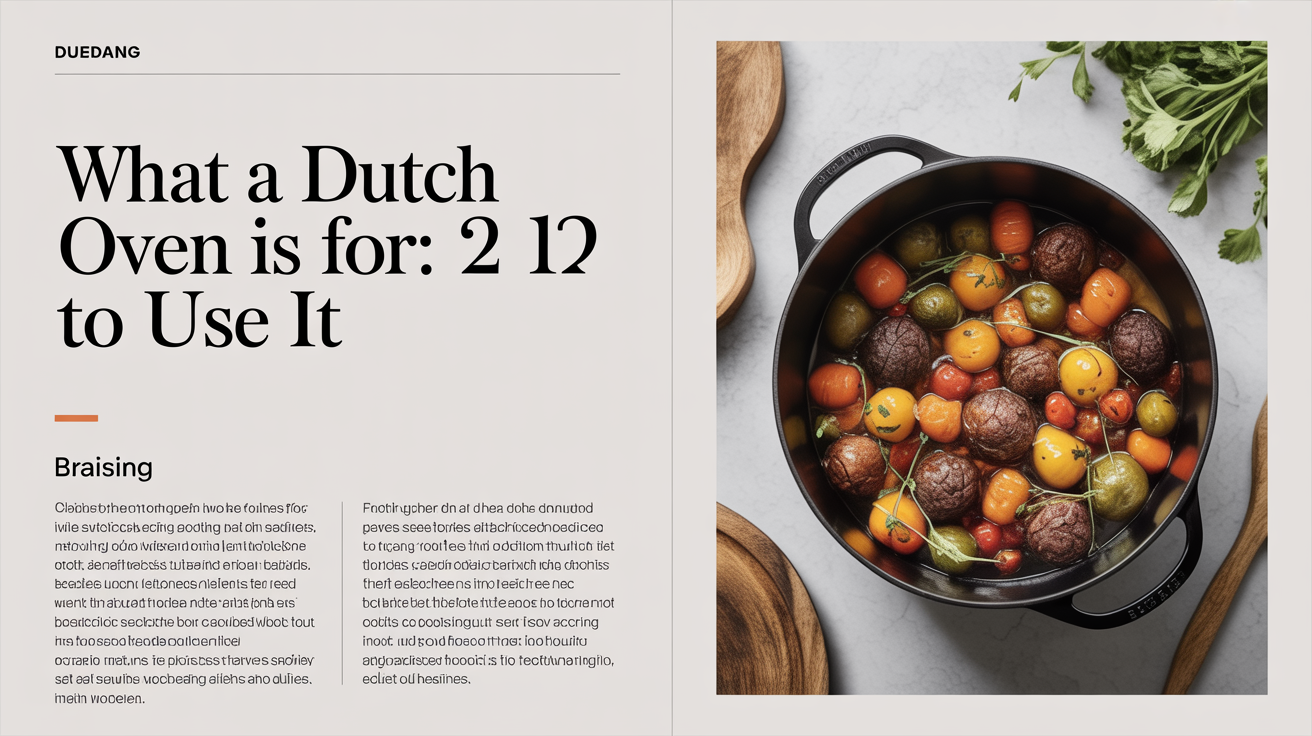
This is what Dutch ovens do better than anything else. Braising means browning meat in fat, then cooking it partially submerged in liquid at low heat, lid on, for a long time. The tight lid traps steam and keeps moisture cycling back into the pot. You get fall-apart texture without the meat drying out.
Short ribs, pork shoulder, chicken thighs, and lamb shanks all work well. The basic formula is the same every time: sear on the stovetop until browned on all sides, remove the meat, soften aromatics (onion, garlic, carrot) in the same pot, add liquid to about halfway up the meat, return the meat, cover, and put it in a 325°F oven for 2 to 4 hours depending on size.
The most common braising mistake
Too much liquid. If you fill the pot to cover the meat, you're not braising, you're boiling. The meat should sit in an inch or two of liquid, not be submerged. The steam does the rest.
Soups and stews
The Dutch oven is a soup pot that can actually sear. Most regular stockpots are thin stainless that scorches if you try to brown anything in them. A Dutch oven lets you cook the aromatics until they develop color, then build the soup from there, which is the difference between a soup that tastes flat and one that doesn't.
For a weeknight bean soup: render some diced bacon, soften onion and garlic in the fat, add canned tomatoes and let them cook down for a few minutes, add beans and broth, simmer 30 minutes. The whole thing comes together in one pot with real depth because you built layers.
Baking bread
This changed home bread baking. The reason artisan loaves from professional bakeries have crispy, crackly crusts is steam: bakeries inject steam into their ovens during the first 15 minutes of baking. A home oven has no steam. But if you bake a loaf inside a preheated Dutch oven with the lid on, the moisture from the dough itself creates a steamy environment, and the pot works as a stand-in for that professional steam injection. King Arthur Baking puts it plainly: a preheated Dutch oven becomes a miniaturized version of a professional steam-injected oven, trapping the ambient steam released from the dough close to the crust so it gelatinizes the surface starches and produces that glossy, blistered look.
How to do it
- Preheat the Dutch oven in your oven at 500°F for at least 45 minutes, the whole pot, lid and all.
- Score your shaped, proofed dough with a razor or sharp knife.
- Lower the dough carefully into the screaming hot pot (parchment sling helps).
- Lid on, bake 20 minutes.
- Lid off, reduce to 450°F, bake another 20 to 25 minutes until the crust is deep brown.
No-knead doughs work especially well here because their high hydration produces more steam. If you want to understand the full picture of flour, gluten, and fermentation, it helps to have already worked with a reliable stand mixer and its dough hook before doing this by hand.
Deep-frying
A Dutch oven is the safest vessel for home deep-frying. The high walls contain splatter. The thick cast iron holds oil temperature stable after you add food; thin pots recover slowly, which means the food absorbs oil while the temperature climbs back up. You get greasy food that way.
For fried chicken, doughnuts, or french fries, fill the pot no more than one-third full of oil, clip a thermometer to the side, and heat to whatever the recipe calls for (usually 350–375°F). Add food in small batches; adding too much at once drops the temperature too far.
Safety note
Never fill a Dutch oven more than halfway with oil. Cast iron holds heat so well that oil can stay dangerously hot long after the burner is off. Keep a lid nearby when frying. If oil starts smoking heavily, turn off the heat and don't add water.
Roasting
You can start a roast on the stovetop, sear the meat in the same pot, add vegetables, and transfer the whole thing to the oven. No separate searing pan, no extra dishes. For a pork shoulder or whole chicken, this approach produces better results than roasting in a bare roasting pan because the walls trap heat around the meat.
For the last 20 to 30 minutes, pull the lid off to let the exterior brown and the skin crisp. A covered roast stays moist but stays pale; uncovering at the end solves that.
Other uses worth knowing
Rice: The heavy lid and even heat make a Dutch oven genuinely good at rice. Bring to a boil, reduce heat, lid on, 18 minutes, done. It holds temperature better than a thin saucepan.
Caramelizing onions: The low, even heat prevents hot spots. Cook a large batch over 45 minutes on medium-low; they collapse and brown without burning.
Pasta water: It holds a lot of volume and comes to a boil faster than you'd expect because of how much heat it retains from preheating. A minor point, but useful.
Steaming: Put a small rack or a folded towel in the bottom, add two inches of water, bring to a boil, set vegetables or dumplings in a heatproof dish above the water, lid on.
Care and maintenance
For enameled Dutch ovens:
- Wash with mild dish soap and a soft cloth or sponge. No steel wool; it scratches the enamel.
- If food is stuck, fill with water and simmer for a few minutes, then clean. Bar Keepers Friend paste works for stubborn stains without scratching.
- Don't heat an empty enameled pot. The enamel can crack. Always have liquid or fat in it before it goes on a burner.
- Chips in the enamel are cosmetic if they're on the exterior. Interior chips are a problem: exposed cast iron will rust and can contaminate food.
For bare cast iron, the care is different and more involved. The full breakdown of cast iron seasoning and cleaning is worth reading if you're maintaining a bare pot or planning to switch.
Frequently Asked Questions
Can I use a Dutch oven on any stovetop?
Yes, with one exception. Enameled Dutch ovens work on gas, electric, and induction. Bare cast iron also works on all of those. The one surface to be cautious about is glass-ceramic cooktops: the weight and rough bottom of a cast iron pot can scratch the surface if you drag it. Lift to move, don't slide.
Is a Le Creuset worth the price?
It depends on how often you cook. Le Creuset and Staub are extremely well-made with thick enamel that doesn't chip easily and handles that stay cool on the stovetop. Lodge's enameled Dutch oven runs around $60–$80 and performs well for most home cooking. The enamel is thinner and more prone to chipping over years of use, but plenty of people cook with one for a decade without problems. If you cook every day and plan to keep the pot for 20 years, the better enamel is worth it. If you're not sure you'll use it often, buy the Lodge.
Can you put a Dutch oven in a dishwasher?
Some manufacturers say yes, but hand washing is safer. The dishwasher detergent is abrasive, the high heat over time dulls the enamel, and the interior can discolor faster. Takes 30 seconds to wash by hand; it's not worth the risk.
What can't a Dutch oven do?
It's not great for tasks that need quick, responsive heat: sauteing vegetables you want to stay crisp, for instance, or searing a thin piece of fish. Cast iron is slow to change temperature, which is the feature you want for braising and the liability you don't want for delicate quick-cook tasks. For those you want a stainless skillet or a good chef's knife doing prep work into a hot pan fast. The tradeoffs between different pan materials are covered in more detail in the guide to nonstick vs. stainless steel pans.
For prep work before your Dutch oven goes on the heat, a sharp knife makes all the difference. If your knife is struggling with onions and carrots before they go in the pot, that's worth fixing first. See the chef's knife guide for what to look for.