Ingredients
Pantry Spices Worth Keeping on Hand
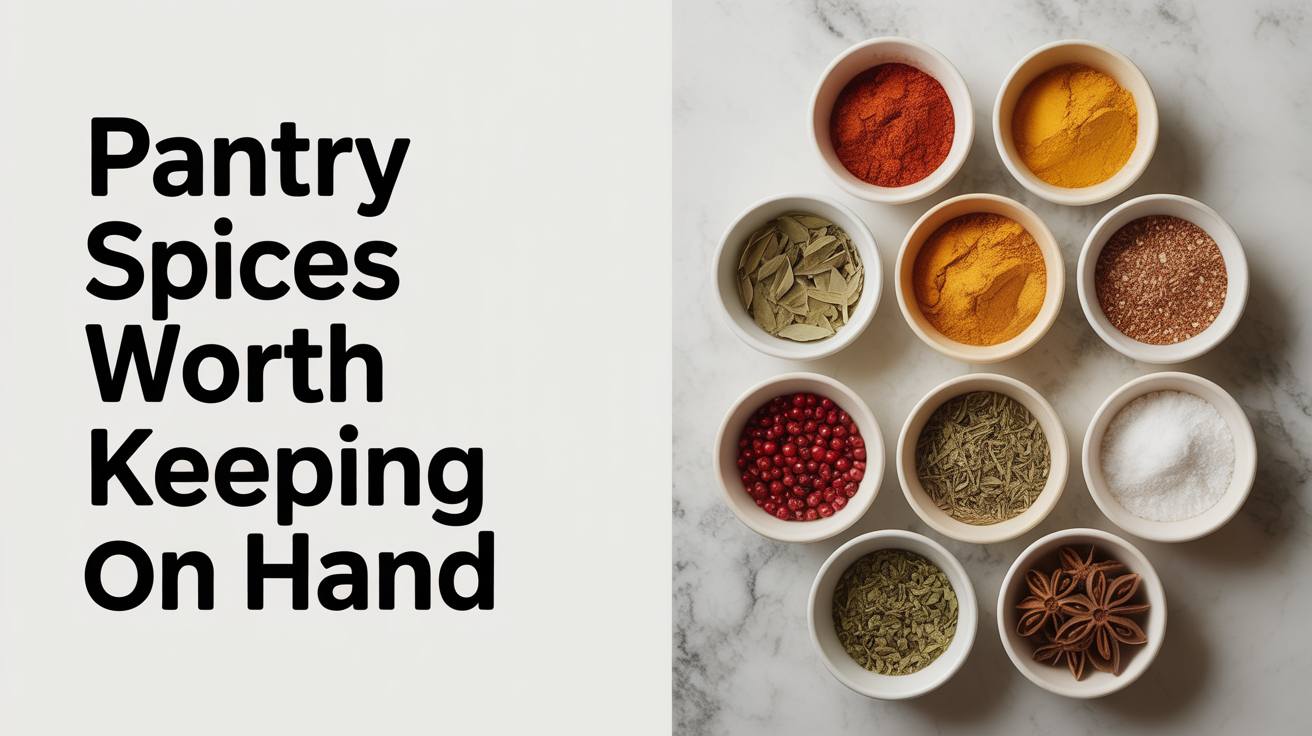
In Short
- Twelve spices cover most everyday cooking. A crowded rack usually means a lot of dull jars, not more flavor options.
- Ground spices fade in 12 to 18 months opened. Whole spices last 2 to 3 years.
- Smell the jar before you cook with it. If it's faint or dusty, it won't do much for the food, though it's not unsafe.
- Store spices in a dark cabinet away from the stove, in airtight containers. Heat and steam age them out fastest.
- Don't shake a jar directly over a steaming pot. Condensation causes clumping over time.
Most spice racks accumulate over time: a jar of fenugreek from one ambitious recipe, some crystallized star anise, a tin of something labeled "poultry seasoning" with no date and a faint memory. None of those get touched week to week. Meanwhile, the three or four jars that do the real work are buried at the back.
This guide is a cut-down version of that reality. Twelve spices, chosen because they show up across cuisines, tolerate everyday cooking conditions, and genuinely change how food tastes. Skip the rest until you actually need them.
Why a Shorter Spice List Works
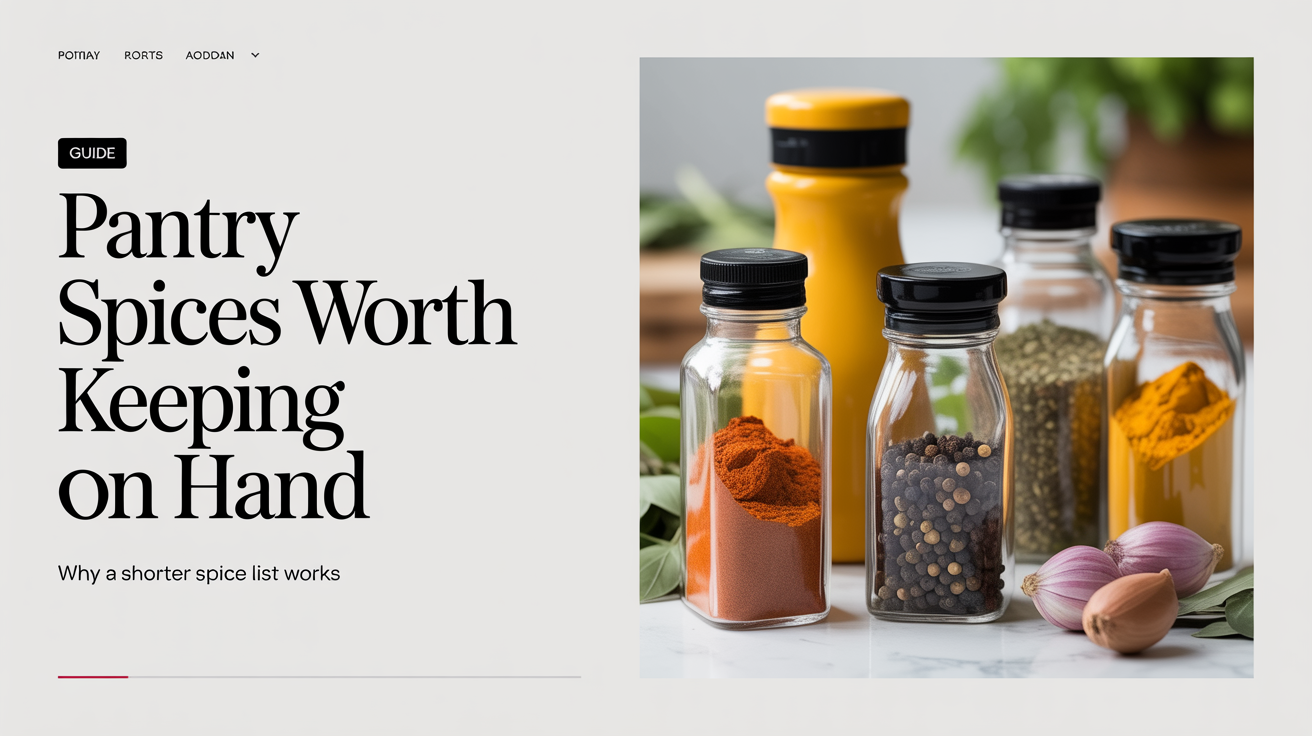
Spices lose potency. Ground spices fade faster than whole ones, and most lose meaningful aroma within 12 to 18 months of being opened, sometimes sooner if your kitchen gets hot. A large collection of half-used jars usually means a lot of dull, ineffective seasoning you're adding more of to compensate.
A focused list also trains you to use what you have, which turns out to be good practice. When a recipe calls for cumin and it's one of twelve jars instead of fifty, you notice what it does to the food.
Knowing when to reach for a dried herb versus a fresh one is a separate question worth reading, but spices and dried herbs share one rule: fewer good jars beat a full rack of mediocre ones.
The Twelve Spices That Do Real Work
These aren't ranked, but they are sorted roughly by how often they come up in a standard home-cooking rotation.
| Spice | Starting amount | Where it works |
|---|---|---|
| Cumin | 1 tsp per pot | Chili, tacos, roasted vegetables, beans |
| Smoked paprika | 1/2 tsp | Lentil soup, roasted potatoes |
| Garlic powder | To taste | Dry rubs, marinades, spice blends |
| Onion powder | 1 tsp | Quick soups, rubs |
| Ground coriander | 1 tsp | Fish, chicken, roasted carrots |
| Turmeric | 1/4 tsp per serving | Soups, rice, scrambled eggs |
| Red pepper flakes | A pinch | Pasta, pizza, roasted vegetables |
| Black pepper | Fresh-cracked | Nearly everything |
| Cinnamon | 1/4 tsp | Stews, tomato sauces, chili |
| Dried oregano | 1 tsp | Tomato sauces, braised beans |
| Ground ginger | 1/2 tsp | Dry rubs, baked goods |
| Bay leaves | 1-2 leaves | Soups, braises |
Cumin
Ground cumin is the workhorse of the twelve. It appears in Mexican, Indian, Middle Eastern, and North African cooking, and works in dry rubs, soups, roasted vegetables, and bean dishes. Toasting ground cumin in a dry pan for 30 to 60 seconds before using it pulls out more of its earthy, faintly nutty flavor. A teaspoon (about 2.5 g) is a reasonable starting point for a pot of chili or a batch of taco meat.
Smoked Paprika
Regular paprika is mild and slightly sweet. Smoked paprika is what gives dishes a grilled, almost campfire quality without any actual smoke. A half-teaspoon stirred into lentil soup or sprinkled over roasted potatoes changes the dish noticeably. Keep the sweet smoked variety unless you want heat; hot smoked paprika is a different jar.
Garlic Powder
Fresh garlic and garlic powder are not interchangeable, but garlic powder belongs in your pantry anyway. It disperses evenly through dry rubs, marinades, and spice blends in a way fresh garlic cannot, and it doesn't burn the way fresh minced garlic does when you season a steak that's going into a hot pan.
Onion Powder
Same logic as garlic powder. It's useful in spice rubs, soups built quickly from pantry ingredients, and anywhere you want onion flavor without adding moisture. One teaspoon (about 2.5 g) roughly approximates the mild background sweetness of half a small cooked onion.
Ground Coriander
Coriander seed, ground, is lighter and more citrusy than cumin, and the two are often used together. On its own it works well with fish, chicken, and roasted carrots. A good way to use it: combine 1 tsp cumin, 1 tsp coriander, and 1/2 tsp smoked paprika for a quick rub that works on almost any protein.
Turmeric
Turmeric is vivid yellow, slightly bitter, and earthy. Its role in everyday cooking is less about flavor impact than color and background depth, particularly in soups, rice dishes, and scrambled eggs. It pairs well with cumin and coriander. Start with 1/4 tsp per serving and add from there because too much makes food taste medicinal.
Red Pepper Flakes
Red pepper flakes add heat that blooms when you add them early (to hot oil, for example) and more immediate, direct heat when added late. A pinch to pasta, pizza, roasted vegetables, or oil-based sauces is the baseline. They keep well, but their heat does dull over time, so old flakes may require more than the recipe calls for.
Black Pepper
Black pepper is worth mentioning here because freshly ground pepper and pre-ground are genuinely different. Pre-ground black pepper in a tin is convenient, but it's substantially less aromatic than pepper cracked from a mill right before it goes into food. If you're only going to grind one spice, make it black pepper.
Cinnamon
Cinnamon earns its place outside of baking. A small amount (1/4 tsp) stirred into a Moroccan-style lamb stew, a Turkish tomato sauce, or a pot of chili adds warmth without making the dish taste like dessert. Ground cinnamon fades faster than most spices; if yours smells faintly of nothing, it's time to replace it.
Dried Oregano
Dried oregano is more assertive than its fresh counterpart, which is why it works well in longer-cooked dishes like tomato sauces, braised beans, and marinades. Rub it between your fingers before adding it to activate its oils. About 1 tsp (1 g) is a good starting measure for a sauce serving four.
Ground Ginger
Ground ginger and fresh ginger are interchangeable in some applications but not all. Ground ginger is better for dry rubs, spice blends, and baked goods; fresh ginger is better for stir-fries and anything where you want a bright, sharp edge. 1/2 tsp ground ginger is roughly equivalent to 1 tsp fresh grated ginger in baked applications.
Bay Leaves
Bay leaves are easy to dismiss because they're subtle, but soups and braises built without them taste a little flat by comparison. Add one or two dried bay leaves at the start of cooking, and fish them out before serving. Turkish bay leaves tend to be more aromatic than California varieties, though both work.
How to Tell When a Spice Is Too Old
The test is simple: smell the jar. A spice that's still good smells clearly of what it is. Cumin smells earthy and warm. Cinnamon is immediately recognizable. If you open a jar and get a faint, dusty smell or nothing at all, the spice won't do much for your food.
A quick visual check helps too. Ground spices that have faded from deep color to pale, chalky tones have usually lost a lot of volatility. Smoked paprika that was once deep brick-red and is now an orange-beige is a sign it's past its most useful window.
General shelf life for ground spices: 12 to 18 months opened, stored properly. Whole spices last longer, up to 2 to 3 years. Neither of those timelines is a cliff; a two-year-old jar of cumin won't hurt you, it just won't taste like much.
If you're unsure about a jar, toast a small amount (1/4 tsp) in a dry skillet over medium heat for 30 seconds and smell it again. Heat releases whatever volatile compounds remain. If it still smells faint, toss it.
Storing Spices So They Stay Useful
Heat, light, and moisture are the enemies. Storing spices directly above or beside the stove, where steam and heat fluctuate every time you cook, is one of the fastest ways to age them out. A drawer, cabinet away from the oven, or a spot on the counter that doesn't get direct sun will extend their useful life considerably.
Airtight jars make a difference. Many spices come in jars with loose-fitting caps; transferring them to sealed containers (small glass jars with tight-fitting lids) slows oxidation. If you buy in bulk, only transfer what you'll use in a few months and keep the rest sealed.
Moisture is the one that surprises people. Shaking a spice jar directly over a steaming pot lets condensation into the jar and causes clumping over time. Measure spices into your hand or a small bowl first, then add them to the pot.
The question of which salt to reach for at different stages of cooking is connected to all of this: salt and spices work together, and the texture and mineral quality of your salt affects how spices register on the palate.
Frequently Asked Questions
How many spices does a home cook actually need?
Twelve to fifteen is a realistic working pantry. Beyond that, most spices are for specific recipes rather than everyday cooking. Start with the twelve listed here and add others only when a recipe calls for them more than once.
Should I buy whole spices or ground?
Ground spices are more convenient and work well for the dozen listed here. Whole spices last longer and produce better flavor when toasted and freshly ground, but they require a spice grinder (a small blade coffee grinder dedicated to spices works fine). If you cook with cumin and coriander frequently, buying those whole and grinding as needed is worth the small extra effort.
Can I use a spice that smells faint but not bad?
You can, but you may need to use more of it, which isn't always ideal, especially with strong spices like turmeric or cinnamon. If it smells faint rather than rancid, double the quantity called for and see how the dish turns out. If it smells off or musty, discard it.
Where should I store spices for maximum shelf life?
A cool, dry cabinet away from the stove is the best option most home cooks have. A drawer dedicated to spices works well because it keeps them in the dark and away from steam. Avoid the refrigerator; the condensation when jars move in and out does more harm than good for most spices.
Do I need both garlic powder and onion powder, or can I skip one?
They're different enough to be worth having both. Garlic powder is more pungent and forward; onion powder is milder and slightly sweet. If you had to pick one, garlic powder is the more versatile of the two, but the jars are small and inexpensive enough that keeping both makes sense.
Sources
- Iowa State University Extension: Herbs and Spices Have an Expiration Date covers realistic shelf-life ranges for ground versus whole spices and a smell-taste-color freshness test.
- University of Florida IFAS Extension: Herbs and Spices Explained explains what "use-by" dates actually mean and why the refrigerator is the wrong place to store spices.