Recipes
Pressure Cooker Dinner Recipes for Nights When Time Is Tight
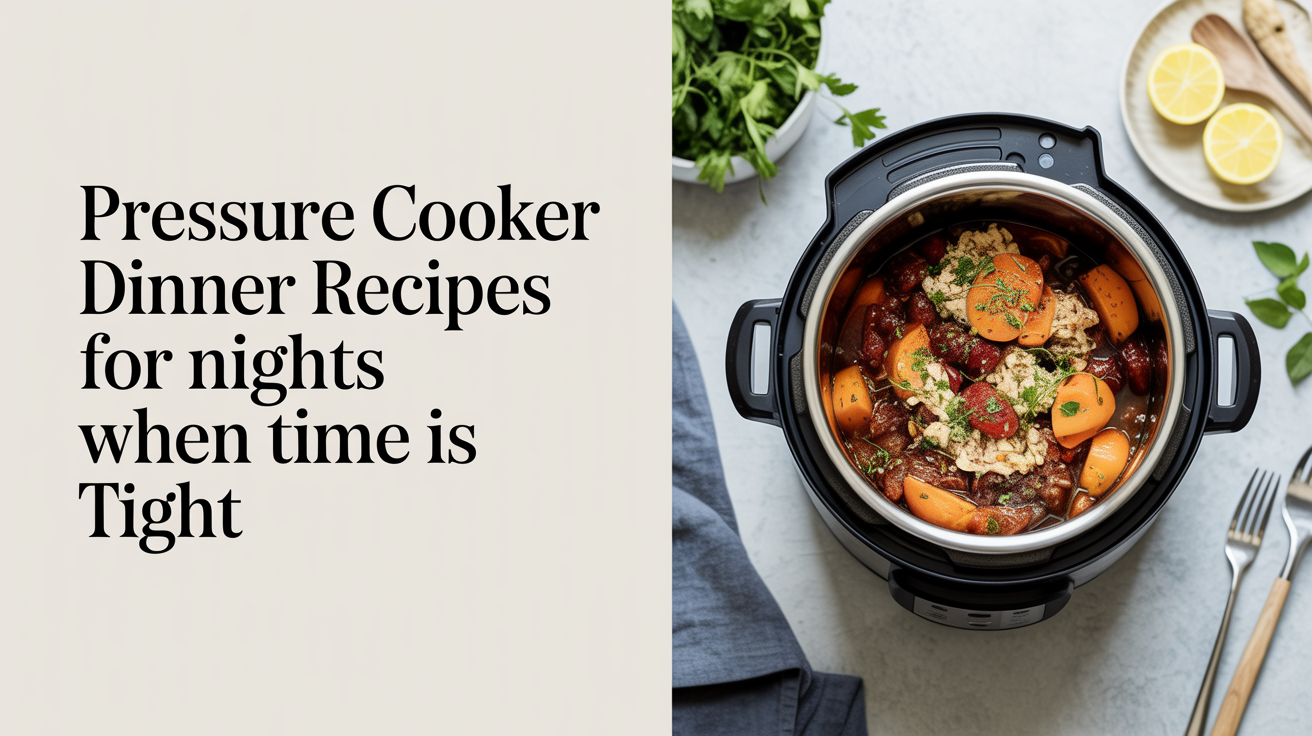
If you bought an electric pressure cooker and it's mostly made beans and stock since then, you're leaving the best part on the table. Good pressure cooker recipes turn a Tuesday that has no business including a braise into a night where you actually eat one. This isn't about beans. It's about pot roast, chicken and rice, chili, pulled pork, and stew landing on the table on a weeknight without three hours of babysitting a pot.
Why Pressure Cooking Changes the Math on Weeknight Dinners
A pressure cooker works by trapping steam, which raises the boiling point of the liquid inside well above what you get on a stovetop or in an oven. Food cooks in that hotter, moisture-saturated environment, and connective tissue in tougher cuts breaks down faster than it would in a low oven or a simmering pot. That's the entire trick. You're not skipping steps, you're compressing the time a braise or a pot of grains needs to get tender.
The practical effect shows up most with the foods that usually keep dinner off the table on a weeknight: a chuck roast, dried beans, a whole chicken, a pot of chili that normally needs an afternoon. Stovetop or oven, those all ask for patience. In a pressure cooker, the same cut goes from tough to fork-tender in a fraction of the time, and grains like brown rice or farro cook through without the usual watch-and-stir routine. Vegetables and quick proteins like shrimp or thin cutlets don't benefit nearly as much, since they were never the bottleneck to begin with.
It's worth saying plainly: exactly how much faster varies by cut, cooker, and altitude, so treat any specific number you see online with some skepticism. What's consistent is the pattern, not a stopwatch figure. Braises, tough cuts, and grains see the biggest gains. Quick-cooking things see almost none.
Five Dinners Worth Building Your Routine Around
These five hit the sweet spot where a pressure cooker actually earns its counter space. None of them require special ingredients, and all of them scale up for leftovers, which matters more on a Tuesday than any of us like to admit.
Pot roast. A chuck roast, some carrots and potatoes, and a well-seasoned braising liquid come out shreddable and saucy. Sear the meat first if you have five extra minutes; it's not required, but the flavor difference is real.
Chicken and rice. Bone-in thighs, rice, and stock cooked together, with the chicken releasing enough fat and juice to carry the whole pot. This is the one to start with if you've never used the appliance for a full meal.
Turkey chili. Ground turkey, beans, tomatoes, and aromatics. It comes out tasting like it sat on a stove for hours, which for once isn't an exaggeration.
Pulled pork. A pork shoulder with a dry rub or a simple braising liquid shreds easily once it's done. This is the dinner that converts skeptics, because the texture difference from a rushed stovetop version is obvious.
Lentil stew. Lentils, carrots, celery, and stock, seasoned however you like. It's the fastest of the five and the most forgiving if you're distracted by kids or a work call halfway through.
Liquid amount matters more than most beginners expect, since a pressure cooker needs enough to build steam but shouldn't be soupy unless that's the point. Here are rough starting ratios; adjust to your specific cooker's manual, since models vary.
| Dinner | Main ingredient amount | Liquid amount (approx.) |
|---|---|---|
| Pot roast | 3 to 4 lb chuck roast | 1 to 1.5 cups broth |
| Chicken and rice | 2 lb bone-in thighs, 1.5 cups rice | 2 to 2.5 cups broth |
| Turkey chili | 1.5 lb ground turkey, 2 cans beans | 1.5 to 2 cups broth or tomatoes |
| Pulled pork | 3 to 4 lb pork shoulder | 1 cup broth or braising liquid |
| Lentil stew | 1.5 cups dried lentils | 4 cups broth |
If you're leaning toward simpler weeknight dinners in general rather than just pressure cooker meals, 30-minute meals covers the stovetop side of that same problem.
Quick Release vs Natural Release, in Plain Terms
Once cooking time ends, the pot still holds pressurized steam, and you have two ways to deal with it.
Quick release means manually venting the steam right away, usually by turning a valve. It's faster and works well for vegetables, seafood, and anything that would overcook if it sat in residual heat.
Natural release means letting the pressure drop on its own, which can take anywhere from ten minutes to close to an hour depending on how full the pot is. This is the better choice for meat, since the resting time lets juices redistribute and keeps things tender rather than seizing up from a sudden pressure drop. Most of the recipes above (pot roast, pulled pork, chicken and rice) do better with at least a partial natural release.
One safety note that matters more than it sounds like it should: keep your hands, face, and anything you care about away from the vent when you release pressure manually. The steam that comes out is genuinely hot enough to burn skin in an instant, and it comes out fast. Point the valve away from cabinets and your face, use a long-handled tool if your model has a manual switch, and don't lean over the pot while it's venting.
Beginner Mistakes That Ruin a Good Pressure Cooker Meal
Overfilling past the max line. Every pressure cooker has a fill line, usually lower for foods that expand or foam, like beans, rice, and grains. Go past it and you risk the pot venting messily through the valve instead of cooking properly, sometimes clogging the release mechanism in the process.
Skipping the minimum liquid. These appliances need a set amount of liquid to build steam and reach pressure at all. Too little, and you'll get an error message or a burn warning rather than dinner. Check your model's minimum, usually somewhere around a cup, before you assume more sauce means more flavor.
Using it for the wrong kind of cooking. A pressure cooker is a moist-heat tool. It won't give you a seared crust, crisp skin, or the browning you get from dry heat in an oven or a skillet. Recipes that depend on that texture, like roasted vegetables or a crackly-skinned chicken, need a finishing step under a broiler or in a hot pan after the pressure cooker does the tenderizing work. Trying to skip that step is the most common reason people call a pressure cooker dinner "fine but not great."
If tonight calls for ground beef instead of a roast, easy ground beef dinners for weeknight cooking has options that don't need a pressure cooker at all, and if soup is more what you're after, healthy soup recipes covers that ground with a stovetop approach. For the slow end of the spectrum on a day when you're out of the house all day instead of short on time in the evening, slow cooker recipes is the other side of the same coin.
Frequently Asked Questions
Can I use a pressure cooker for frozen meat?
Most models can cook frozen or partially frozen meat, though it takes longer than starting from thawed and the texture is a little less even. If you're new to the appliance, thawed meat gives more predictable results while you learn how your specific cooker behaves.
Do I need to brown meat before pressure cooking it?
No, but it helps. Browning builds flavor through the reactions that happen on a hot, dry surface, something a pressure cooker's moist environment can't replicate on its own. If your model has a sauté function, use it for a few minutes before sealing the lid.
Why does my rice come out mushy or undercooked in a pressure cooker?
Usually it's the liquid ratio. Rice needs a fairly precise amount of liquid relative to its volume, and pressure cooking doesn't allow for the usual mid-cook adjustments you'd make on a stovetop. Stick close to your cooker's recommended ratio for the type of rice you're using, since brown and white rice behave differently.
Is it safe to open the lid before pressure has fully released?
No. Most pressure cookers have a locking mechanism that won't let the lid open until internal pressure drops to a safe level, and that's intentional. Forcing it, on models where that's even physically possible, risks a release of hot steam and liquid strong enough to cause serious burns.
How long do leftovers from these recipes keep?
Pulled pork, chili, and pot roast all hold up well in the refrigerator for several days and freeze well beyond that. Lentil stew and chicken and rice are best within the first few days, since rice in particular can turn grainy after freezing and reheating.