Kitchen Equipment
What an Immersion Blender Can Actually Do
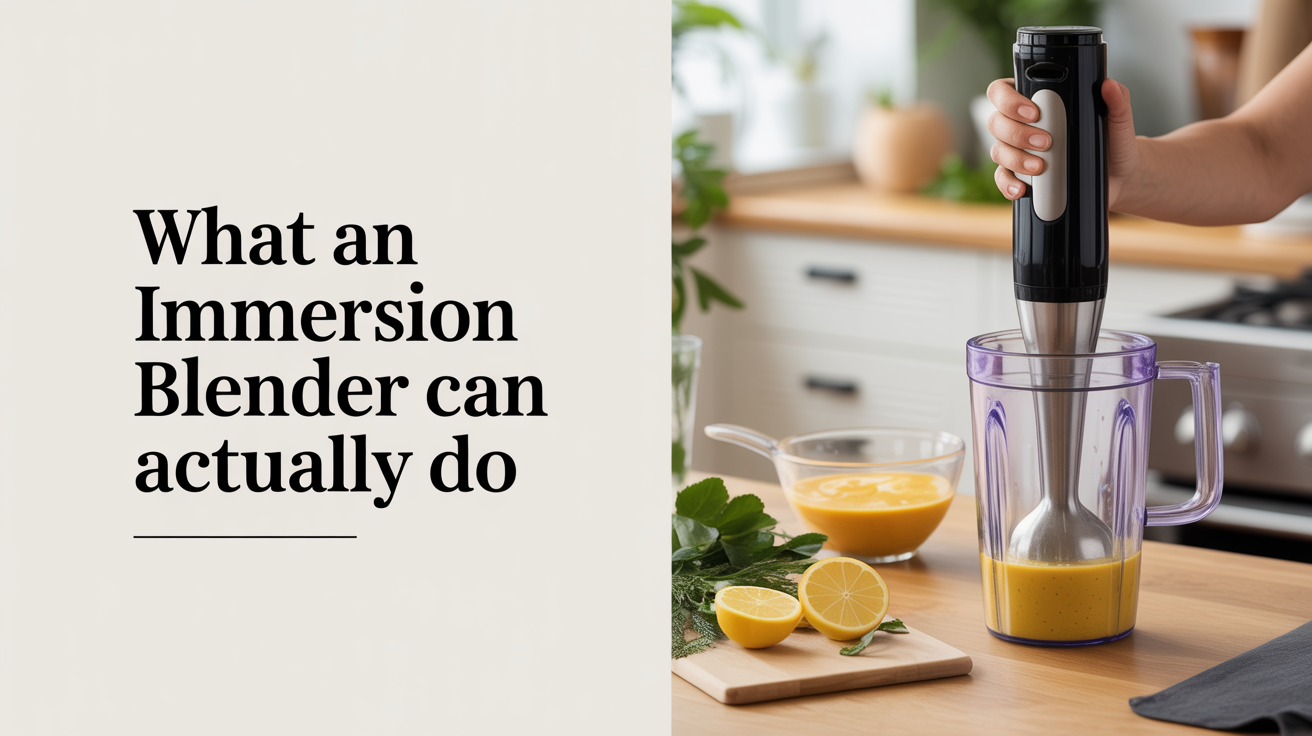
Most immersion blenders spend the bulk of their lives doing one job: pureeing soup. That's a fair use. They're excellent at it. But if soup is all you're using yours for, you're working with a capable tool at a fraction of its range.
The design is straightforward: a motor in the handle, a blade assembly at the bottom, and a shaft that goes directly into whatever you're blending. No transferring hot liquid in batches, no waiting for things to cool, no extra jar to wash. That directness is its main advantage over a countertop blender, and it extends to more tasks than most people expect.
Here's what an immersion blender can actually handle, along with an honest look at where a full-size blender is still the better choice.
Emulsifications: Where the Stick Blender Really Shines
This is where the immersion blender earns real respect, and where a lot of home cooks are surprised by how much easier it makes certain things. Emulsification means forcing two liquids that don't naturally mix (fat and water) to combine into something stable and creamy. The blade's speed creates tiny droplets that stay suspended rather than separating out over time.
Mayonnaise in About 90 Seconds
Homemade mayo is the most satisfying thing you can make with an immersion blender. The geometry of the process works perfectly.
Put 1 whole egg, 1 teaspoon of Dijon mustard, 1 tablespoon of lemon juice, and 1/2 teaspoon of salt into a tall, narrow container (the one that ships with most stick blenders is designed exactly for this). Pour 240 ml (1 cup) of neutral oil over the top. Do not stir. Lower the blender all the way to the bottom of the container, then run it at full speed without moving it for 5 to 6 seconds. You'll see a thick white emulsion form from the bottom up. Once that base is established, slowly tilt and lift the blender upward, pulling the remaining oil into the emulsion from above as you go. The whole thing takes under two minutes.
The critical step is staying at the bottom initially. The egg and mustard need to emulsify before the oil gets incorporated too quickly. Move the blender too soon and the emulsion breaks, leaving you with a thin, oily mess instead of mayo.
One safety note worth knowing before you start: homemade mayo made this way uses a raw egg, and raw eggs can carry salmonella. UConn Extension's guide to egg safety lists homemade mayonnaise specifically among the raw-egg preparations worth caution with, and recommends pasteurized eggs if you're serving young children, older adults, or anyone with a weakened immune system. For everyday home cooking, a fresh egg from a well-refrigerated carton is a low but not zero risk; pasteurized eggs remove that risk entirely and blend exactly the same.
Vinaigrettes and Creamy Dressings
A vinaigrette shaken in a jar separates within a few minutes. One made with an immersion blender holds together for several days in the fridge because the blade creates a more stable, tighter emulsion.
A reliable ratio: 1 part acid (vinegar or citrus juice) to 3 parts olive oil, plus whatever flavorings you want (garlic, shallot, a teaspoon of honey, dried herbs). Blend for 15 to 20 seconds. For thicker dressings like tahini-based or Caesar-style ones, the blender handles the texture easily without the dressing seizing up or requiring constant re-stirring.
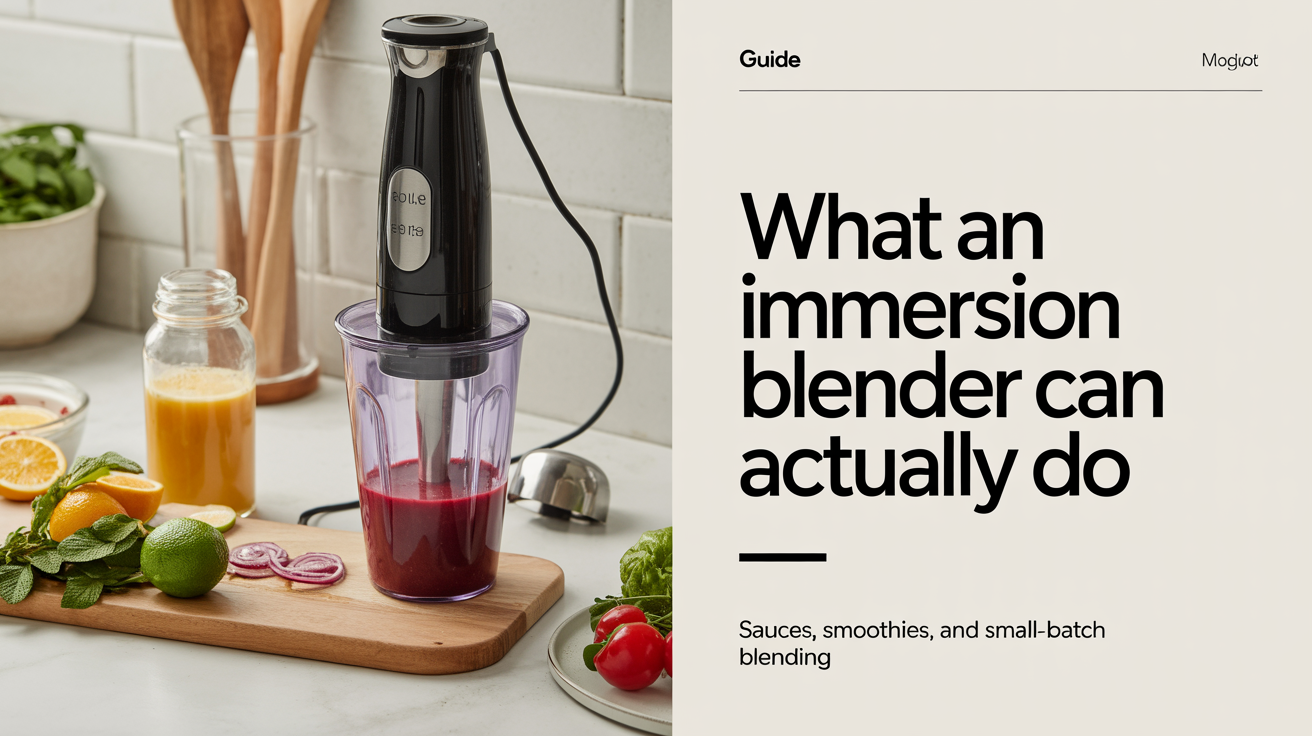
Sauces, Smoothies, and Small-Batch Blending
Pan Sauces and Tomato Sauces
After searing meat or fish in a skillet, you're often left with fond and pan drippings worth building a sauce around. An immersion blender lets you smooth and thicken a sauce right in the pan. Learn how to make pan sauce to see how this technique works from start to finish.
For tomato sauces, soften canned whole tomatoes in a pot, then run the blender through them to reach whatever texture you want, from lightly chunky to completely smooth, without moving anything to a separate jar. One caution: keep the blade fully submerged before turning the blender on, and start at lower speed if your model has that option. Tomato sauce spatter at high speed from a half-submerged blade is not easy to clean off a stovetop.
Smoothies and Protein Shakes
A stick blender handles single-serving smoothies well, especially when the fruit is ripe and soft. Banana, mango, Greek yogurt, berries, a splash of milk or juice: all of these blend smoothly in a tall cup in 20 to 30 seconds. Move the blender up and down gently while running to pull everything into the blade.
Ripe frozen fruit (mango chunks, peach slices, banana frozen at peak ripeness) works if the pieces have been out for 5 to 10 minutes and are starting to soften on the outside. Very hard, fully frozen chunks from a bag straight out of the freezer will strain the motor over time. For thick frozen smoothies made daily, a countertop blender handles the load more reliably.
Small-Batch Pesto
A food processor is the classic tool for pesto, but for one or two portions, the setup and cleanup aren't worth it. Use a deep, narrow cup: add a handful of fresh basil, 1 to 2 tablespoons of toasted pine nuts or walnuts, 1 small clove of garlic, 30 g (about 1/4 cup) of finely grated Parmesan, a pinch of salt, and 60 to 80 ml (4 to 5 tablespoons) of olive oil. Pulse in short bursts rather than running continuously; you want a textured, rough paste, not a smooth puree. The whole process takes under a minute.
Where a Countertop Blender Still Wins
Being clear about this is useful. The immersion blender is genuinely capable, but it's not a replacement for a countertop blender across the board.
Large batches. Making soup for eight or blending a full jar of something means working in shifts with the stick blender, or reaching into a very full pot with real spatter risk. A countertop blender processes large volumes more efficiently.
Very dry or fibrous ingredients. Raw kale, whole nuts, dried dates, and similar items need the sustained power and sealed container of a countertop blender. The immersion blender blade reaches into too small an area to move dry material around efficiently, and you end up with unprocessed chunks.
Ice and frozen drinks. Most stick blenders aren't rated for crushing ice. A few heavy-duty models handle small amounts, but if you make blended frozen cocktails regularly, a countertop blender built for that task is the right tool.
Ultra-smooth restaurant-style purees. A high-speed countertop blender produces a noticeably silkier result for fine purees than most immersion blenders. The difference is subtle for everyday home cooking, but it's real.
For tasks like blending a pureed soup right in the pot, making salad dressing, or a quick single-serve smoothie, the stick blender is faster and simpler than pulling out the countertop machine.
Getting the Best Results from Your Stick Blender
A few things that make a practical difference:
Use a tall, narrow container. The included jar is designed for this. A wide bowl causes spatter and doesn't keep ingredients concentrated around the blade where the blending action happens.
Start with the blade fully submerged. Beginning with the blade near the surface pulls air into the mixture. For mayo especially, the blade needs to be at the very bottom before you turn the motor on.
Leave headroom in the pot. For soups and sauces, keep at least 4 to 5 cm (1.5 to 2 inches) of space at the top to prevent hot liquid from splashing when the blender goes in.
Clean it immediately. Submerge the blade housing in a cup of warm soapy water and run the blender for 5 to 8 seconds. It cleans itself. Let the residue dry and you're scrubbing instead.
Go slow at the start. With hot liquids particularly, starting at lower speed gives you control before increasing power. This prevents the initial splash that catches people off guard.
Frequently Asked Questions
Can I use an immersion blender with hot soup directly in the pot?
Yes, this is one of its clearest advantages over a countertop blender. You can blend at any temperature directly in the cooking pot, including soups that are close to boiling at around 95°C (200°F). Keep the blade submerged and avoid overfilling the pot to prevent spatter.
What container works best for making mayo?
A tall, narrow cup or jar, ideally close to the same width as the blade assembly. Most immersion blenders include one specifically for this purpose. The tight fit keeps the egg, mustard, and oil concentrated together so the initial emulsion forms before you start moving the blender upward.
Can I whip cream with an immersion blender?
Yes. Pour cold heavy cream (35% fat or higher) into a tall container and blend on high speed, moving the blender up and down to incorporate air. Soft peaks form in 45 to 90 seconds. Watch it closely because over-whipping happens faster with an immersion blender than with a hand mixer.
My mayo keeps breaking. What's going wrong?
Two common causes: moving the blender too early before that first bottom emulsion forms, or using a cold egg straight from the fridge. Room-temperature eggs emulsify more reliably. Also check that your container is close to the blade's width, which keeps everything together during those crucial first few seconds at the bottom.
How do I clean the blade housing?
Fill a tall cup about halfway with warm water and a drop of dish soap, submerge the blade, and run for 5 to 8 seconds. Empty, rinse with clean water, and run once more briefly. Wipe the shaft with a damp cloth. Most blade attachments are dishwasher-safe, though hand-washing keeps the blade sharper over time.