Meal Prep
Meal Prep for Beginners: A Simple Starting System
Most people quit meal prep the same week they start. They spend four hours on a Sunday cooking twelve servings of the same chicken and rice, eat it Monday and Tuesday, and by Wednesday they cannot look at it. That is not a prep system, it is punishment. Here is a different approach: batch components, not full meals, and build variety into the week from the start.
Pick one prep day and treat it like an appointment
Sunday works for most people because the week has not started yet and grocery stores are stocked. But if Sunday is your busy day, Thursday evening or Saturday morning works just as well. The actual day matters less than picking one and being consistent about it.
Aim for 60 to 90 minutes total, not a half-day marathon. If a prep session is running past two hours, you are prepping too much or cooking too many things from scratch. Scale back.
Before you start, write down the five or six things you plan to eat for lunches and dinners this week, not full recipes, just the general shape. "Rice bowl situation," "pasta something," "salad with protein." That list tells you what to prep.
Batch components, not full meals
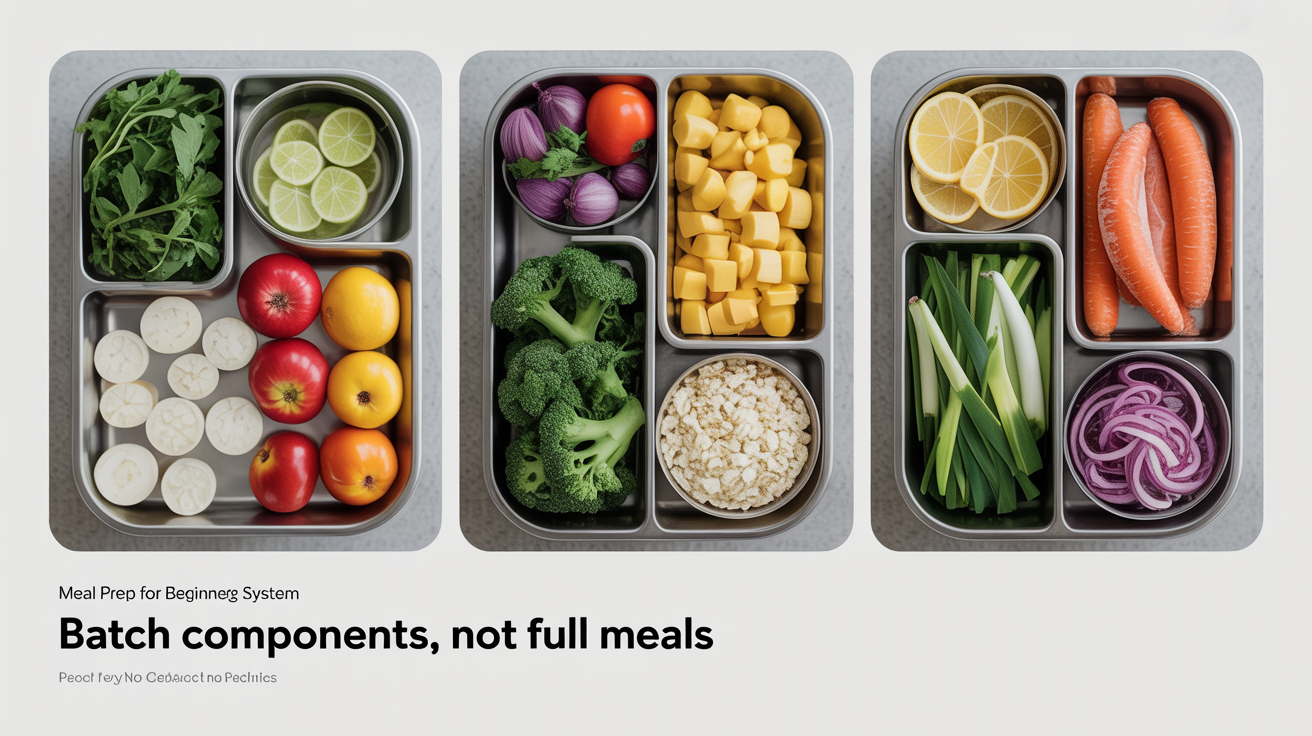
This is the part most beginner guides skip. Instead of making six servings of chicken tikka masala and portioning it into containers, cook the building blocks separately: a grain, a protein, a couple of vegetables. Then combine them differently each day.
A simple starting ratio: one grain, two proteins, three vegetables. That sounds like a lot, but most of these take almost no active time.
One grain: Cook a big pot of rice, farro, or quinoa. Two cups dry makes roughly five cups cooked, which covers most of the week.
Two proteins: One can be fully cooked and ready to eat (a batch of ground turkey, a sheet pan of roasted chicken thighs). The other can be something fast to finish, marinated shrimp that takes four minutes in a pan, or canned beans ready to go.
Three vegetables: Roast two of them together on one sheet pan (broccoli and sweet potato, zucchini and bell pepper). Keep one raw for crunch and freshness, shredded cabbage, sliced cucumber, cherry tomatoes.
With this setup, Monday's lunch is a rice bowl with chicken and roasted vegetables. Tuesday's dinner is the same components over pasta with jarred sauce added. Wednesday you make tacos using the ground turkey, the cabbage slaw, and whatever else is left. The meals feel different because the assembly is different.
Storage timelines that actually matter
Cooked proteins are the thing to watch most carefully. The ranges below follow the cold food storage guidance from FoodSafety.gov, which is the government reference most cooks default to for how long leftovers stay safe in the refrigerator.
| Component | Fridge (days) | Freezer |
|---|---|---|
| Cooked grains (rice, quinoa) | 4–5 | 1 month |
| Cooked chicken or turkey | 3–4 | 3 months |
| Cooked ground beef or pork | 3–4 | 3 months |
| Roasted vegetables | 4–5 | 2 months |
| Raw cut vegetables | 3–4 | Not recommended |
| Hard-boiled eggs (unpeeled) | 7 | Not recommended |
| Cooked beans or lentils | 4–5 | 3 months |
If you prep on Sunday, your proteins need to be eaten by Wednesday or Thursday. If you know you will not get to them, portion half into the freezer right away. See the guide to freezer-friendly meals for specifics on how to freeze without losing texture.
One practical note: store sauces and dressings separately from everything else. Grains and vegetables dressed ahead of time get soggy. Keep a few jars of sauce in the fridge and add them at the moment of eating.
Your first-week plan
Do not try to prep everything this week. Pick one grain, one protein, two vegetables. That is enough to see whether the system works for you.
Here is a sample first week built around a Sunday session:
Sunday prep (about 75 minutes):
- 2 cups dry brown rice in the rice cooker or pot
- 2 lbs chicken thighs seasoned with salt, pepper, garlic powder, roasted at 425°F for 30–35 minutes
- One sheet pan: broccoli florets and sliced red onion, tossed in olive oil, roasted alongside the chicken for the last 20 minutes
- One bag of coleslaw mix left raw in the fridge
Meals that come out of this:
- Monday lunch: rice bowl with sliced chicken, broccoli, a drizzle of soy sauce and sesame oil
- Monday dinner: chicken fried rice using leftover rice, eggs, and frozen peas (10-minute meal)
- Tuesday lunch: chicken and coleslaw wrap with whatever sauce you like
- Wednesday lunch: grain bowl with the remaining chicken and vegetables, maybe with a soft-boiled egg added
- Wednesday dinner: pasta (cook fresh) with the remaining roasted vegetables and some olive oil and parmesan
That is five meals from one prep session, and nothing is identical.
Avoiding boredom before it starts
Boredom in meal prep usually comes from eating the same flavor profile every day, not from eating the same ingredients. The rice and chicken bowl tastes totally different depending on whether you use soy-ginger dressing, tahini, salsa, or Caesar. Keep four or five sauces in the fridge at all times. A small jar of gochujang, a bottle of your favorite hot sauce, a batch of tahini thinned with lemon juice, any of these changes the entire character of a bowl in thirty seconds.
Rotate your grain each week. Brown rice one week, farro the next, white rice or quinoa after that. Same with proteins: chicken thighs one week, ground turkey another, sheet pan salmon or explore high-protein meal prep ideas for when you want more variety without adding much extra prep time.
Also: do not prep vegetables you do not actually like. It sounds obvious, but a lot of people roast cauliflower because they read they should, then do not eat it. Prep the vegetables you already reach for. If you eat raw carrots as a snack anyway, add a bag to your prep. If you hate zucchini, skip it.
Common mistakes beginners make
Cooking too much: More food sounds efficient until Thursday when you are eating stale rice out of obligation. Start with 60% of what you think you need.
Skipping seasoning at the component stage: Plain roasted chicken thighs are fine, but chicken thighs seasoned with smoked paprika, garlic, and salt are versatile in ways that plain chicken is not. Season your components well and they work in more dishes.
Forgetting about breakfast: Lunch and dinner prep gets all the attention, but prepping a few breakfasts saves as much time as anything. Overnight oats for four days takes ten minutes to set up Sunday evening. Hard-boil a half dozen eggs. That alone removes two decisions from every morning.
Getting the right containers
You do not need a matching set of sixteen identical glass containers. What you do need is a few things that stack, seal properly, and fit in your fridge without taking up the entire middle shelf.
Glass containers with locking lids are worth the money if you plan to reheat in them. Plastic is fine for cold storage and for things you will not microwave. A few wide-mouth mason jars are good for sauces, dressings, and overnight oats. See the full breakdown in the guide to meal prep containers, it covers sizes, materials, and what to skip.
One container to add if you do not have it: a large rectangular storage bin for raw prepped vegetables. Washing and cutting a whole head of broccoli on Sunday and storing it loose takes about two minutes of active work and makes the whole week easier.
Frequently Asked Questions
How long does it take to meal prep as a beginner?
A realistic first session is 60 to 90 minutes if you are cooking one grain, one protein, and two vegetables. It gets faster as you build a rotation of components you know how to cook quickly. Most experienced meal preppers spend 45 to 60 minutes per week.
Do I have to prep on Sunday?
No. Sunday is common because of how the work week lines up, but any consistent day works. Some people do two shorter sessions, a light prep Wednesday or Thursday to restock proteins for the second half of the week.
Is meal prep worth it if I live alone?
Yes, and arguably more so. Cooking for one from scratch every night means either cooking small quantities (which takes almost as long as cooking large ones) or buying expensive single-serve options. Batch cooking a week's worth of components and eating varied meals from them is usually cheaper and faster than the alternative.
What if I get bored halfway through the week?
Change the sauce and the format before you change the ingredients. A rice bowl, a wrap, a grain salad, and a stir-fry can all use the same three components. If you are still bored, that is a sign to rotate your proteins and vegetables next week, or to keep one dinner slot open for cooking something fresh and spontaneous.