Techniques
How to Caramelize Onions Properly (and Why It Takes Time)
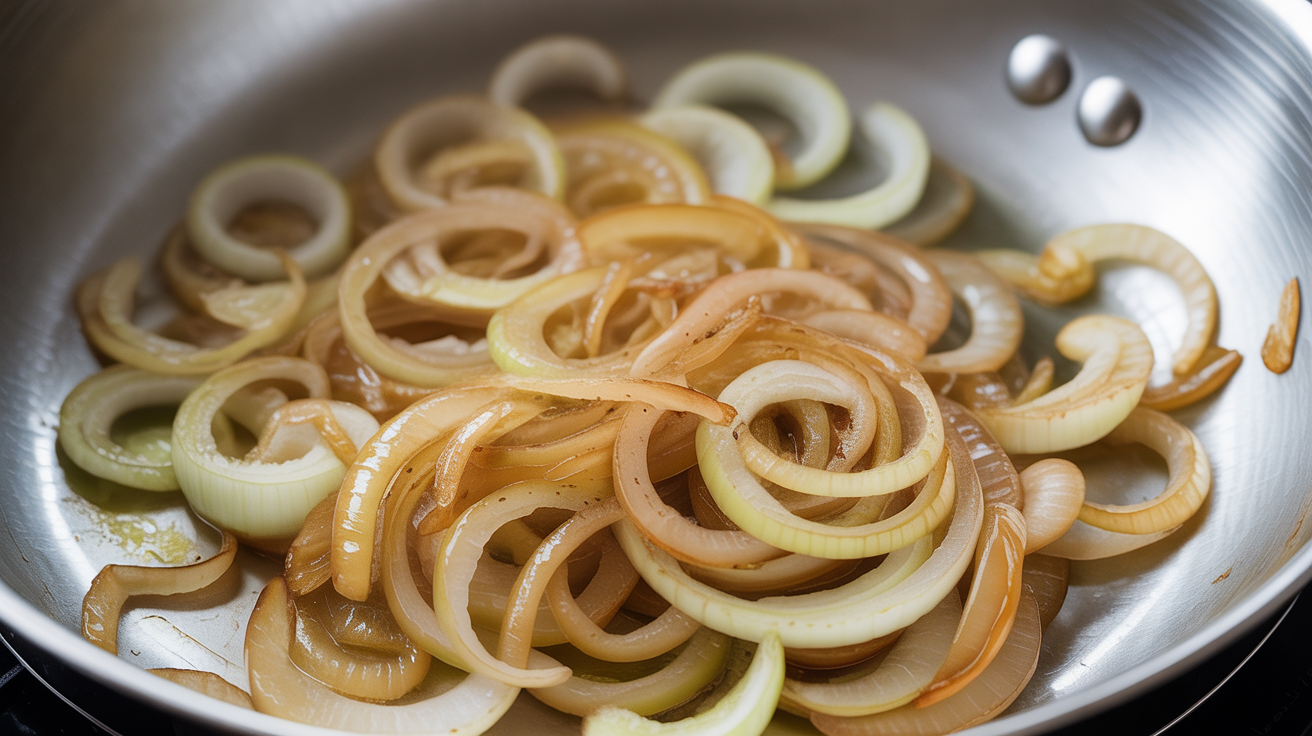
Properly caramelized onions take 35-45 minutes over low to medium-low heat. That's not a suggestion, it's chemistry. The sugars in onions don't fully break down into those deep, sweet, amber compounds until they've had a long, gentle cook. Anything faster and you get browned onions. Not the same thing.
What actually happens during caramelization
Raw onions are mostly water and sulfur compounds, which is why they bite. Heat drives off the water. What's left, mostly sucrose and fructose, starts breaking down around 320°F (160°C). True caramelization produces hundreds of flavor compounds that don't exist in the raw onion: nutty, bitter, sweet, slightly acidic notes all at once.
High heat gets you something different. Above 350°F the Maillard reaction dominates, browning the exterior proteins fast while the interior stays sharp. The result looks similar but tastes thin. Truly caramelized onions are soft all the way through, nearly jammy, with no residual sharpness. America's Test Kitchen's breakdown of the science describes it this way: as onions cook down, some of their sugars caramelize into new flavor and color compounds, while amino acids in the released proteins react with sugars separately through Maillard browning. Both reactions are happening, just at different rates depending on the heat.
Pan choice and heat level
The right pan
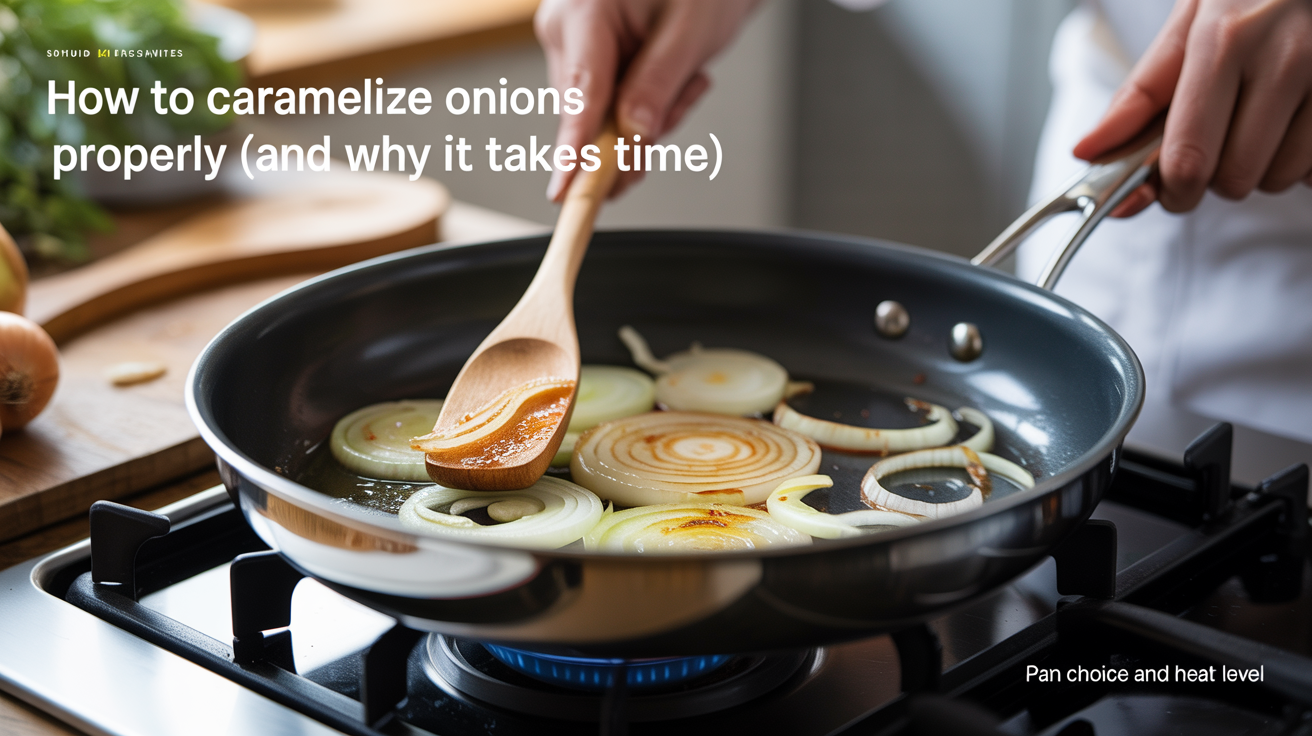
A wide, heavy-bottomed pan works best. Cast iron is good. Stainless steel is fine. Avoid nonstick, because you want fond (the brown bits that stick) to build up on the pan bottom. That's flavor you'll deglaze later.
Width matters because it determines how much steam escapes. A pan that's too small crowds the onions and traps moisture, so they steam instead of slowly cooking down. Use a 12-inch pan for 2-3 large onions.
Heat level
Start on medium to soften the onions for the first 5-10 minutes, then drop to medium-low or low for the rest of the cook. The onions should sizzle gently, not aggressively. If you hear a loud, constant sizzle, the heat is too high.
Two tablespoons of butter, or butter and olive oil combined, coats the onions evenly and slows uneven browning. Salt added at the start draws out moisture and helps them soften faster.
The timeline (and what to expect)
| Time | What you'll see |
|---|---|
| 0-10 min | Onions soften, turn translucent, shrink significantly |
| 10-20 min | Begin to turn golden at the edges, smell sweet |
| 20-30 min | Uniform golden-brown, noticeably reduced in volume |
| 30-45 min | Deep amber, jammy texture, sweet with a savory edge |
Three pounds of raw onions reduces to about one cup of finished caramelized onions. That's not a typo. Plan accordingly.
Stir every few minutes, not constantly. Letting the onions sit between stirs is what lets the sugars concentrate and the fond develop on the pan bottom.
Deglazing to build color
Once a decent layer of dark fond forms on the pan bottom (usually around the 20-minute mark), add a splash of liquid and scrape it up. This is the step that separates good caramelized onions from very good ones.
For liquid, plain water works fine (use 2-3 tablespoons at a time). Dry white wine or dry sherry adds a little acidity that balances the sweetness. A teaspoon of balsamic vinegar gives depth and a slight tang. Beef or chicken stock produces a richer result, good for French onion soup.
You can deglaze two or three times during the cook. Each time the liquid evaporates and a new layer of fond forms, you're adding more complexity. Don't skip this step.
Batch cooking and freezing
The time investment is the same whether you make one cup or four. Make a big batch.
Four pounds of onions cooked down fits in a 12-inch pan with patience (add them in batches as they shrink). The finished slow cooked onions freeze well for up to 3 months. Portion them into an ice cube tray, freeze solid, then transfer to a bag. Each cube is roughly 2 tablespoons, a useful single-serving amount for most recipes.
This is one of the better things you can keep in the freezer. Having caramelized onions ready means a good weeknight pasta or a fast flatbread is 10 minutes away instead of an hour.
What to do with caramelized onions
Once you have a batch, the uses are easy to find:
- French onion soup is the obvious one. Good caramelized onions make the soup; mediocre ones undermine it.
- Toss with pasta, a little pasta water, parmesan, and black pepper.
- Spread on flatbread or pizza dough with gruyere and fresh thyme.
- Spoon onto a burger alongside cheese. The sweetness cuts through fat in a useful way.
- Use as a shakshuka base by stirring a spoonful into the tomato sauce before adding eggs.
- They pair well with bitter vegetables like broccoli or Brussels sprouts. See how to roast vegetables for a method that works with both.
- Served alongside a seared steak, the sweetness plays off the crust nicely. The technique for that crust is in our how to sear a steak guide.
- Stir a spoonful into plain rice while it cooks and the result is genuinely different. Basic rice technique here if you want a reliable starting point.
FAQ
Can I speed up the process with higher heat?
Not without changing what you get. Higher heat browns onions faster but doesn't give the sugars time to fully break down. The result is sharper in flavor and less jammy in texture. Some recipes speed things up by adding a pinch of baking soda. America's Test Kitchen tested this: baking soda raises the pH of the onions, which lets caramelization happen faster and also helps break down flavorless inulin into sweet fructose. It works, and it can cut the cook time to around 15 minutes, but the flavor and texture come out a little different from the long, slow version. Worth knowing about, not worth substituting if you have the time.
Why do my onions keep burning before they caramelize?
Usually the heat is too high, or the pan is too dry. Add a small splash of water when the onions look like they're catching, and lower the flame. A heavy pan also helps because it distributes heat more evenly than a thin one.
Do I have to stir constantly?
No. Constant stirring slows the process by preventing fond from building. Stir every 3-5 minutes, scraping up any stuck bits from the bottom, and let them sit between stirs to develop color.
What's the best onion for caramelizing?
Yellow onions are the standard. They have enough sugar to caramelize well and enough savory depth to stay interesting. Sweet onions (Vidalia, Walla Walla) produce a softer, sweeter result. Red onions work but turn an unappetizing brown-purple color. White onions are fine but blander.
How do I know when they're done?
Color and texture, not time. Finished caramelized onions are deep amber-brown, soft enough to break apart with a spoon, and smell sweet with a savory edge. Taste them. There should be no sharpness left. If they still taste pungent or sharp at all, keep going.