Meal Prep
How to Choose Meal Prep Containers
The Short Version
- Glass costs more upfront but resists stains, smells, and warping for years. Plastic is lighter and cheaper, better if you carry lunch daily.
- A container is only leakproof if it has a gasket lid and passes the flip-it-upside-down water test.
- Medium (3-4 cups) covers most single-meal portions. Start there before buying small or large sizes.
- Buy roughly 1.5 containers per meal you prep each week, to cover dishwasher turnaround.
- Never microwave a sealed container. Vent the lid or remove it, and hand-wash if you want the gasket to last.
The short answer: get glass containers in two or three sizes, make sure the lids actually seal, and buy enough to cover one full week of lunches. Everything below explains why, and where the tradeoffs are.
Glass vs plastic: which one is actually better?
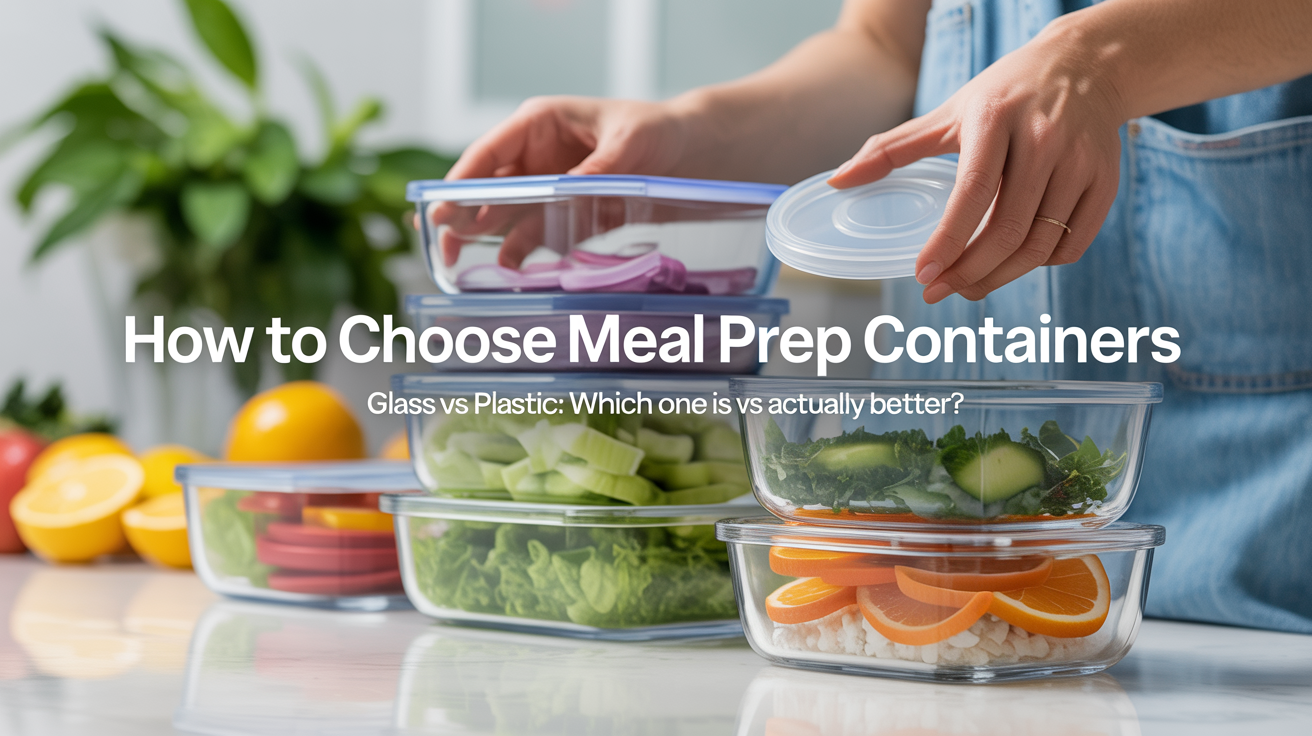
This is the question everyone asks first, and the honest answer is that it depends on how you use them.
Glass is heavier and costs more upfront. It also does not warp, stain, or hold onto smells. After six months of reheating curry and chili, a glass container looks the same as it did on day one. Plastic does not. The other thing glass has going for it: you can go straight from freezer to oven (without the lid) in most cases, which saves a dish.
Plastic is lighter and cheaper, which matters if you are carrying lunch to work every day or buying a full set of 20 at once. Modern BPA-free polypropylene is generally considered safe for food storage, though researchers are still studying some replacement compounds. If you reheat in plastic, transfer the food to a plate first. Even microwave-safe plastic can leach chemicals when heated repeatedly.
| Feature | Glass meal prep containers | Plastic containers |
|---|---|---|
| Weight | Heavier (adds up in a bag) | Light |
| Odor/stain resistance | Excellent | Fades over time |
| Microwave safe | Yes (lid off) | Many are, check label |
| Oven safe | Often yes (lid off, up to 400°F typical) | No |
| Freezer safe | Yes | Yes |
| Durability | Can chip or break if dropped | Durable, but warps with heat |
| Cost | Higher upfront | Lower upfront |
| Lifespan | Years, sometimes decades | 1-3 years typical |
If you work from home or mostly store food in the fridge overnight, glass is the better long-term investment. If you commute or need to pack a bag, plastic saves your back.
What makes a lid actually leakproof
Every container claims to be leakproof. Few are. The ones that hold up tend to have a rubber or silicone gasket around the inside of the lid that compresses when you snap the lid closed. Four-sided locking clips (one on each edge) are more reliable than two-sided clips.
Before buying a full set, do a quick test: fill the container with water, close it, and flip it upside down over your sink. If it drips, it will definitely leak in your bag.
A few things to know:
- "Leakproof" usually means sealed liquids under normal pressure. A container that passes the water test may still weep a little if it gets crushed at the bottom of a bag.
- Vented lids (with a small steam vent) are useful for microwaving but are not fully leakproof. Some brands sell two lid types for the same container body.
- Lids wear out faster than the containers. If you can buy replacement lids separately, that is worth factoring into the decision.
Compartments: useful or just more to clean?
Compartment containers are genuinely useful if you want to keep foods separate. Think salads where you do not want the dressing sogging the greens, or plates where the sauce cannot touch the rice. For high-protein meal prep especially, a two-compartment container handles protein and vegetables without needing two separate boxes.
The tradeoffs are real though. Compartment containers are harder to clean because the divider creates corners. They also limit portion flexibility: a one-compartment container can hold a big stew or a small side salad, but a divided one is locked into a shape.
A reasonable approach: buy mostly single-compartment containers in a couple of sizes, and add two or three divided ones if you find yourself doing a lot of lunch plates.
Sizing: what you actually need
Container sizing is usually listed in cups or ounces. Here is a rough guide:
Small (1-2 cups / 8-16 oz): Snacks, dressings, sauces, cut fruit, single servings of dips.
Medium (3-4 cups / 24-32 oz): Single lunch portions, salads, grain bowls. This is the size most people use most.
Large (5-7 cups / 40-56 oz): Full dinner portions, soups, batch-cooked grains meant for several meals.
If you are just getting started with meal prep for beginners, a set that includes a mix of medium and large sizes covers most situations. You can add small containers once you know what you actually prep week to week.
How many containers to buy
This depends on how often you meal prep and how often you run the dishwasher.
For one person prepping lunches five days a week and running the dishwasher every two to three days, 8-10 medium containers is comfortable. For a two-person household doing full meal prep (lunches and dinners), 14-18 containers across sizes is more realistic.
A formula that works: multiply the number of meals you prep per week by 1.5. That buffer accounts for containers in the dishwasher or still cooling on the counter.
Do not overbuy immediately. Start with one set of 10, live with it for a month, and you will have a clear sense of what sizes you run out of first.
Microwave and freezer safety: what to check
Not all containers marked "microwave safe" behave the same way. That label means the container will not melt or warp under normal microwave use, not that the food will heat evenly or that the lid should go in with it.
For microwaving:
- Remove the lid or vent it before heating. Sealed containers can build pressure.
- Glass heats food more evenly than plastic in most cases.
- Stir and check halfway through. Container shape affects heating.
For freezing:
- Leave headspace (about an inch) when freezing liquids or soups, or the container can crack as the food expands. This is especially relevant for freezer-friendly meals like soups and casseroles.
- Let hot food cool completely before freezing. Putting hot food in a closed container raises the internal temperature of everything around it.
- Plastic containers designed for freezing have a slightly different formulation than standard ones. Look for "freezer safe" specifically, not just "food safe."
Caring for containers so they last
Glass containers last years if you treat them reasonably. Plastic ones have a shorter window no matter what, but you can extend it.
Glass: Avoid sudden temperature swings. Do not take a container from the freezer and run it under hot water. Thermal shock can crack glass. Let it come to room temperature first, or thaw in the fridge overnight.
Plastic: Hand-wash if you want to extend the life of the lid gaskets. Dishwasher heat degrades rubber and silicone over time, which is usually what causes lids to stop sealing before the container itself fails. If you do use the dishwasher, put lids on the top rack.
Both: Do not stack glass containers without something between them (a dish towel works). Stacking bare glass creates chips at the rims.
Inspect lids every few months. If the gasket is cracked, brittle, or has developed a permanent odor, replace the lid.
FAQ
Are glass meal prep containers worth the extra cost?
For most people who meal prep consistently, yes. Glass does not stain, warp, or hold smells, so a set you buy today will look and function the same in three years. The upfront cost is higher, but you are unlikely to replace them. The main exceptions: if you carry containers in a bag where weight matters, or if you are new to meal prep and not sure whether you will stick with it.
What size meal prep containers do I need most?
Medium (3-4 cups / 24-32 oz) covers the majority of single-meal portions. If you had to pick one size to start with, that is the one. Add large containers if you batch-cook grains or soups, and small ones if you prep snacks or sauces.
Can I put glass containers in the oven?
Many glass food storage containers are oven safe up to 400-450°F without the lid, but check the specific product. Tempered glass (commonly used in storage containers) handles oven heat well. Borosilicate glass is more resistant to thermal shock, meaning it tolerates a bigger jump between hot and cold before cracking. Avoid broiling even with oven-safe glass.
How do I get rid of food smells in plastic containers?
Fill the container with a mixture of baking soda and water (roughly one tablespoon per cup), seal it, and let it sit overnight. For persistent smells (garlic, fish, chili), leave it in direct sunlight for a few hours after washing. Sunlight actually breaks down the odor compounds. If the smell is still there after a few attempts, the plastic has absorbed it permanently and it is time to replace the container.
How do I know if a container is actually leakproof?
Test it before you trust it. Fill with water, seal the lid, flip it upside down, and hold it over the sink for 30 seconds. Then shake it a few times. If water escapes anywhere, it will leak in your bag. Look for containers with a silicone or rubber gasket inside the lid and four locking clips. Two-clip designs are more likely to leak at the unlocked sides.
Further Reading
- National Capital Poison Center: Plastic Containers, Are They Harmful? explains what BPA is, why heat increases how much leaches into food, and how to spot BPA-containing plastics by recycling code.
- Wikipedia: Borosilicate Glass covers why borosilicate handles temperature swings that would crack ordinary soda-lime glass.