Kitchen Equipment
Types of Cookware Materials and What They're Best At
Fast Facts
- Stainless steel is the most versatile everyday pan: acid-safe, oven-safe, and built for browning.
- Cast iron and carbon steel both need a seasoned surface to release food well. Cast iron holds heat longer; carbon steel is lighter and more responsive.
- Nonstick releases food effortlessly but shouldn't go past about 450°F, and the coating eventually wears out.
- Enameled cast iron gets you cast iron's heat retention without seasoning or acid restrictions.
- Copper heats and cools almost instantly, which is why it's the choice for candy and caramel, not for daily searing.
Picking a pan feels simple until you're standing in front of a wall of options at the kitchen store, trying to decide whether you need a stainless skillet, a cast iron, or something with a slick nonstick surface. Each material behaves differently on heat, holds up differently over time, and genuinely performs better or worse for certain tasks. This guide breaks down the six main cookware materials so you can understand what each one does well and figure out which ones belong in your kitchen.
| Material | Heat behavior | Acid-safe | Best for |
|---|---|---|---|
| Stainless steel | Even with a bonded core | Yes | Searing, pan sauces |
| Cast iron | Slow to heat, holds it well | Once seasoned, use caution | High-heat searing, cornbread |
| Carbon steel | Faster and lighter than cast iron | Once seasoned, use caution | Eggs, crepes, fish |
| Nonstick | Even, but heat-limited | Yes | Eggs, delicate fish |
| Enameled cast iron | Excellent retention | Yes | Braises, stews, bread |
| Copper | Nearly instant response | No, needs a lining | Candy, sauces, hollandaise |
Stainless Steel
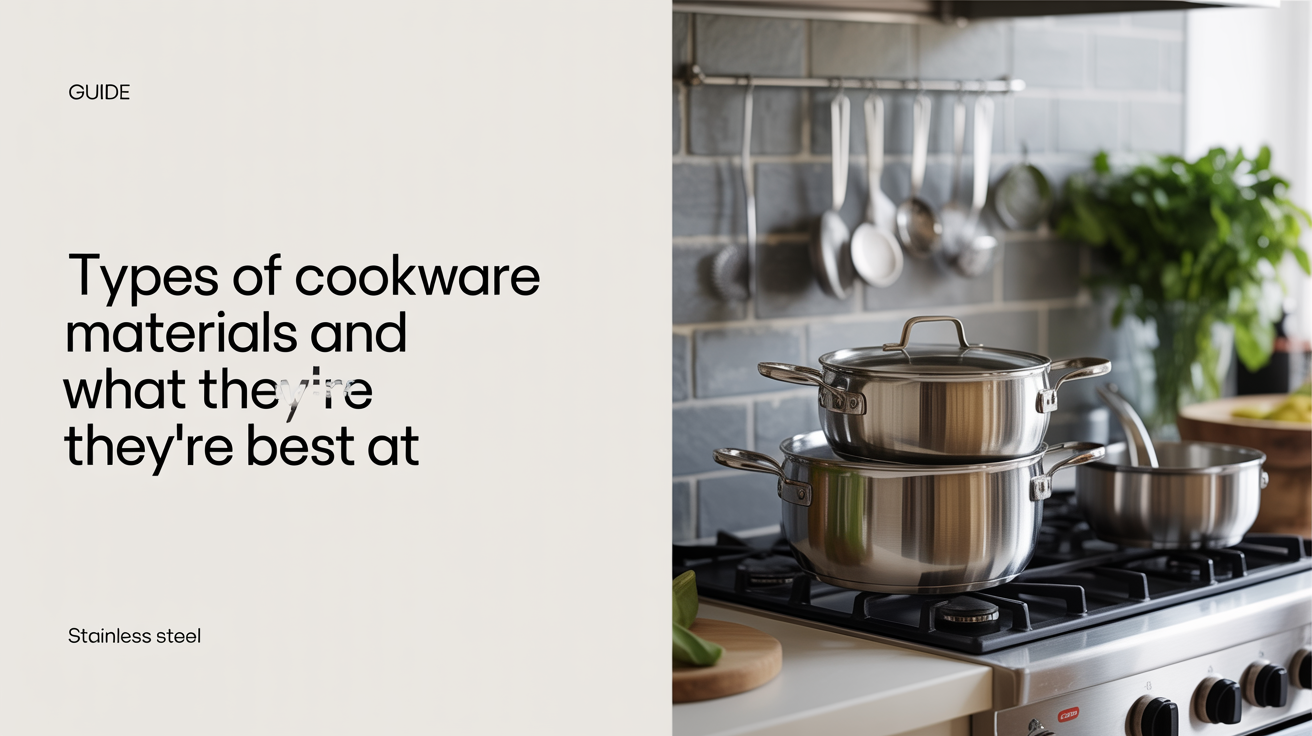
Stainless steel is the backbone of most home and professional kitchens because it handles almost everything reasonably well. It doesn't react with acidic ingredients, it can go from stovetop to a 500°F (260°C) oven without complaint, and it's nearly indestructible under normal use.
The key thing to understand about stainless is that it doesn't conduct heat evenly on its own. Manufacturers bond it to aluminum or copper cores (look for "tri-ply" or "5-ply" labeling) to solve this problem. A quality tri-ply pan distributes heat across the whole surface rather than leaving a scorching hot spot directly over the burner.
What it's best at
Stainless earns its place for browning and searing. Proteins build a fond (the browned bits left on the pan's surface) that dissolves into sauces, which is where pan sauces get their flavor. Chicken thighs, pork chops, scallops, and sautéed vegetables all come out better in stainless than in most alternatives.
It's also the right choice for cooking acidic foods. Tomato-based sauces, lemon-butter pan sauces, and wine reductions can all go straight in without any metallic off-flavor or unwanted reaction.
Care
Stainless steel is dishwasher safe, though hand washing keeps the surface looking better over time. Food sticking is usually a preheating problem, not a material problem. Make sure the pan is fully hot before adding oil. A drop of water should skitter across the surface before you add anything. Deglaze stuck-on bits with water, wine, or stock while the pan is still hot and they lift right off.
Cast Iron and Carbon Steel
These two materials share a lot of DNA. Both are made from iron, both require seasoning (a layer of polymerized fat that acts as a natural nonstick coating), and both handle very high heat without any trouble. Seasoning works because heating oil breaks it down into fatty acids that harden into a coating that's both water-repelling and oil-attracting, which is exactly the combination that keeps watery food from bonding to the bare metal underneath.
Cast iron
A well-seasoned cast iron skillet holds heat better than almost any other pan. Once it's hot, it stays hot even when you drop in a cold steak. That property makes it ideal for situations where you need consistent surface contact: cornbread, pan pizza, and high-heat searing.
Cast iron heats slowly, and it's less responsive when you turn the flame down. For something like a delicate fish fillet where you need immediate heat control, it's not the best fit. A 10-inch or 12-inch cast iron skillet weighs between 4 and 8 pounds, which some people find awkward to maneuver. It can also crack if thermally shocked (dropping a very hot pan into cold water, for instance).
Care means drying it completely after washing, applying a thin coat of neutral oil, and storing it somewhere dry. Rust is possible but completely reversible with steel wool and re-seasoning.
Carbon steel
Carbon steel is the lighter, more responsive sibling of cast iron. A 12-inch carbon steel pan might weigh around 3 pounds compared to 6 or 7 pounds for a comparable cast iron. Chefs favor it in professional kitchens for exactly that reason. It heats faster, responds to temperature changes more quickly, and works well for eggs, crepes, and fish once properly seasoned.
The tradeoff is that carbon steel needs more initial care. New pans often have a protective factory coating that has to be scrubbed off before first seasoning. The seasoning builds over months of regular use, so the pan gets progressively better over time.
Both cast iron and carbon steel need to stay dry and should not sit in soapy water. Small amounts of mild dish soap won't strip a well-built seasoning, but soaking will.
Nonstick
Nonstick coatings (most commonly PTFE, sold under various brand names) are designed for one job: releasing food without sticking. Eggs, pancakes, and delicate fish fillets slide right off a well-maintained nonstick surface with almost no effort.
The coating comes with real limits. Most manufacturers recommend keeping nonstick below 450°F (232°C), and many suggest staying under 400°F (204°C) for daily cooking. Above roughly 500°F, PTFE coatings start to break down and release fumes that can cause short-lived flu-like symptoms, sometimes called polymer fume fever. This means nonstick isn't the right choice for hard searing or for putting under a broiler. Modern nonstick cookware has also been PFOA-free since 2013, addressing an older health concern tied to that specific compound.
Nonstick pans also have a finite lifespan. The coating scratches over time, especially with metal utensils. Once the surface is scratched and flaking, replace the pan. A quality nonstick skillet used with silicone or wooden tools at moderate heat should last 3 to 5 years under regular use.
For a closer look at how these two materials compare day to day, see our guide to nonstick vs stainless steel pans.
Enameled Cast Iron and Copper
Enameled cast iron
Enameled cast iron is cast iron with a glass-like enamel coating fused to the surface. The enamel means you get the heat retention of cast iron without the seasoning maintenance, and without any restrictions on acidic ingredients. Tomato braises and wine-heavy stews are completely at home in an enameled pot.
The most common form is a Dutch oven: a wide, heavy pot with a tight-fitting lid that's ideal for braises, stews, soups, and no-knead bread. The combination of retained heat and a sealed environment creates moist, gentle cooking that develops deep flavor over 2 to 4 hours at 300°F to 325°F (149°C to 163°C).
If you're curious about what else a Dutch oven can do beyond braising, our piece on Dutch oven uses covers a lot of ground.
Enameled cast iron is heavy, and the enamel can chip if the pan is dropped or if metal utensils dig into the surface. Treat it with some care and it lasts decades.
Copper
Copper is the fastest heat conductor in the cookware world. It responds to temperature changes almost instantly, making it the preferred material for delicate tasks that require precise control: caramel, candy making, hollandaise, and French-style reduction sauces.
The downsides are significant for most home cooks. Good copper pans are expensive, often several hundred dollars per piece. They require polishing to stay presentable. They also react with acidic foods, which is why copper cookware is typically lined with tin or stainless steel on the interior.
For most home kitchens, copper is a specialty item rather than a daily driver. A single small copper saucier is useful; a full copper set is more than most cooks need.
Building a Practical Cookware Set
You don't need one of every type. A well-chosen small collection handles almost everything.
A solid starting point: a 10-inch or 12-inch stainless skillet for searing and saucing, a 10-inch nonstick skillet for eggs and fish, a cast iron or carbon steel pan for high-heat and oven work, and a 4-to-6-quart enameled Dutch oven for braises and soups. Those four pieces cover the vast majority of everyday cooking.
Prioritize quality over quantity. A single well-made tri-ply stainless skillet will outperform a full set of thin pans at every task. If you're building out your kitchen tools more broadly, a sharp chef's knife belongs right alongside your cookware as the other foundation of a functional setup.
Frequently Asked Questions
What is the most versatile type of cookware?
Stainless steel is the most versatile material for everyday cooking. It handles high heat, works on all stovetop types including induction, tolerates acidic ingredients, and goes straight from stovetop to oven. A 10-inch or 12-inch tri-ply stainless skillet is the single most useful piece most cooks can own.
Can you put nonstick pans in the oven?
Many nonstick pans can go into the oven up to around 400°F (204°C), but always check the manufacturer's documentation for the specific pan. The oven limit is usually set by the handle material rather than the coating itself. Pans with plastic handles often have lower limits than those with all-metal or silicone-wrapped handles.
Is stainless steel actually nonstick?
No, stainless steel is not nonstick. But food releases much more cleanly from a properly preheated stainless pan with oil than most people expect. The key is patience: let the pan heat over medium for a minute or two before adding fat, then let proteins sit without moving them until they naturally release from the surface.
Do you need to season stainless steel?
No. Stainless steel's cooking properties don't benefit from a seasoning layer the way cast iron and carbon steel do. You can cook in a stainless pan immediately and clean it however you like, including in the dishwasher.
What cookware material lasts the longest?
Cast iron and enameled cast iron are essentially lifetime materials with reasonable care. Carbon steel is close behind. Stainless steel also lasts decades under normal use. Nonstick is the exception: the coating degrades with use and eventually needs to be replaced, typically every 3 to 5 years depending on how heavily the pan is used.
Sources
- Wikipedia: Seasoning (cookware) explains the chemistry of how heated oil polymerizes into the protective, food-releasing layer on cast iron and carbon steel.
- Healthline: Is Nonstick Cookware Like Teflon Safe to Use? covers the 500°F breakdown threshold for PTFE coatings and the PFOA phase-out that addressed earlier safety concerns.