Ingredients
Types of Rice and Which One to Use for Each Kind of Dish You Cook
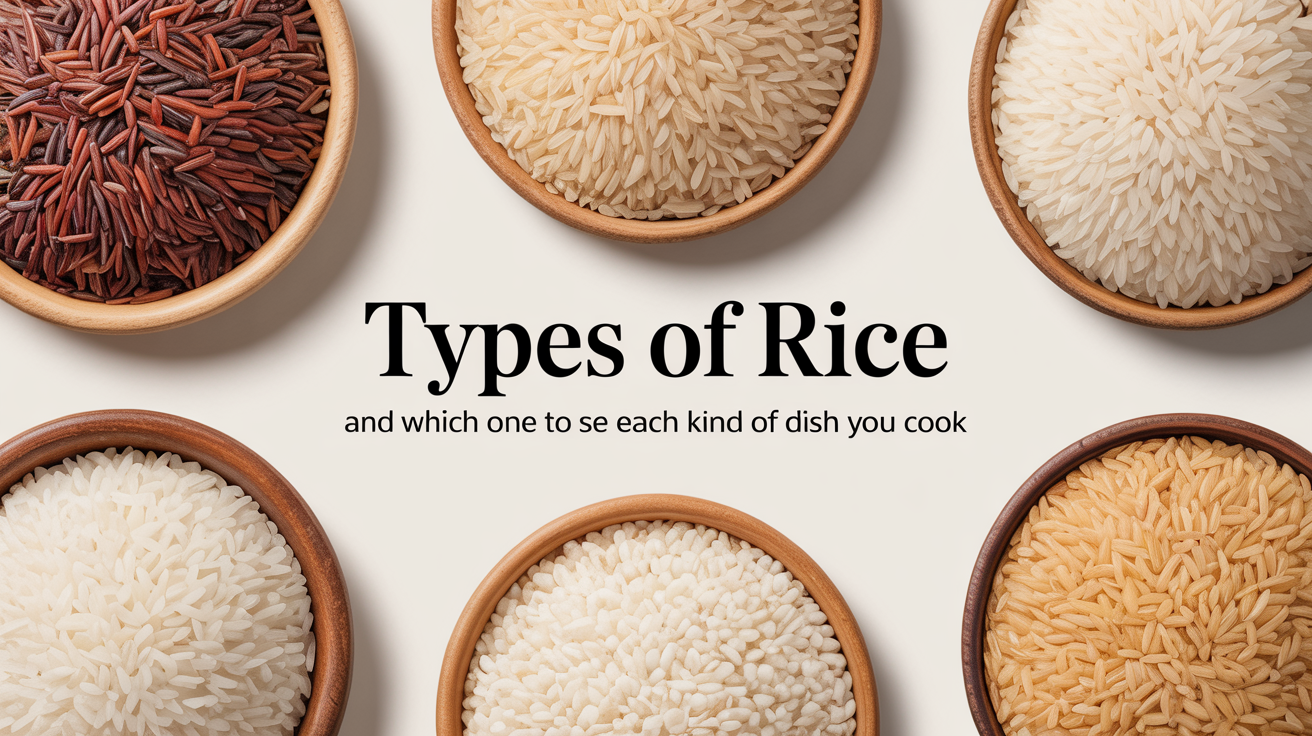
If you've ever grabbed whatever bag of rice was already in your pantry and wondered why your risotto came out soupy or your fried rice turned into a sticky clump, the problem probably wasn't your technique. It was the rice. The many types of rice aren't interchangeable, and each one behaves differently once it hits water and heat. Some grains want to stay separate and fluffy; others are bred to clump on purpose. Knowing which is which saves you a ruined pan of dinner and a lot of guessing at the grocery store.
Rice is generally sorted by grain length: long, medium, and short. That single measurement tells you almost everything about how a rice will cook, how much starch it releases, and what dish it's built for. A handful of specialty rices, wild, black, and brown among them, don't fit neatly into the length categories because their bran layer or species changes the rules.
Long-Grain Rice: Basmati, Jasmine, and Everyday White
Long-grain rice is roughly four to five times longer than it is wide, and when cooked properly, the grains stay separate and light. This is the rice you want for pilafs, biryanis, grain bowls, and any dish where a fork should be able to fluff the rice into distinct pieces rather than a mass.
Basmati is the classic choice for Indian and Middle Eastern cooking. It's aged before sale, which dries it out slightly and gives it that signature nutty aroma and firm bite. Basmati elongates as it cooks rather than swelling much in width, which is why the grains look so slender on the plate.
Jasmine rice is the workhorse of Thai and broader Southeast Asian cooking. It's softer and slightly stickier than basmati, with a subtle floral scent, but it still holds separate grains when cooked with the right water ratio. The basmati vs jasmine rice question usually comes down to what you're serving: basmati pairs naturally with dry-spiced curries and pilafs where you want texture contrast, while jasmine's stickier grains are easier to eat with a spoon or scoop up alongside softer foods.
Plain long-grain white rice, the kind sold in generic bags at any supermarket, is the most neutral option. It lacks the aroma of basmati or jasmine, but it behaves similarly enough to work as an everyday substitute.
Medium-Grain Rice: The In-Between Option
Medium-grain rice is shorter and plumper than long-grain, and it releases more starch as it cooks. That makes it a bit more tender and clingy without going fully sticky. It shows up often in Spanish and Latin American cooking, paella being the best-known example, where you want the rice to hold sauce and flavor without turning to mush. It's also a reasonable middle ground if your household can't agree on fluffy versus sticky rice.
Short-Grain Rice: Sushi, Arborio, and Sticky Rice
Short-grain varieties are almost as wide as they are long, and they carry the most surface starch of the bunch. That starch is exactly what you want in certain dishes and exactly what ruins others.
Sushi rice (sometimes labeled Japanese short-grain rice) is rinsed before cooking to remove excess surface starch, then seasoned with vinegar, sugar, and salt after cooking. The goal is grains that cling together just enough to hold a roll while still having individual bite.
Arborio and other risotto rices (carnaroli and vialone nano are other names you'll see) are prized for the opposite reason sushi rice is rinsed: you want that starch. Risotto technique relies on slowly releasing it into the broth through constant stirring, which creates the dish's signature creaminess without any cream at all.
Glutinous or "sticky" rice, despite the name, contains no gluten. It's a short-grain variety used across Southeast Asian cooking, often steamed rather than boiled, and it turns fully cohesive and chewy once cooked, the entire point in dishes like Thai sticky rice with mango.
Best Rice for Fried Rice, and Other Practical Matchups
If you're wondering about the best rice for fried rice specifically, it's long-grain, and ideally a day old. Fresh-cooked rice holds too much surface moisture, so when it hits a hot wok, that moisture turns to steam and the grains clump instead of crisping and separating. Rice that's been refrigerated overnight loses some of that moisture as the starches firm back up, a process called retrogradation, leaving drier grains that separate easily when tossed with oil and heat. You can approximate this with fresh rice by spreading it on a sheet pan to cool for twenty or thirty minutes, but a genuine day-old batch still wins on texture.
Here's a quick reference for matching rice type to dish:
| Rice Type | Texture | Best For |
|---|---|---|
| Basmati (long-grain) | Dry, separate, fragrant | Pilafs, biryani, curry sides |
| Jasmine (long-grain) | Slightly sticky, fragrant | Thai and Southeast Asian dishes, grain bowls |
| Plain long-grain white | Neutral, separate | Everyday sides, grain bowls |
| Medium-grain | Tender, some cling | Paella, mixed rice dishes |
| Arborio/carnaroli (short-grain) | Creamy when stirred | Risotto |
| Sushi rice (short-grain) | Sticky, holds shape | Sushi, onigiri |
| Glutinous rice (short-grain) | Fully cohesive, chewy | Sticky rice desserts, mango sticky rice |
| Day-old long-grain rice | Dry, firm grains | Fried rice |
| Brown rice (any length) | Chewy, nutty | Grain bowls, pilafs, sides |
| Wild rice | Chewy, earthy | Stuffings, soups, mixed rice blends |
| Black rice (forbidden rice) | Chewy, slightly sweet | Salads, side dishes, some desserts |
Specialty Rices: Wild, Black, and Brown
Wild rice isn't technically rice at all. It's the seed of a different aquatic grass, but it's cooked and used the same way, so it lives in the same aisle and the same conversation. It has a chewy texture and an earthy, almost smoky flavor, and it works well mixed into pilafs, stuffings, or a pot of healthy soup for added texture.
Black rice, sometimes marketed as "forbidden rice," is a whole-grain variety with a deep purple-black color that comes from anthocyanin pigments, the same family of compounds that colors blueberries. It has a slightly sweet, nutty flavor and a chewy bite, and it holds its color well in salads and cold rice dishes.
Brown rice isn't a separate variety so much as a different milling stage. Any type of rice, long, medium, or short grain, can be sold as brown rice if the bran and germ layers are left intact rather than polished away to make white rice. That bran layer gives brown rice its nutty flavor and extra fiber, but it also means water has to penetrate the outer layer to reach the starchy interior, so the grain takes noticeably longer to cook. Where white rice might take fifteen to twenty minutes, brown rice often needs closer to forty five minutes.
The bran layer affects shelf life too. White rice, with the bran and germ removed, stores well for years in a cool, dry pantry because there's little fat left to go rancid. Brown rice still contains the germ and its natural oils, so it has a shorter shelf life and can develop an off, slightly rancid smell if stored too long, especially somewhere warm. If you buy it in bulk and don't go through it quickly, the refrigerator or freezer will extend its usable life considerably.
How to Store Rice Properly
Uncooked white rice keeps well in an airtight container in a cool, dark pantry, away from heat and moisture. Whole grain and brown rices are more sensitive to their oils turning stale, so refrigeration or freezing is worth it if you won't cook through a bag within a few months.
Cooked rice needs more caution. Rice can carry a bacterium called Bacillus cereus, which produces spores that survive cooking. If cooked rice sits out at room temperature too long, those spores can multiply and produce toxins that aren't destroyed by reheating. The safe approach, consistent with USDA-style food safety guidance, is to cool cooked rice quickly, refrigerate it within about two hours of cooking, and eat leftovers within three to four days. Spreading hot rice on a tray rather than leaving it in a deep, covered pot speeds up cooling considerably. It's a small habit, but one worth building since the risk, while manageable, is real.
Frequently Asked Questions
What's the healthiest type of rice?
Brown rice, wild rice, and black rice all retain more fiber, vitamins, and minerals than white rice because they keep the bran and germ intact. White rice isn't unhealthy in a normal diet; it's simply lower in fiber and micronutrients.
Can I substitute one type of rice for another in a recipe?
Often, especially within the same category, like swapping basmati for jasmine. Cross-category swaps are trickier: long-grain rice in a risotto won't release enough starch for a creamy texture, and arborio in a pilaf will likely turn gummy.
Why does my rice come out mushy every time?
Mushy rice is usually a ratio or timing problem, not a rice-type problem. Too much water, cooking too long, or lifting the lid to stir partway through (which releases starch prematurely) are the common culprits. Check the rice cooking method against the water ratio for your specific rice type, since long-grain and short-grain rices need different amounts.
How long does cooked rice actually last in the fridge?
Plan on three to four days for cooked rice in an airtight container in the fridge, provided it was cooled and refrigerated within about two hours. If it sat out longer than that, or you're unsure how long, it's safer to discard it.